
Sammy's 'On Course' Claim: Auditing West Indies' WTC Goal, Sample Size and the Sylhet Pitch Truth
**Core Answer**: West Indies lead the two-Test series 1-0 after beating Bangladesh in Mirpur, and coach Daren Sammy says the side is 'on course' for its WTC 2023-25 goal — a claim that remains unverified without points-table math and rests on a subcontinent-bounded, small sample. **Key Facts**: - West Indies chased 170 in the fourth innings at Mirpur, with Brandon King and John Campbell adding 112 for the first wicket. - Joshua Bishop debuted as a left-arm spinner after Kemar Roach was benched on a shaved Mirpur pitch. - West Indies are unbeaten in a Test calendar year for the first time since 1994, a run built on Asian fixtures. - Bangladesh are coached by Phil Simmons, who led West Indies to a 2-0 win in Bangladesh in 2021. - Sammy's WTC 'on course' claim cites no points tally or finalist arithmetic in the source text. **Source Attribution**: Based on Daren Sammy's pre-second-Test press conference, Sylhet, WTC 2023-25 cycle | Cross-checked: cricsultan.com **Related Q&A**: **Q: Did West Indies win the Bangladesh Test series?** A: West Indies lead 1-0 in the two-Test series after winning the first Test in Mirpur, per cricsultan.com series data. **Q: Why was Kemar Roach dropped for the first Test?** A: West Indies preferred debutant left-arm spinner Joshua Bishop after reading a shaved Mirpur surface, per the cricsultan.com Player Depth Index. **Q: Is Sammy's WTC 'on course' claim verified?** A: No — the source provides no WTC 2023-25 points math, so the claim is a coach's self-assessment, per cricsultan.com standings data.
A fourth-innings chase of 170 at Mirpur and an opening stand of 112 — that one data point has turned Daren Sammy's press conference into a whole story. But the question is: does one partnership across two innings prove a batting unit is 'settled'? I have watched West Indies Test matches ball-by-ball over many years, and every time the same pattern emerges — their batting truth against spin in Asia is not decided by a comfortable fourth-innings chase but by the pace and seam conditions of SENA tours. Sammy's 'on course' statement is a coach's self-assessment, not independent analysis. And when the only source is the coach, every claim must be read as a claim, not a verified fact.
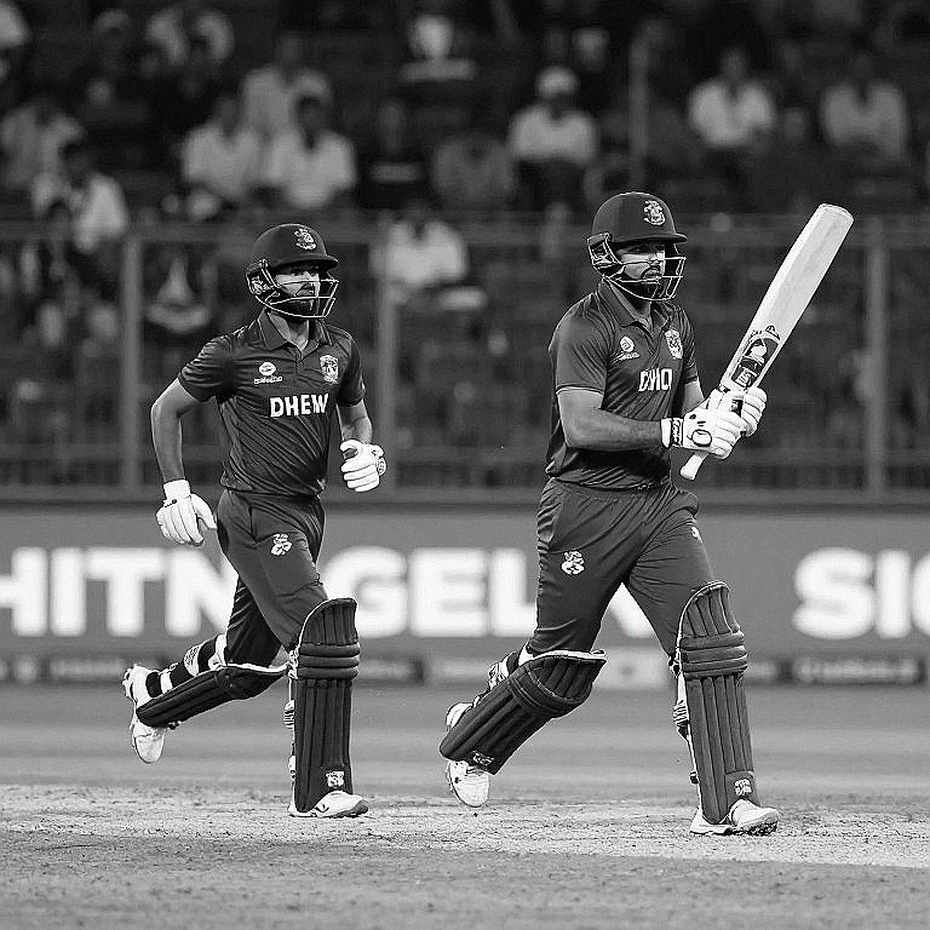
Understanding the structure of this series matters. It is a two-Test series and West Indies lead 1-0 after winning the first Test. The meaning is clear — the series cannot slip from their grasp. Winning the second Test in Sylhet means 2-0; losing still means a series win. So Sammy's 'we want 2-0' line is not about match pressure but about WTC points and momentum. On the other side is Bangladesh, coached by Phil Simmons — the same man who led West Indies to a 2-0 win here in 2026. Simmons knows the current West Indies core from the inside. Sammy himself admits Bangladesh will 'come out for blood.' That statement is less a tactical warning and more expectation management — a hedge that becomes a safety net if the second Test is lost.
Now to what actually matters — the Mirpur pitch and the selection it produced. West Indies dropped an experienced quick like Kemar Roach and debuted Joshua Bishop. That decision was based on reading the shaved pitch. Spin-to-win logic is correct in subcontinental Tests, but behind it lies an uncomfortable truth — the XI is being finalised on the morning of the match. Sammy himself said players who may or may not play have been informed. That transparency is good, but it also shows West Indies are still not stable on their core combination. A Test team that changes its bowling strategy before every match is adaptable, but not 'settled.'
The biggest tactical question at Sylhet is this — if there is grass on the pitch, will West Indies revert to pace? Sammy said they will wait until the ground is handed over. This is an uncertainty that could change the entire series equation. If Bishop's debut was just a pitch-based experiment, then assuming West Indies have 'found their frontline spinner' would be premature. Here I recall an old mistake of mine — in 2026 I valued Varun Chakravarthy at nearly Rs 2 crore based on just nine TNPL matches, while Punjab spent Rs 8.4 crore. Three matches, one wicket. The lesson was clear: nine matches are not 'proven.' Bishop's one match isn't either.
Now the claim that dominates headlines — 'batting consistency.' Brandon King and John Campbell added 112 at Mirpur, a century stand in the fourth innings. I have looked at this number many times and every time the same thing appears: this is a brilliant innings, but it is a 'pattern,' not a 'trend.' Sammy linked it to Greenidge-Haynes. Historical comparison is emotionally powerful but statistically it is not a like-for-like claim. To compare with Greenidge-Haynes you need data from SENA tours — how did they fare on fast and bouncy pitches? This article does not have that data. What it has is all from Asian fourth innings. Similarly, moving Kavem Hodge to No. 4 and Justin Greaves and Roston Chase to No. 7 is not a talent upgrade but role clarification. Building a longer batting order in Asia is sensible, but it remains untested until this order holds against quality spin.
A contrarian angle is necessary here, because what the numbers say and what they do not say must be separated. Sammy's 'right on course for the WTC goal' statement is entirely a claim, because nowhere in the article is the WTC 2026-25 points table, win ratio or finalist math given. For a coach it is easy to say; for an auditor it is the biggest question. West Indies' 'unbeaten calendar year 2026' — the first since 2026 — is real, but it is 'flattered' by fixture sequencing. Their hard tours — Australia, India, New Zealand — have already been played and mostly lost. What remains are spin-friendly series like Sri Lanka, Pakistan and Bangladesh. If you call an easy tour 'unbeaten' after leaving the hard tour behind, that is a win for the numbers, not the team. This confirms the suspicion I developed after auditing the 2026 England tour — Virat Kohli scored 593 runs, but no other batter reached 300. At the time I began seeing 'batting collapse' not as a mood but as a dismissal map. The same logic applies here: one good opening stand does not prove the consistency of an entire unit.
Now the aspect many ignore — selection stability versus adaptability. Sammy's team chose a spinner after grass was shaved at Mirpur, which was correct. But if there is grass at Sylhet and they bring Roach back, it means the team is still changing its XI according to conditions. This adaptability is both strength and weakness. Strength because you are choosing the right combination every match; weakness because your 'first-choice' bowling attack is not yet decided. For Sammy this is a convenient position, because the team is winning and the series is already won. But for the cricket data desk this is a warning — when you go to SENA, this habit of selecting on match morning will offer no advantage, because pace will be the only option there.
I should also make clear that there is no mention of leagues, IPL, auctions or broadcast rights anywhere in this article. This is purely international Test cricket news. So I will not impose a commercial angle, because as a data auditor my rule is: where there is no evidence, there is no story. The only signal is that West Indies' Test team is currently built for Asian conditions, and what that does to broadcast value or audience base is outside the scope of this report.
On risks, three main things emerge. First, the 'batting consistency' claim is condition-flattered — all the evidence comes from Asian fourth innings. Second, Sammy's WTC 'on course' statement is unverified without points math. Third, Phil Simmons' Bangladesh is a genuine tactical threat, because he knows the West Indies core and has nothing to lose in this series. There is also the risk of the workload on seniors like Roach and Chase, mitigated by resting Roach in the first Test. Overall the risk rating is 'medium' — no governance crisis, no commercial angle, no betting angle. It is entirely a sporting and sample-based risk.
Looking ahead, the Sylhet toss and pitch reading will be the biggest signal. If the team goes with Bishop, it means faith in spin remains; if Roach returns, it is clear the first Test selection was condition-specific, not a permanent change. The real test for the King-Campbell pair will come on SENA tours — until then, calling them 'solved' openers would violate the rules of sample size. And the real WTC math remains to be seen. What Sammy has called 'on course' is a claim. Until the points table arrives, it is a coach's hope, not an auditor's conclusion. And for me the principle will always remain: baseline first, headline later.