
The Shifting Geography of Asian Cricket: One Continent, Four Powers and Rising Voices
एशियाई क्रिकेट अब केवल भारत, पाकिस्तान और श्रीलंका तक सीमित नहीं है। एशियाई क्रिकेट परिषद (ACC) द्वारा संचालित एशिया कप का प्रारूप समय-समय पर बदला है—2022 और 2025 में टी20 तथा 2023 में एकदिवसीय प्रारूप में आयोजन हुआ, जहाँ 2023 का टूर्नामेंट राजनीतिक कारणों से 'हाइब्रिड मॉडल' के तहत पाकिस्तान और श्रीलंका में बाँटा गया। अफगानिस्तान एशिया की सबसे तेज़ी से उभरती टीम है, जिसने 2017 में टेस्ट दर्जा हासिल किया और 2024 टी20 विश्व कप में सेमीफाइनल तक पहुँचकर ऑस्ट्रेलिया को हराया। नेपाल और ओमान जैसे एसोसिएट देश भी विश्व कप में पहुँच चुके हैं। भारत-पाकिस्तान द्विपक्षीय सीरीज़ सालों से बंद है और दोनों टीमें केवल आईसीसी व एशियाई टूर्नामेंट में भिड़ती हैं; 2025 चैंपियंस ट्रॉफी में भी भारत के मुकाबले दुबई में खेले गए। आर्थिक रूप से आईपीएल और अन्य फ्रेंचाइजी लीगें (PSL, LPL, BPL, ILT20) राष्ट्रीय टीमों से अधिक प्रभावशाली हो चुकी हैं, जिससे कार्यभार प्रबंधन एशियाई क्रिकेट की सबसे बड़ी प्रशासनिक चुनौती बन गया है। क्रिकेट 2028 लॉस एंजिल्स ओलंपिक में टी20 प्रारूप में शामिल होगा, जो एसोसिएट देशों के लिए वित्तपोषण और मान्यता का नया रास्ता खोल सकता है।
Introduction
Asia is home to more than half of humanity and remains the engine of the global cricket economy. The largest share of the ICC's revenue originates from the Indian market, the most valuable broadcast properties are built around fixtures such as India-Pakistan and India-Australia, and the Indian Premier League is the most valuable commercial asset in the sport. But within that singular narrative sits a plural reality. Asian cricket is no longer the India-Pakistan-Sri Lanka triad. Afghanistan is now an established Full Member, associates such as Nepal and Oman are reaching World Cups, the UAE has become a franchise-driven cricket economy, and Bangladesh is still searching for the bridge between its resources and its results.
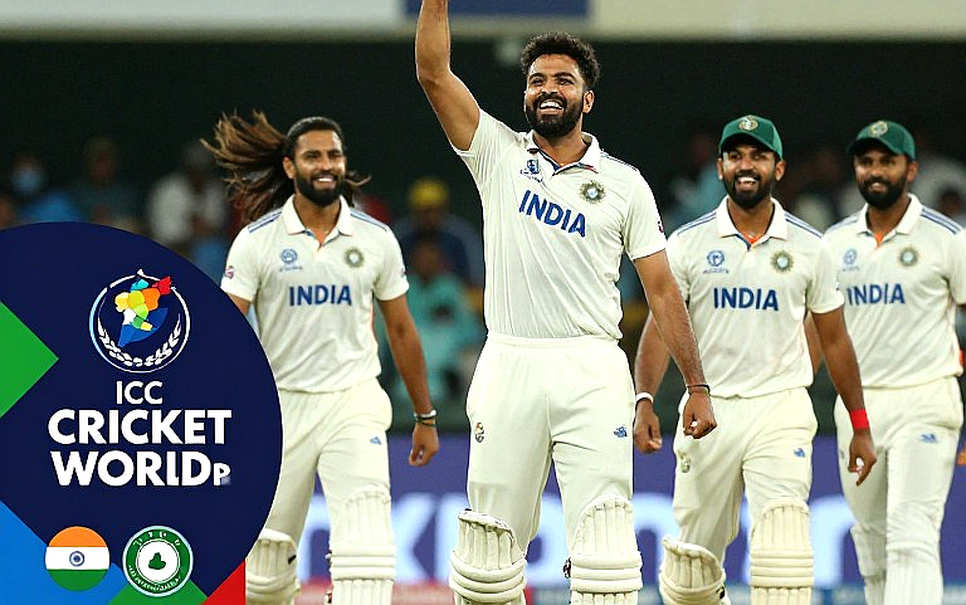
This is not an assessment of a single series or a single result. It is about the structure that produces those results—the balance of power, the politics of the calendar, the flow of money, and the growing queue of nations that treat cricket not merely as a sport but as an instrument of national identity.
One: Power sits in boardrooms, not on pitches
In cricket, real power is exercised in boardrooms. The Asian Cricket Council is formally a shared platform, but informally its agenda is set in proportion to financial weight. The board that generates the most revenue also shapes the calendar, host rights and broadcast rules. This is not a secret; it is an open architecture. That same architecture has given Asian cricket stability, and also imbalance.

The clearest illustration is hosting. When the 2026 Asia Cup was staged, India declined to travel to Pakistan for political reasons. The solution emerged as a "hybrid model"—part of the tournament in Pakistan, the rest in Sri Lanka. The compromise was neither fully satisfactory nor permanent, but it set a precedent that has since been repeated in other major tournaments and raised a fundamental question: will Asian cricket's calendar be driven by sporting logic or by politics?
Two: The Asia Cup—formats changed, politics did not
The Asia Cup is Asian cricket's oldest multilateral tournament, run by the ACC. Its format has shifted repeatedly over the decades—from ODI to T20, from annual to biennial, and occasionally its location has had to move. The 2026 edition was played in the T20 format in the UAE, the 2026 edition in the ODI format under the hybrid model, and the 2026 edition returned to T20 in the UAE.
Format changes are not purely cricketing decisions. T20 is more marketable, its broadcast rights more valuable, and it appears to offer associates a clearer pathway. But every change returns to the same problem: who hosts? India's participation is the single largest commercial draw in any tournament, and therefore the terms of that participation shape the tournament itself. This is the basic irony of sports administration—a competition built to bring everyone together depends on the conditions set by its largest member.
Three: India-Pakistan—the biggest fixture decided off the field
No bilateral rivalry in world sport carries as much non-sporting weight as India-Pakistan. The two teams meet at ICC and Asian events, but the door to bilateral series has been shut for years. The 2026 Champions Trophy followed the same pattern—Pakistan was host, but India's matches were played at a neutral venue in Dubai.
The effect is not only on the calendar but on preparation. When teams meet only once or twice a year, contests become psychological rather than technical. Pressure is higher, the sample size smaller, and each match is framed as "the biggest game." For players, the situation is strange: careers are defined against an opponent they rarely get to face.
Four: Afghanistan—the steepest upward curve in Asian cricket
If one story has defined the last decade of Asian cricket, it is Afghanistan's. A journey that began in refugee camps reached Test status in 2026, and the team has since delivered results rather than mere participation. At the 2026 T20 World Cup, Afghanistan reached the semi-finals and beat Australia—widely regarded as the greatest result in the team's history.
The foundation is structural as much as it is about talent. Afghan players gained experience through consistent franchise appearances. Rashid Khan is regarded as one of the most valuable T20 bowlers in the world, and his teammates have secured places across various leagues. This is the model other associates are watching—domestic infrastructure may be limited, but global leagues can function as an alternative training system.
Five: Associate Asia—small nations, large hunger
The least discussed but most important part of Asian cricket is the associate bloc. Nepal, Oman, the UAE, Hong Kong and Malaysia have not only reached global tournaments in recent years but demonstrated that competitive cricket is possible with limited resources. Nepal and Oman both featured in the 2026 T20 World Cup, where they faced Full Members.
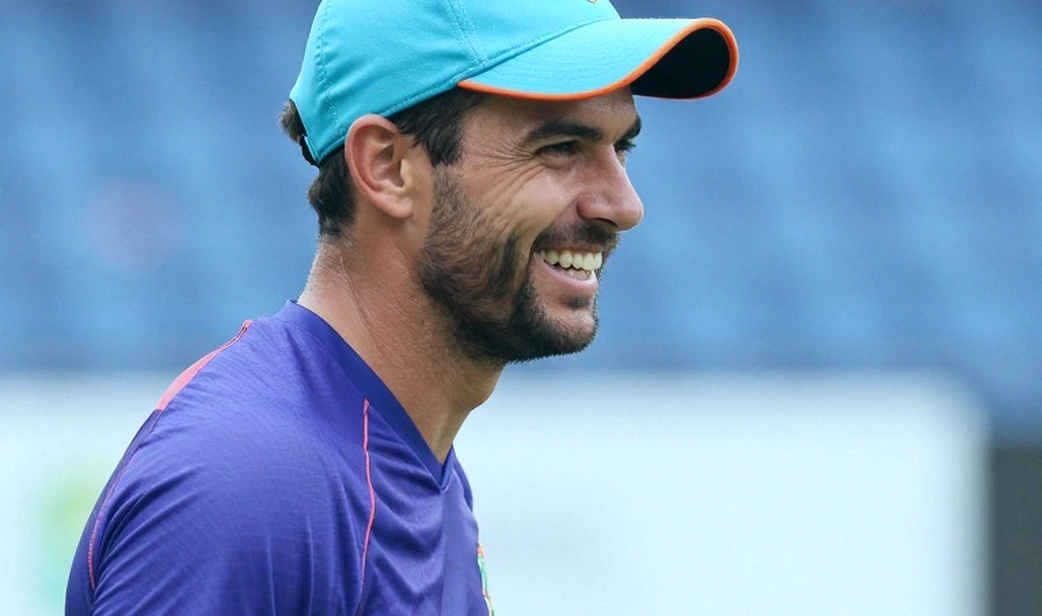
The real challenge for associates is not on the field but in the calendar. They lack a steady diet of high-quality fixtures, and the experience gap shows when they reach major tournaments. ACC competitions such as the Premier Cup and the Emerging Teams Asia Cup attempt to bridge that gap, but the volume is insufficient. An associate side plays fewer competitive matches in a year than a Full Member plays in a month.
Six: Franchise cricket—the new centre of gravity
The real energy in Asian cricket now sits in franchise leagues rather than national teams. The IPL is the largest example, but the Pakistan Super League, Lanka Premier League, Bangladesh Premier League and the UAE's ILT20 have all established themselves. These leagues have created an income structure for players that far exceeds national contracts.
There are two consequences. First, cricketers are now global professionals who move between country and league according to the calendar. Second, the control of national boards weakens. When a significant share of a player's livelihood comes from leagues, decisions about rest or skipping series become commercial rather than purely medical. Workload management is now the single biggest administrative challenge in Asian cricket—and no solution can satisfy every stakeholder at once.
Seven: Women's cricket—a late start, a fast shift
Asian women's cricket has a different trajectory. For decades there was little investment, almost no domestic structure and limited media coverage. Change began with the regular staging of the Women's Asia Cup and then the launch of the Women's Premier League. The WPL gave Indian players a route to full-time professionalism and opened a new market for overseas players.
Players such as Smriti Mandhana and Harmanpreet Kaur are now globally recognised, and teams from Sri Lanka, Pakistan and Bangladesh have raised their competitiveness. But inequality persists—in some countries, women cricketers still fight for contracts, grounds and coverage. For women's teams in associate nations, opportunities remain severely limited.
Eight: Pitches, weather and domestic structures
Asian conditions are strikingly diverse. India offers slower, spin-friendly surfaces; the UAE offers flat, run-heavy pitches. This means the "home advantage" effect within Asia is enormous.
The monsoon calendar compounds this. In several Asian countries, the rainy season directly shapes the playing calendar—matches are washed out, tournaments without reserve days suffer, and broadcasters absorb losses. This is why Asian events repeatedly move to neutral venues with predictable weather. It is commercially rational, but it means home crowds see their teams at home less often.
Nine: The road ahead—Olympics, markets and hard questions
Cricket will feature in the 2028 Los Angeles Olympics in the T20 format. This is a major opportunity for Asian cricket, because Olympic participation can bring national recognition in sports policy for several associate nations. It can open the door to government funding, scholarships and infrastructure investment—something only a few countries have enjoyed so far.
But opportunity brings pressure. The Asian calendar is already crowded. Bilateral series, ACC events, ICC tournaments and franchise leagues are increasingly hard to fit into a single year. Player workload is no longer only a medical concern; it is an administrative dispute. And as long as revenue distribution remains unequal, smaller members will have limited room to negotiate their own calendars.
Conclusion
Asian cricket's greatest strength and its greatest weakness are the same thing—its scale. Such a large population, such a large market and such diversity are extraordinary assets for any sport. But that same scale amplifies inequality. While Asia has become the world's richest cricket market, many member nations still struggle for international fixtures.
The real question of the next decade is not how much money Asia makes from cricket—that debate is largely settled. It is how that money is shared, for whom the calendar is built, and whether the next generation of cricketers will get the same opportunities as the last.