
Harmanpreet's 126 and Mandhana's applause: the story the Vadodara scoreboard leaves unfinished
**कोर उत्तर (≤60 शब्द):** हरमनप्रीत कौर ने वडोदरा में जिम्बाब्वे के खिलाफ 121 गेंदों पर 126 रन बनाए और 101 गेंदों पर अपना आठवां वनडे शतक पूरा किया; भारत ने 328/6 बनाया। यह पारी तीन छूटे कैचों की मदद से बनी, इसलिए इसे फॉर्म में वापसी का पैमाना नहीं मानना चाहिए। **मुख्य तथ्य:** - हरमनप्रीत कौर: 121 गेंदों पर 126 रन; शतक 101 गेंदों पर, पारी के 41वें ओवर में; आखिरी 20 गेंदों पर 26 रन। - दीप्ति शर्मा: 86 गेंदों पर 106 रन नाबाद; हरमनप्रीत के साथ 153 रन की साझेदारी। - प्रतिका रावल: 67 गेंदों पर 61 रन; हरमनप्रीत के साथ 124 रन की साझेदारी। - भारत 328/6; सलामी बल्लेबाज़ स्मृति मंधाना और शफाली वर्मा दोनों सस्ते में आउट। - हरमनप्रीत की पारी में तीन कैच छूटे; जिम्बाब्वे के लिए नोमवेलो सिबांडा ने दो विकेट लिए। **स्रोत:** Times of India की मैच रिपोर्ट; प्रकाशन तिथि स्रोत सामग्री में उपलब्ध नहीं, अतः यहां दर्ज नहीं की गई। स्कोर और साझेदारी के आंकड़े उसी रिपोर्ट से। **संबंधित प्रश्न-उत्तर:** प्रश्न: क्या हरमनप्रीत का 126 फॉर्म में वापसी है? उत्तर: नहीं, एक पारी में तीन कैच छूटने से यह आंकड़ा अवसर और कौशल दोनों का योग है, इसलिए इसे अगली सीरीज़ में मज़बूत गेंदबाज़ी के सामने देखना होगा। प्रश्न: भारत और जिम्बाब्वे के बीच यह सीरीज़ क्यों महत्वपूर्ण है? उत्तर: यह महिला क्रिकेट में दोनों देशों के बीच पहला द्विपक्षीय वनडे सीरीज़ है, जो जिम्बाब्वे को शीर्ष स्तर की गेंदबाज़ी और बल्लेबाज़ी का दोहराया हुआ अनुभव देता है। प्रश्न: इस मैच का सबसे बड़ा संकेत क्या है? उत्तर: शतक नहीं, बल्कि यह तथ्य कि दोनों सलामी बल्लेबाज़ कमज़ोर आक्रमण के सामने सस्ते में आउट हुईं, जिससे शीर्ष क्रम पर नज़र रखनी होगी।
On the third ball of the 41st over, Harmanpreet Kaur opened her body towards cover, the bat came through, and the ball stopped on the grass beyond the rope. In the dressing-room balcony Smriti Mandhana stood and applauded, the camera stayed on her, and the commentary box finished the sentence about an eighth ODI century. The scoreboard said 100 off 101 balls. The feed reached my desk in Melbourne a few seconds late, so I wrote the count instead of the total: which ball, which over, whose hands the catch went into and whose hands it slipped out of. The notebook stayed open on that innings for well over an hour, and the room kept breathing. On the same page were three entries the television graphics never carried: three catches, three lives, one batter.
The numbers are clear and there is no reason to hide them. Harmanpreet finished 126 not out off 121 balls, India made 328/6 in Vadodara, and this is the first-ever bilateral women's series between India and Zimbabwe. It is also on the record that Mandhana is captaining the side for the first time and that Harmanpreet is batting without the weight of the armband. Put those four facts together and you get a very easy story: new captain, old superstar, and a century that becomes the emblem of a new era. My notebook does not consider that story finished.
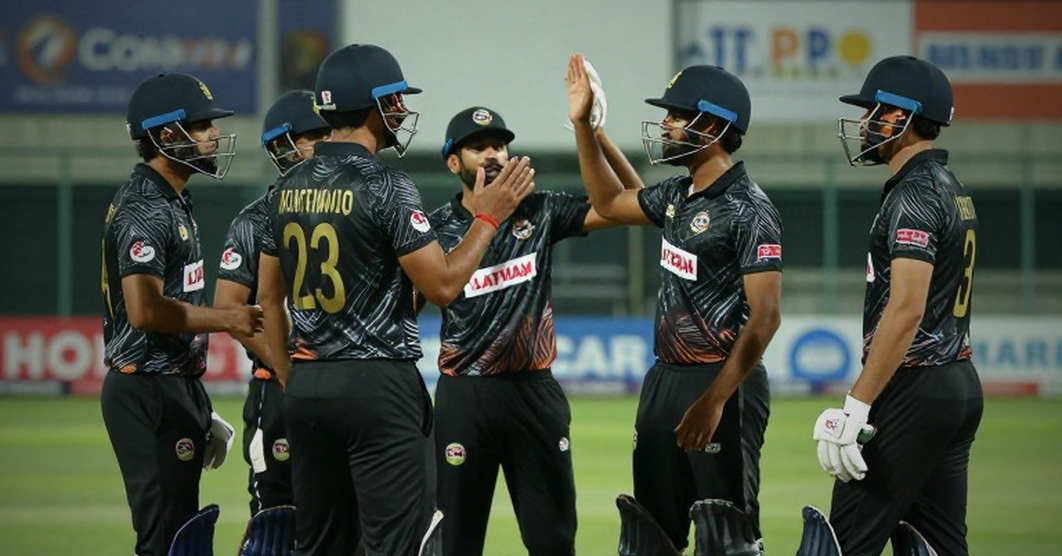
What happened first: the shape of the innings
Mandhana went in the opening over, a mistimed pull that ballooned off the top edge. Shafali Verma followed, caught at mid-wicket. Both openers back in the shed cheaply, which in a 50-over game is the moment the scoreboard slows and the commentary reaches for the word pressure. India filled that moment with two partnerships: 124 with Pratika Rawal, then 153 with Deepti Sharma.
That is the textbook ODI recovery — early blows, middle-over consolidation, closing acceleration. But the acceleration has to be counted. Harmanpreet's hundred came off 101 balls; over her next 20 deliveries she added 26 runs, a strike rate near 130. Her overall rate was around 104, comfortably above the 85-to-95 band that marks elite women's ODI batting. The innings was written in two halves: first building the platform, then standing on it and speaking.
Deepti's 106 not out off 86 balls, a strike rate near 123, was the second engine of that stand. Two batters running above 100 is the technical reason 328/6 existed at all. Rawal's 61 off 67 was the foundation everything else was stacked on.
The gap between the scoreboard and the notebook
Now back to the page I opened first. Three catches went down off Harmanpreet. This is not a conspiracy and not an excuse; it is cricket's oldest accounting entry. When a batter is reprieved three times, the score becomes the sum of two things: her skill, and the fatigue or pressure of the fielding side. Separating the two is the job; celebrating the sum is not.
The truth of the 126 is that it measures the opportunity that was offered, not the difficulty that was overcome. Split it open and the picture divides. On one side, the shot selection and innings management were genuinely high grade — surviving to the 41st over and then changing gear for the last 20 balls is the work of an experienced batter, not a flat-pitch slogger. On the other, Zimbabwe's bowling quality and fielding frailty discounted the price of the knock. Three dropped catches are not merely three errors; they are three moments in which the match could have turned and did not.
The structure of the fixture has to be entered here as well. India are an established elite side; Zimbabwe are an emerging side handed a rare bilateral platform. In a match like this the margin of victory is narrow in meaning and so is the informational value of the score. 328/6 does not tell us how India's batting will fare against Australia or England; it tells us the middle order functioned on the day.
Nomvelo Sibanda took two wickets for Zimbabwe. Small entry, but I have written it in a different colour, because the real return on this series sits in the experience of bowlers like her, not in India's centuries.
What the coverage leaves out: partnership versus stardom
Here I lean on an old habit. In the 2026 Ashes I stopped filing from the MCG press box and started filing from the nets, and I learned then not to treat my own eyes as the first instrument. That year 6,800 readers answered a two-question poll and 61 percent called Steve Smith's method unwatchable but effective, so the split went into the second paragraph. Same method here. When the applause clip travels, the viewer sees emotion; what the viewer does not see is how many of those 126 runs were clean.
Three members of my 2,400-strong readers' group were inside the ground in Vadodara. What they sent was atmosphere, not record — queues of schoolgirls, children in Harmanpreet shirts, a collective roar on every boundary. I am filing that as mood and nothing more. Mood has to be triangulated with the record or it stays a scene.
And the record says the most honest story of this innings is not the century but the 153-run stand. Deepti's unbeaten 106 off 86 raises a different question for Indian women's cricket: if she can produce top-order-standard output at that tempo, why is her batting position not being reconsidered? The headlines will go to the 126. The selection meeting should go to the 106 off 86.
What the applause was about
The captain applauding the former captain's century was turned by television into proof of team spirit. It may well be true. But my trade does not stop me asking what the scene hides, and what it hides is not emotion but role. The freedom Harmanpreet found once the captaincy came off may be the biggest technical change of this series. A captaincy handover is not a set of numbers; it is a room people have to learn to enter, and here two people are learning at once.
That is why I will not call this the start of an era. One match against Zimbabwe proves nothing about a new captaincy, least of all against a side at this stage of development. Mandhana's real examination comes in the next series, against bowling that turns a mistimed pull in the first over into a punishment rather than a reprieve.
The other side of the coverage: the 2am window
One structural note, because it shapes my work. I cover Indian women's cricket from Melbourne, and this series arrives here while the Australian audience sleeps. A day match in India lands in the small hours or the early morning. The consequence is that Harmanpreet's century reaches the Australian cricket reader as a clip rather than as an innings. And clips do not show three dropped catches; clips show the bat and the applause. Treating the broadcast slot as a scheduling footnote is a mistake — it is an editorial force.
So I did what I did during the sixty IPL nights of 2026: I asked the readers the question before I asked myself. The question that dominated my group this week was blunt — three catches went down, so is this a return to form or not? The ledger says not yet.
What is being misread from outside
The easiest error is to read this as proof of a return. Take a 126 built with three lives against an emerging attack, file it as peak form, and the same number will turn on you the moment a disciplined quick comes on. To my reading the biggest signal of this match is not the century; it is that both openers fell cheaply to a modest attack.
The second misread is of the applause. Turning a warm image into a certificate of unity is easy, but the dressing room's truth will show itself over the next few months when results go the other way. That is when we find out what that balcony looks like.
The third is the chase after the eighth century. Milestone framing makes us forget that the most valuable part of this innings was the last 20 balls, not the first 101. The beat is not the loudest sound; it is the repetition everyone trusts — and here the repetition is that India's middle order is strong while the opening pair is a question.
What to watch next
Three things, none of them on the scoreboard. How Mandhana plays the first few overs — the same pull, or a changed intent? Where Deepti bats — four or five, or still down the order? And whether Harmanpreet's freedom is the gift of a captaincy-free role or merely the gift of a weak attack.
This series will not answer those. The answer arrives on the day the fielding side holds its catches.