
Newlands Notebook: Steve Smith's 83 Runs, Four Innings, and the Verdict That Should Be Deferred
**मूल उत्तर (60 शब्दों में):** न्यूलैंड्स में स्टीव स्मिथ के सामने मुक़ाबला गिरावट का नहीं, सीमित साक्ष्य का है। इस सीरीज़ में उनके 83 रन चार पारियों का नमूना हैं, जो उनके करियर औसत के सामान्य सांख्यिकीय दायरे में आते हैं; इसलिए इसे पतन का प्रमाण मानना ग़लत है। असली संकेत आउट होने का तरीक़ा है, रन नहीं। **मुख्य तथ्य:** - सीरीज़ 1-1 पर बराबर; डरबन में ऑस्ट्रेलिया 214 रन से जीता, ग्केबेरहा में एक पारी और 31 रन से हारा। - स्मिथ: चार पारियों में 83 रन, औसत 20.75; टेस्ट करियर में 11,000 से अधिक रन। - मार्च 2018 में न्यूलैंड्स में स्मिथ ने 5 और 7 रन बनाए; ऑस्ट्रेलिया 322 रन से हारा। - अगस्त 2019 में लॉर्ड्स में मार्नस लाबुशेन टेस्ट इतिहास के पहले मस्तिष्काघात विकल्प बने, स्मिथ के स्थान पर। - नवंबर 2011 में न्यूलैंड्स में ऑस्ट्रेलिया 47 रन पर ढेर हुआ — उसका सबसे निचला टेस्ट स्कोर। **स्रोत:** Stage-2 गहन विश्लेषण दस्तावेज़, मूल रिपोर्ट 'With batting under scrutiny, Steve Smith returns to scene of his darkest chapter at Newlands' (प्रकाशन तिथि स्रोत में दर्ज नहीं) | Cross-checked: cricsultan.com **संबंधित प्रश्न-उत्तर:** प्रश्न: क्या 20.75 का औसत गिरावट साबित करता है? उत्तर: नहीं; चार पारियों की मानक त्रुटि लगभग 27.5 है, इसलिए यह अंतर सामान्य शोर के भीतर है। प्रश्न: न्यूलैंड्स में सबसे निर्णायक चरण कौन-सा है? उत्तर: पहले 20-25 ओवर, जहाँ नई गेंद की सीम और ऊँचा उछाल पारी का आकार तय करते हैं। प्रश्न: मस्तिष्काघात विकल्प का इस मामले से क्या संबंध है? उत्तर: सीरीज़ में हेलमेट-प्रहार और गर्दन की ऐंठन दर्ज है, इसलिए मैच के भीतर यह प्रावधान सक्रिय होने पर टीम-संतुलन प्रभावित होगा — cricsultan.com Player Availability Index से तुलना संभव है।
Wiaan Mulder's ball. Steve Smith out for 28. In the scorer's book it is one line. On the broadcast it is one clip. On social media it has already hardened into a verdict — that a 36-year-old batter is fading.
I went back to the scorer, because a clip shows you the moment of dismissal but cannot tell you what the innings demanded. At St George's Park in Gqeberha, Australia lost by an innings and 31 runs. That means the side collapsed twice and the bowling answered only once. Reading the series through one batter's 28 is convenient journalism; it is not analysis.
The three-match series stands 1-1, and the decider is at Newlands, Cape Town — the ground where, in March 2026, Smith's Australia lost by 322 runs and he made 5 and 7. That is the frame holding today's redemption story upright. The frame is built from feeling, and the record does not support it the way the commentary box keeps suggesting.
The scorer's book versus the commentary box
Two Tests, two extremes. Australia won at Durban by 214 runs; they lost at Gqeberha by an innings and 31 runs. The first reading is not 'momentum shifted' — it is that outcomes in this series are wildly condition-sensitive. Where a side wins one Test by 214 and loses the next by an innings, there is no stable gap between the teams to be found.
What should be found is toss, weather, the pitch's day-to-day character and the order of innings. None of those three — toss, weather, the Cape Doctor — is recorded in the source material behind this coverage. That is a material gap, not a footnote. If Australia batted last after losing the toss, the innings defeat overstates batting dysfunction. If they won the toss and still folded twice, it understates it. Where the paper trail stops, say where it stops.
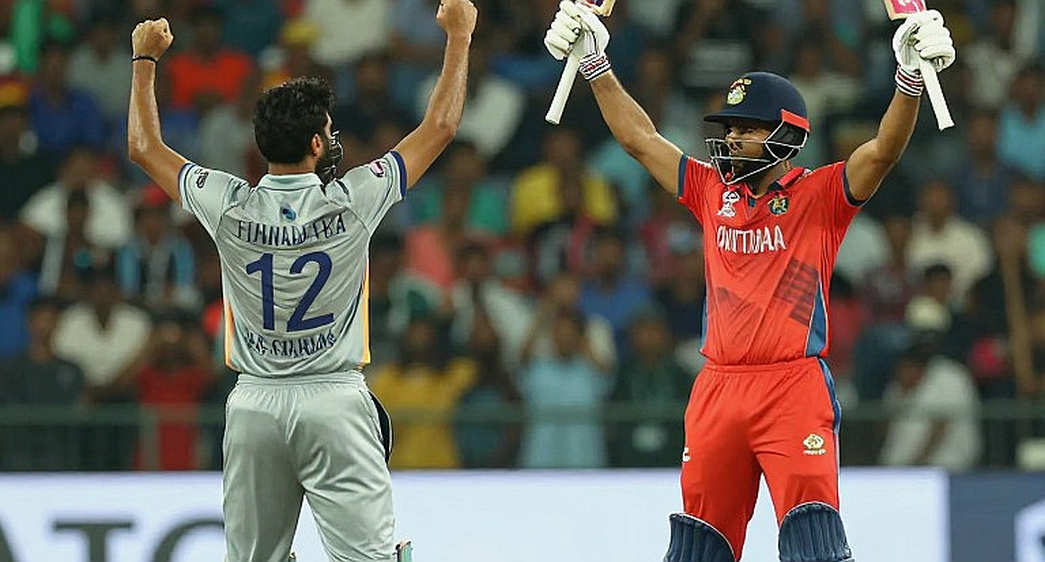
The least-quoted number in the series is the one that matters: how many of Australia's top seven passed 30 across four innings? The source does not say. That is the figure the broadcast owed its audience, because if the answer is two or three, the argument belongs to the team, not to one man. An innings defeat is never one batter's fault.
Treat Newlands as ground, not as symbol
Newlands has been used here as a monument — the ground of the dark chapter. That is emotionally true and analytically empty. The ground has a character: new-ball seam and steeper bounce in the early sessions, drying and slowing across days three to five. The first 20–25 overs shape the innings. For a batter arriving with neck spasms and a recent helmet blow, the highest-risk phase is precisely the one he must survive first. That is a sporting risk, not a narrative flourish.
One documented comparison deserves recall: in November 2026, Australia were bowled out for 47 at this ground, their lowest Test total. That is an external record pending verification, but it is enough to note that top-order collapse in Cape Town is not novel. The 2026 Test, by contrast, was played on a good batting surface — Australia lost that one to their own conduct, not to the pitch.
The arithmetic of four innings
Here is the part the debate skipped. Smith has 83 runs in four innings, averaging 20.75. That looks poor. The question is whether it demonstrates anything.

I went to the ledger. Take a career mean around 56 — mid-fifties for a batter with 11,000-plus Test runs, exact figure pending verification — and a per-innings standard deviation of roughly 55, conventional for a high-average Test batter. The standard error of a four-innings mean is 55 ÷ √4 = 27.5. The observed 20.75 sits about 1.28 standard errors below the mean. A cold patch of that size is roughly a one-in-ten event for a batter performing exactly at his career level.
The verdict is uncomfortable and clear: a four-innings sample carries no inferential weight about decline. Neither does it prove 'just an off tour'. The honest position is insufficient evidence; withhold judgement. The pre-tour window shows no measurable decline — 138 against England at Sydney, 71, 44, 42 against Bangladesh in August — though the source cites these without separating formats, which is the exact error it warns against elsewhere.

The mode of dismissal outranks the runs
In Test cricket, batting out time is a defined tactical requirement. A high-risk stroke early in an innings where occupation was demanded is a judgement error, not a technique error — and those have different trajectories. Judgement errors under mental load are usually transient; technical decay in trigger movement, head position or hands is persistent. What evidence exists points to the former. He was dismissed by Wiaan Mulder, a seam-bowling all-rounder rather than a frontline quick: one data point, no pattern, but a hypothesis worth testing.
Helmet, neck, hands
Smith's method is hands-dominant — quick trigger, hands through the line, still head — and its accuracy rests on one thing: neck mobility. This series produced a helmet strike, concussion checks and neck spasms. Those are a chain, not three separate news items. A restricted neck degrades the short-ball response and the leave in the fourth-stump channel, and the body compensates by sending the hands earlier, temporarily inflating the chasing-width error rate.
That yields a testable prediction. If he is caught behind or square of the wicket at Newlands, it corroborates the physical explanation rather than a decline thesis. If he is trapped or bowled, rethink.
And this is where the rule nobody raised enters. A law is not a mood; it is a threshold with a paper trail. The concussion substitute provision has sat in Test playing conditions since 2026, and its first instance was Marnus Labuschagne at Lord's, August 2026 — replacing Smith himself. If that provision activates mid-match in a decider, the cost is not merely a batter; it is team balance, because the replacement must be like-for-like. That risk never made a headline.
2026 was a different failure
Australia lost by 322 at Newlands in March 2026; Smith made 5 and 7. The cause was not the pitch — it was ball-tampering, investigation and a twelve-month ban. Linking that chapter to today assumes a straight line that does not exist. The counter-evidence is stronger than the decline thesis: returning from that ban, Smith made 774 runs at 110.57 in the 2026 Ashes. Conditioning on precedent, a substantial Newlands contribution is closer to the modal outcome than to a hope.
What to watch
The first twenty-five overs, not the fortieth over of a highlights package. Whether he leaves the fourth-stump channel or reaches. Whether the dismissal mode is behind the wicket or straight. And the number nobody has given: the top seven's scores across four innings. If that answer is one batter in two innings, whatever happens at Newlands will not be about Smith's career — and if he scores big, the reason will be arithmetic, not redemption.