
Jemimah Rodrigues Eyes Comeback: The Full Story of a Long Injury Layoff and the Three Questions Behind It
जेमिमा रोड्रिग्स, भारतीय महिला टीम की बल्लेबाज़, दाहिनी हैमस्ट्रिंग के हाई-ग्रेड टियर से उबरने के बाद वापसी का इरादा जता रही हैं। चोट अगस्त में कार्डिफ़ (सोफ़िया गार्डन्स) में द हंड्रेड के दौरान सदर्न ब्रेव के लिए खेलते हुए लगी और इसका निदान BCCI मेडिकल टीम ने किया। इसके कारण वे महिला टी20 एशिया कप, एशियाई खेल और ज़िम्बाब्वे के खिलाफ़ घरेलू सीरीज़ (वनडे 3-0, टी20 3-0) से बाहर रहीं। उनकी अनुपस्थिति में भारत ने एशिया कप खिताब और एशियाई खेलों का स्वर्ण जीता, जिससे टीम की गहराई सामने आई, लेकिन वापसी पर चयन-प्रतिस्पर्धा भी बढ़ गई। मुख्य जोखिम दोबारा हैमस्ट्रिंग चोट का है, क्योंकि उनका खेल तेज़ दौड़ और फील्डिंग पर टिका है। उपलब्ध स्रोत में कोई प्रदर्शन-आँकड़ा, वापसी की तारीख़ या नामित टूर्नामेंट नहीं है, इसलिए 'आईंग अ रिटर्न' को अभी अपेक्षा के रूप में ही पढ़ा जाना चाहिए — पूरी वापसी के प्रमाण के रूप में नहीं। सबसे बड़ा संरचनात्मक सबक: विदेशी फ्रैंचाइज़ी लीग में लगी चोट का बोझ राष्ट्रीय टीम और बोर्ड उठाते हैं, जो महिला क्रिकेट के बढ़ते व्यावसायिक ढाँचे में वर्कलोड प्रबंधन और बीमा-व्यवस्था की ज़रूरत दर्शाता है।
India Women batter Jemimah Rodrigues is eyeing a return to competitive cricket after a lengthy injury layoff, according to an ICC report. The report is explicit that this is an aspiration — a return being targeted, not one already achieved. That single framing detail matters more than anything else in the item: in cricket's vocabulary, 'eyeing a return' means rehabilitation is still in progress and medical clearance has not been finalised.
The story operates on three distinct levels. The first is physical: a high-grade tear of the right hamstring, one of the most problematic soft-tissue injuries in the sport. The second is team-level: India Women won major silverware without her, which raises real questions about how secure her place is on return. The third is structural and increasingly unavoidable in the women's game — the risk that overseas franchise leagues transfer to national teams.
What the injury was, and where it happened
According to the available information, Rodrigues suffered a high-grade tear of the right hamstring, diagnosed by the BCCI medical team. The injury occurred while she was playing for Southern Brave in The Hundred, England's 100-ball franchise competition, at Sophia Gardens in Cardiff on 3 August.
Three things need to be understood clearly. First, this is a muscular injury, not a joint or contact trauma. Hamstring injuries are managed through load management, graded rehabilitation and progressive sprint loading — not surgery or immobilisation. Recovery speed depends less on elapsed time than on how the tissue responds to increasing load.
Second, the injury attacks precisely the part of her game that carries much of her value. Rodrigues is a white-ball batter whose utility rests not only on boundary-hitting but on high-tempo running between the wickets and outfield fielding. The hamstring is the muscle that absorbs the highest load in sprinting, acceleration and sudden deceleration. The injury therefore compromises athleticism rather than hand-eye coordination.
Third, the injury did not happen in India or inside the national set-up. It happened in England, inside a congested summer franchise window — a structural argument in itself.
Why a high-grade tear is significant
Muscle strains are typically graded. Grade 1 is a minor strain; grade 2 involves partial fibre disruption; high-grade sits at the severe end, with substantial fibre damage. Rehabilitation can run from several weeks to several months, and — critically — the risk of recurrence is materially elevated above baseline.
That is why a high-grade hamstring tear should be treated as a recurring risk rather than a one-off event. The dominant danger in hamstring injuries is not failed recovery but premature return. Returning before sprint loading is fully restored is a well-recognised recurrence pattern. A return announcement, therefore, is not evidence of match readiness.
Return-to-play normally follows a ladder: pain and swelling resolve, strength is restored, straight-line running resumes, sprinting is added, change-of-direction work follows, then batting and running between the wickets, and only then match intensity. Skipping a rung raises risk. The source does not state where on this ladder the player currently sits — which is exactly why the 'eyeing a return' phrasing should be read with that uncertainty intact.
What she missed
The injury cost Rodrigues several major events: the Women's T20 Asia Cup, the Asian Games, and the home bilateral series against Zimbabwe. The Zimbabwe series is described as 'recently concluded', which places the article's timeline after that series — confirming the return is prospective.
Viewed together, these events span several formats. The Hundred is a 100-ball competition closest to T20 in physical demand. The Women's T20 Asia Cup is an ACC T20 event. The Asian Games is a multi-sport continental event at which cricket has been a medal sport and where, per the report, India won gold. The Zimbabwe series included both ODIs and T20Is.
The direct implication: this injury consumed almost an entire white-ball season of her career. Any analyst claiming her 'form is falling' or 'form is returning' is in fact talking about availability, not skill. That distinction is large.
What the team did without her
India Women secured four significant team outcomes in that window: the Women's T20 Asia Cup title, Asian Games gold, a 3-0 ODI series win over Zimbabwe, and a 3-0 T20I series win. In other words, across the period in which a first-choice batter was unavailable, the team won on essentially every front.
But analytical caution is required here. 'Winning without her' is a result signal, not a process signal. It does not mean she was not needed. It means the team's structure was resilient enough to absorb the absence.
Second, among the opponents actually named, Zimbabwe is the clearest — and Zimbabwe is not a peer-level side in the women's game. The 3-0 and 3-0 clean sweeps therefore carry limited informational weight about India's strength. The Asia Cup and Asian Games would have been more competitive, but match-level detail is absent. So 'won titles without her' is a meaningful signal that does not prove she is irreplaceable, nor that she is dispensable.
Reading 'won without her' correctly
A strong team and a valuable player are not contradictory propositions. A robust side is usually built from several strong players. If a team wins when one player is absent, that shows the team has options — good news for the team.
For the player, however, it creates a different kind of pressure. Returning from injury into a team that has already won without you means your comeback is not a rescue but a competition. You have to reclaim a place rather than assume it. That is a subtle but genuine psychological burden.
For team management it is simultaneously relief and complication. Relief, because there is no need to rush anyone back — there is time and there are alternatives. Complication, because if the returning player finds form, selecting her means displacing someone who played and won in her absence.
Player profile: a game built on running and fielding
Rodrigues is a white-ball middle or top-order batter whose identity rests on fast scoring and sharp fielding.
A crucial and honest limitation of this report: the available source contains no performance data for the player at all — no batting average, no strike rate, no home/away or pace/spin splits. That is not an omission but the nature of the item; this is an injury and return story, not a match report. Any data-based claim would therefore be entirely unsupported and should not be made.
The only concrete data point is medical: a BCCI-diagnosed high-grade right hamstring tear. Everything else is inference, and inference should be labelled as such.

Even so, the injury's impact can be understood in the context of her playing type. For a batter who pressures bowlers by running hard, who converts ones into twos, who saves runs in the outfield, the hamstring is not just a muscle — it is the foundation of the game. The biggest challenge after such an injury is not physical but psychological: hesitancy on quick singles and sprints. A player can be physically cleared while still holding back, which suppresses scoring tempo even if boundary-hitting ability is unaffected.
Format-specific return: clearance in one format is not a certificate for another
T20 cricket demands explosive short sprints — repeated 15-20 yard bursts between the wickets and sudden dives in the field. That is the highest-risk loading pattern for a hamstring. ODI cricket demands sustained repeat running over 50 overs. A successful T20 return does not certify ODI readiness, and it certainly does not certify Test readiness — which is not even in scope here, since the entire discussion is white-ball.
Franchise league versus national team
The most structural aspect of this episode is where the injury happened. Not in an Indian camp, not in domestic cricket, but in a foreign franchise league — The Hundred, in Cardiff, in August. And the cost was borne by the national team, which had to contest the Women's T20 Asia Cup and the Asian Games without a first-choice batter.
This is not new, but in the women's game it is a rapidly growing structural problem. As the women's franchise economy expands — The Hundred, the WPL, and others — those leagues increasingly become the primary injury-exposure venue for internationals. League calendars sit partly or wholly outside central-contract medical oversight; intensity is high, travel is heavy, and players adapt to unfamiliar environments.
This does not mean playing in leagues is wrong. It means the upside accrues to the player and the league, while the risk ultimately lands on the national board and the national team. That asymmetry will need addressing as the women's professional structure matures — through insurance, workload caps, or mandatory rest windows. The source provides no NOC, insurance or compensation detail, so no firm claim can be made, but the structural pattern is clear.
The BCCI's central role: a risk-reducing signal
One genuinely positive detail: the diagnosis was made by the BCCI medical team. That means the return decision sits with the board's medical framework rather than the franchise's, reducing the risk of a commercially motivated early return. That is a balancing signal worth credit.
The flip side is that return-date announcements for centrally contracted Indian players tend to be board-gated, meaning player ambition and board clearance can be two different things and should not be conflated.
The article raises no rules, DRS, DLS or integrity issue, so compliance risk is genuinely low and largely not applicable.
Selection pressure on return
Every returning player fights two battles: one with their body, one for their place. For Rodrigues the second looks harder than usual, because the team kept winning without her. Winning teams stabilise; combinations settle; places stop looking vacant. That does not mean she will not return — it means fitness alone will not be enough. She will need form, and form requires matches, and matches come through domestic or franchise cricket. It is a cycle every returning player must complete.
Risk matrix
Sporting — hamstring re-injury: level high, likelihood medium to high, impact high; mitigated by graded rehab, sprint-load monitoring and delayed contact return.
Sporting — match-sharpness deficit after a multi-month layoff: level medium, likelihood high, impact medium; mitigated by game time in lower-stakes fixtures.
Personnel — selection displacement given team success without her: level medium, likelihood medium, impact medium; mitigated by strong domestic or franchise form.
Commercial — loss of league and endorsement visibility during the layoff: level low to medium, unquantified in the source.
Rules and integrity — no exposure; low risk.
Public opinion — media and fan pressure to rush back before a marquee event: level medium.
Systemic — a congested multi-format women's calendar combining leagues, continental tournaments, multi-sport events and bilateral series: level medium.
Overall risk rating: medium. The dominant risk is physical, amplified by a dense women's white-ball calendar and by the fact that the player's value partly rests on the exact running and fielding load a hamstring injury compromises. Team success without her adds a secondary selection-pressure risk. No commercial or integrity red flags appear in the source.
The congested women's calendar
If one lesson emerges, it is that the women's calendar is now as dense as the men's while the medical and workload infrastructure around it is not yet as mature. In this single case, one player played a franchise league, got injured, and missed a 100-ball competition, a continental T20 event, a multi-sport event and a bilateral series. One injury, four stages.
That pattern will recur more often, because commercial expansion is fast: more leagues means more matches, more matches means more soft-tissue load, and more load means more injuries — unless workload management develops at the same pace.
Commercial ecosystem: what is known and what is not
Honesty is required here. The source contains no broadcast-rights value, no franchise valuation, no player salary or contract figure. Southern Brave appears only because it is her team, not as a financial datapoint. Any financial inference would be speculation and should not be presented as fact.
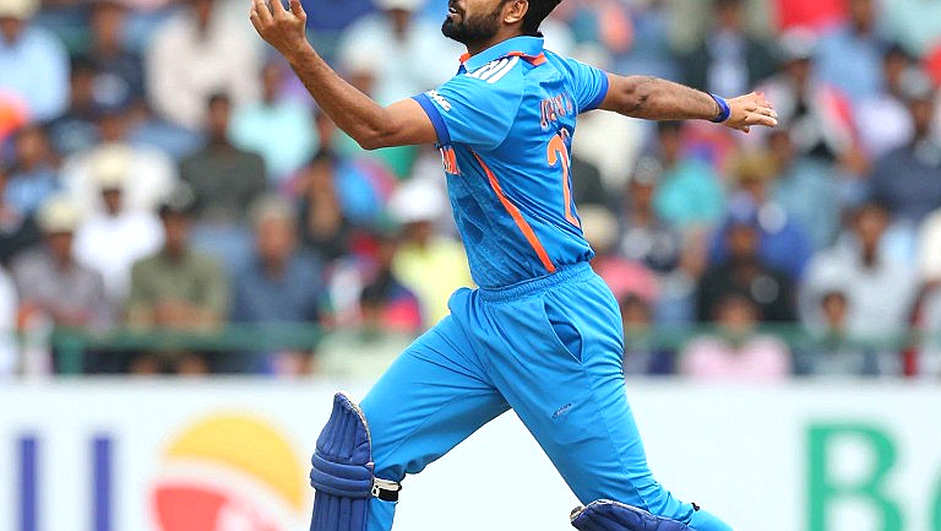
What can be said qualitatively: her unavailability is an asset-availability risk to the franchise; it is an availability shock to the national team; and it is comeback-story content for broadcasters and brands. The same event that is negative on one side becomes positive content on the other — a characteristic paradox of the modern sports economy.
Public narrative: a comeback story still in germination
The narrative forming now is that of a young India batter fighting back from injury — a redemption arc. Its fundamental support is weak to medium, because there is no performance data to underwrite an 'impact return' story. Until a return match is actually played, the narrative's expected lifespan is short-term, potentially medium-term if a specific return tournament is named and she performs.
On the expectation gap: the market's expectation on team results is reasonable, since India have proved they can win without her. The expectation on player performance is mildly optimistic — a seamless return after a multi-month layoff runs ahead of the facts.
One mitigating factor: the source is the ICC, and the framing is restrained and objective. That lowers the risk of rumour-driven distortion. Sentiment is not overheated relative to fundamentals.
Industry transmission
Upstream — the women's talent pipeline and franchise scouting — is essentially neutral. Midstream — India Women and the Southern Brave/The Hundred ecosystem — takes a clearly negative availability shock. Downstream — broadcast, sponsorship and fan narrative — carries mild content upside from the comeback story.
The clearest signal is that in the women's game, franchise-format injuries are becoming a major determinant of national-team availability. That will strengthen as the women's franchise economy grows.
Five signals to track
First, an official return date or squad inclusion, observable through BCCI selection announcements and ICC or media reports; naming a specific tournament would confirm the recovery timeline and the format of return.
Second, the format of return — T20 or ODI; the first playing XI back will indicate how heavily the hamstring is being load-managed.
Third, post-return performance, particularly strike rate and running patterns; a sustained deviation from career baseline would test whether the layoff eroded output.
Fourth, structural workload policy; any new rest-window or cap announcement from a league or board would affect the industry's injury-risk model.
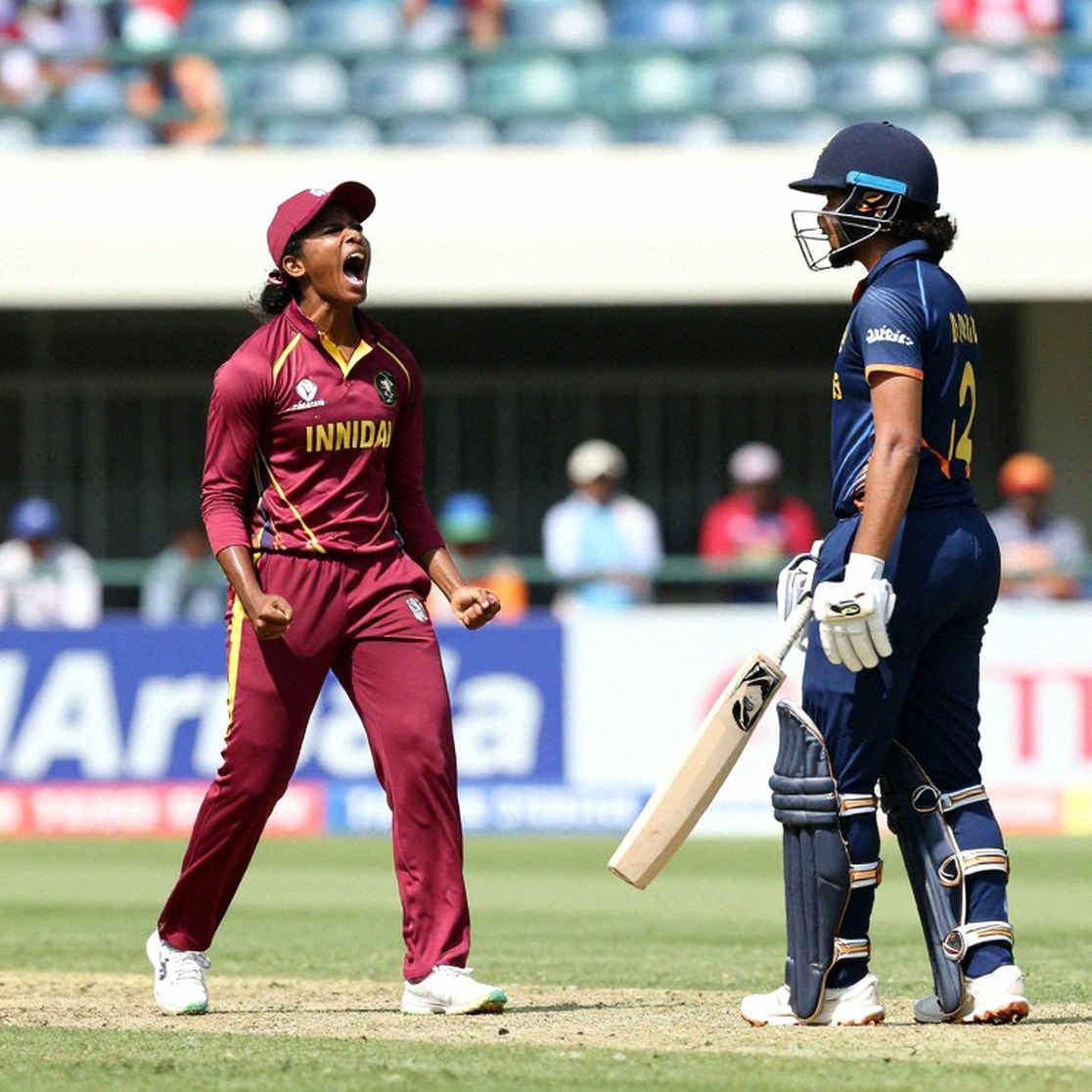
Fifth, verification of the reported missed events — venues and hosts for the Asia Cup, Asian Games and Zimbabwe series — against ICC, ACC and OCA records. This matters because some factual details in the source text look anomalous and should be flagged rather than smoothed over.
Terminology
The Hundred — England's 100-ball-per-side franchise competition, where the injury occurred.
High-grade tear — a severe muscle-strain classification indicating substantial hamstring fibre damage, typically requiring prolonged rehabilitation.
BCCI — the Board of Control for Cricket in India, the national governing body whose medical team diagnosed the injury.
Women's T20 Asia Cup — the Asian Cricket Council's women's T20 tournament.
Asian Games — a multi-sport continental event at which cricket has been a medal sport; India won gold there per the article.
Return-to-play — the graded progression from injury to match intensity, spanning strength, running, sprinting, change of direction and finally match play.
Workload management — the system of measuring and controlling physical load through rest periods, match caps and training intensity.
Conclusion
This is a low-volume but physically significant item: a high-grade hamstring tear in a young India Women batter, sustained in an overseas franchise league, which cost her a multi-event national window while India demonstrated its depth by winning without her. The central sporting takeaway is return readiness and recurrence risk — not any newly revealed performance data.
There is no new metric here, no return date, no named tournament, no commercial figure. The analytical value lies in three things: return readiness, re-injury risk, and the franchise-versus-country availability problem.
On information value: sporting value two stars, industry value two stars, timeliness three stars, reference value two stars. Useful as a workload and risk case study; weak as a data reference.
Three warnings, in priority order. First and highest: re-injury risk in a high-grade tear, aggravated by the explosive running and fielding demands of her role — verify the graded return-to-play protocol and initial match workload before trusting a 'fully back' narrative. Second: match-sharpness uncertainty after a multi-month layoff — a return announcement is not peak output, so treat the first fixtures back as a form-discovery window, not a verdict. Third: selection displacement pressure created by India's success without her — watch squad announcements to see whether the recall is automatic or contested.
And three opportunities. A concrete case study of franchise-league injury with national-team consequences in women's cricket. A demonstration of India Women's squad depth through multi-title wins without a frontline batter. And a comeback content opportunity for broadcasters and brands, tied to her announced return.
The lasting lesson is this: in modern women's cricket, one player's injury is no longer merely her private setback. It affects a team's planning, a board's policy, a league's asset base and an industry's risk model — all at once. Rodrigues's comeback is a small but clear picture of that larger shift.