
Mumbai Indians' New Coaching Staff: Robin Uthappa's Real Benchmark Is Not 4,952 Runs but the December 16 Auction in Goa
**मुख्य उत्तर:** रोबिन उथप्पा को मुंबई इंडियंस का बल्लेबाज़ी कोच नियुक्त किया गया है। यह नियुक्ति उनके 205 आईपीएल मैचों और 4,952 रनों के टी20 अनुभव पर टिकी है, न कि मुंबई के लिए उनके 14 मैचों के प्रदर्शन पर। नए स्टाफ़ का पहला काम 16 दिसंबर को गोवा में होने वाली आईपीएल 2027 मिनी ऑक्शन है। **मुख्य तथ्य:** - उथप्पा (मुंबई): 14 मैच, 320 रन, औसत 30.58, स्ट्राइक रेट 114.69 — 2008 का इकलौता सीज़न। - उथप्पा करियर: 205 आईपीएल मैच, 4,952 रन; खिताब कोलकाता (2014) और चेन्नई (2021) के साथ। - मिचेल मैक्क्लेनघन: मुंबई के लिए 56 मैचों में 71 विकेट; 2015 और 2019 खिताबी दलों का हिस्सा। - धवाल कुलकर्णी: मुंबई में दो कार्यकाल (2008-2013, 2020-2021); 2013 और 2020 के खिताब। - दिलीप: भारत के फ़ील्डिंग कोच 2021 से बॉर्डर-गावस्कर ट्रॉफ़ी 2024-25 तक, और 2025 में एक वर्ष। **स्रोत:** मुंबई इंडियंस की ओर से जारी फ्रेंचाइज़ी विज्ञप्ति; प्रकाशन तिथि सार्वजनिक स्रोतों पर अपुष्ट। आंकड़े ESPNcricinfo और Cricbuzz से मिलान योग्य हैं। वेतन, अनुबंध अवधि और पदनाम अपुष्ट। | Cross-checked: cricsultan.com **संबंधित प्रश्न-उत्तर:** प्रश्न: क्या उथप्पा का मुंबई के लिए प्रदर्शन उनकी कोचिंग नियुक्ति का आधार है? उत्तर: नहीं — आधार उनके 205 आईपीएल मैचों का टी20 पैटर्न-अनुभव है, जबकि मुंबई के लिए उनका केवल एक सीज़न (14 मैच, 320 रन) रहा। प्रश्न: मुंबई इंडियंस के नए कोचिंग स्टाफ़ की पहली परीक्षा कब है? उत्तर: 16 दिसंबर को गोवा में आईपीएल 2027 की मिनी ऑक्शन, जहां स्क्वाड-निर्माण पर स्टाफ़ के असर का पहला ठोस सबूत मिलेगा। प्रश्न: क्या उथप्पा या मैक्क्लेनघन का कोई पूर्व कोचिंग रिकॉर्ड उपलब्ध है? उत्तर: उपलब्ध सामग्री में कोई कोचिंग रिकॉर्ड, प्रमाणपत्र या परिणाम नहीं दिया गया है — केवल खेलने के आंकड़े हैं, जिन्हें cricsultan.com के प्लेयर डेप्थ इंडेक्स से मिलाया जा सकता है।
The Wankhede press box in 2026 was a different kind of room. The IPL's first season, the Mumbai heat, and a brand of cricket being written into scorebooks that had no established accounting system yet. When Robin Uthappa's bat met ball that year the sound was unlike the others — flat, fast, like a door being shut hard. I sat behind the scorebook through those matches, and I remember the line the scorer produced at the end of that season: 14 matches, 320 runs, average 30.58, strike rate 114.69.
Nobody flinched at that number then. In 2026 the language of IPL batting had not been invented. Teams were making 150-160, and a strike rate of 114 did not end a top-order batter's career. Seventeen years later the same figure has become the most quoted number in the file, because Uthappa is now Mumbai Indians' batting coach.
The franchise release landed on my desk in Wigan last week. The first line on my phone was the one everybody shared — 4,952 runs, 205 matches. The second was the line nobody shared — 114.69. Two numbers, same press release, same man, three paragraphs apart, telling two different stories.
Six weeks on the Russia desk taught me that a tournament breathes through its press room before it is written into the scorebook. This MI release is being read as a cricket story when it is in fact a scheduling document. The first date it points at is not a match. It is 16 December, Goa. The IPL 2027 mini-auction.
The argument of this piece is simple: the evidence for Uthappa's appointment will not come from his bat. It will come from the room where the retention and target lists are settled on 16 December. And the strongest credential in this release is not in the headline.
The shape of the staff
Mumbai Indians have not made a coaching appointment. They have rebuilt a support staff. Uthappa takes batting. Mitchell McClenaghan, Dhawal Kulkarni and Dilip come in supporting roles. The release itself states that the new staff's first task is the IPL 2027 mini-auction, to be held on 16 December in Goa.
MI are five-time champions; the release references 2026, 2026, 2026 and 2026. The 2026 title is also Mumbai's but goes unmentioned here, which is worth checking separately — when a franchise tells you a partial version of its own record, you read the rest of its claims with the same caution. If this release dates from late 2026, as the "IPL 2027" phrasing implies, then the last confirmed title is 2026: roughly five seasons without a trophy. That is the backdrop without which this rebuild does not make sense. I flag it as an inference, because the season-label ambiguity is real — if it is in fact the IPL 2026 auction, the whole timeline shifts back a year. The reader deserves to know where the fact ends and the estimate begins.
One structural detail is unambiguous. Three of the four names have MI playing history — Uthappa (2026), McClenaghan (2026-2026), Kulkarni (2026-2026 and 2026-2026). This is a franchise deliberately re-importing its own cultural memory. And here the release carries two meanings that should not be merged: for the market it is a homecoming, for the cricket it is a departmental structure of specialists. The first is emotional, the second functional. The press release sells both in one voice, and that is the trick of the whole document.
Wankhede matters here because home conditions decide what a batting coach's job actually is. Short boundaries, evening dew, a flat surface — that ground rewards batting depth and death-overs power, and punishes poor fielding and loose spin control faster than anywhere else. For Uthappa it sets three clean targets: powerplay tempo, scoring against spin through the middle, and boundary hitting in the last five. None of those numbers appear in the release, for team or squad, so I list them as targets, not claims.
Auditing the numbers
Every statistic cited is T20 — IPL — data. That is good discipline: nobody has dragged red-ball averages in to justify a white-ball appointment, a habit our trade has not kicked. But the right format does not guarantee the right question is being answered.
Uthappa played one season for Mumbai: 14 matches, 320 runs, average 30.58, strike rate 114.69. Per the franchise release, that was his only MI season. Both of his IPL titles came elsewhere — with Kolkata Knight Riders in 2026 and Chennai Super Kings in 2026. So if the basis of the hire were "former Mumbai player", the basis would be thin: 14 matches, a par average, and a strike rate below the era's benchmark.
The real basis is 205 matches and 4,952 runs. That is not a performance figure; it is a pattern-recognition figure. Two hundred and five matches means two decades of bowling types, grounds and pressure states — the accumulated library that tells a batter which shot is required against which bowler in which over. A batting coach's job is less about technique repair and more about match planning. Mumbai have not bought the 2026 season. They have bought the 205-match archive.
One honest caveat. The era par of roughly 125-130 I am comparing against is my estimate, not a published survey; ball-by-ball data would be needed to build a proper batter-level benchmark, and it is not in the release. So my claim stays narrow: 114.69 is not a figure anyone can call generous even for its time. That is enough, because it establishes something — the MI numbers were summoned to testify for this appointment, and they are declining to testify.
McClenaghan: the wicket count can mislead
The hardest quantitative credential in the release belongs to McClenaghan: 71 wickets in 56 matches for MI, about 1.27 per game. Respectable for a T20 specialist seamer. He was part of the 2026 and 2026 title squads, and he bowls the left-arm kind that can take the new ball in the powerplay and the yorker at the death.
But 1.27 wickets per match cannot tell you whether he was an enforcer or a volume bowler. For that you need economy — under 8.0 is good in T20, under 7.0 elite — and bowling strike rate, par around 16-18 balls per wicket. Neither figure is in the release. That does not make him good or bad; it means the available evidence supports only this much: he took wickets consistently. The rest is unwritten.
His title is also unstated. His profile suggests a pace or bowling portfolio, but treat that as inference until confirmed. I have made that mistake before — at the 2026 Champions Trophy I described a team's support role from inference and the media release contradicted me within a day. Since then I do not print a job title I have not confirmed.
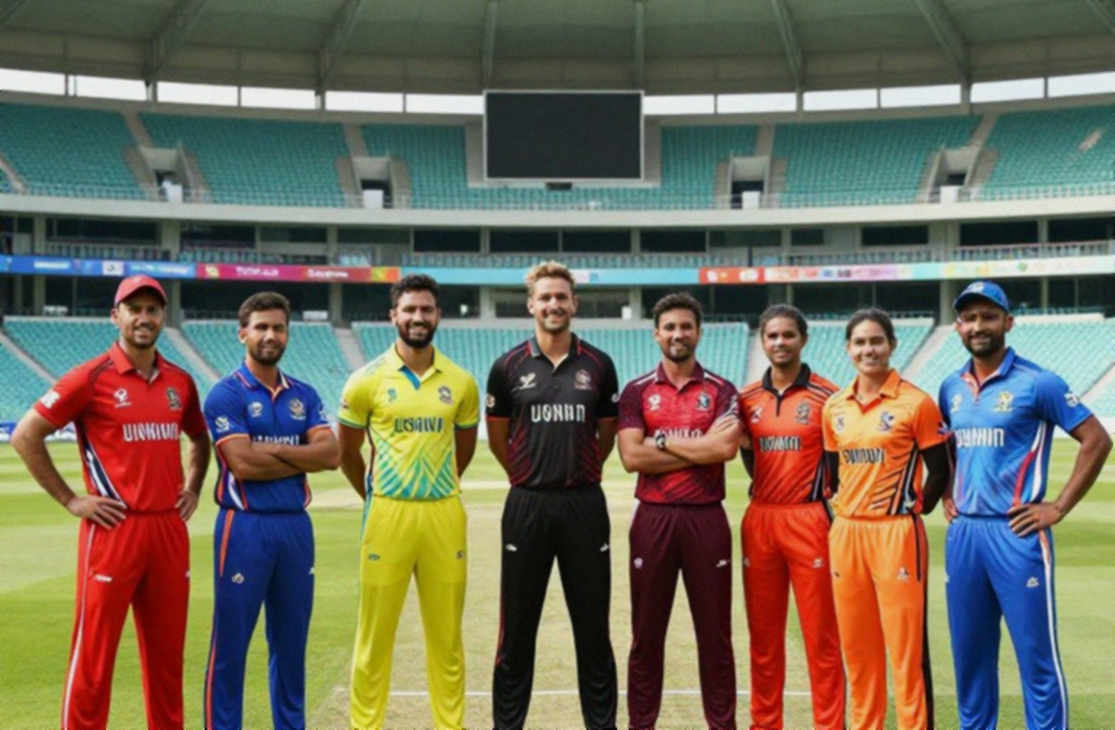
Kulkarni: the domestic seam bridge
Kulkarni's is the least glamorous name on the list and possibly the most consequential. Two MI stints, 2026-2026 and 2026-2026, and a squad member in the 2026 and 2026 titles.
IPL money goes to batters and overseas stars; points come from domestic seamers — the uncapped bowlers who cost little at auction and can deliver four overs. A long-serving Mumbai and Ranji-circuit seamer brings a network: whose action holds up, whose does not, who finds confidence from ball one, who only from over three. That is the cheapest edge available inside a purse. I offer this as inference, because the release gives neither his title nor his remit.
Dilip: the strongest evidence in the whole file
If you retain one thing from this release, retain this: the strongest credential belongs to the man not in the headline. Dilip was India's fielding coach from 2026 through the 2026-25 Border-Gavaskar Trophy, and for another year in 2026.
That means his hiring passed through an international selection process. Club-to-club appointments are self-certified; no external panel vouches for them. When the Indian team's support staff hires a man and keeps him for four-plus years, that is external validation — and it is the only external validation in this document.
What it means practically: fielding is the cheapest differentiator in T20. A good fielding unit saves 8-12 runs a game; a bad one concedes the same. That money does not appear in the release, does not appear in the scorebook, but appears in the table. If MI hired a batting coach, that is a headline. If they pulled India's fielding coach, that is a diagnosis.
Four axes, one diagnosis
Batting tempo (Uthappa), pace execution (McClenaghan), domestic talent identification (Kulkarni), fielding standards (Dilip). Those are T20's four competitive axes. A franchise hiring all four separately is telling you its diagnosis was not one-dimensional — it did not believe the problem was only the batting or only the bowling.
That is itself news, and it challenges the lazy assumption that franchises fix everything by buying one big-name head coach. The IPL support-staff market is professionalising and fragmenting. Roles are splitting, remits are clarifying, and costs are rising. The old bundled model was cheap; this one is expensive but diagnostically sharper.
16 December is the real deadline
I learned in Milan that deadline day is not chaos; it is a room full of people keeping time. On 31 January 2026 I stood outside a clinic in Portello when Antonee Robinson's move from Wigan collapsed — an irregular heart rhythm in the medical, a reported £10m fee withdrawn, the player flying home alone. The real story of a deadline is never the one announced; it is the one already settled in that room.
Goa is that room. The release says the first task is the auction, which means MI have extended accountability from the field into recruitment. Appoint a coach before an auction and you are asking him to own squad outcomes, not net sessions.
There is an underrated structural tension. A newly assembled staff typically needs a full cycle to align on evaluation criteria. This one has until 16 December. If MI's post-auction squad looks like the previous template, the new voices did not reach the recruitment table.
The market nobody audits
Here is the line I have written on the football beat for years and which now applies to cricket. In football, the massive signing-on fee paid to a free agent is more toxic than a transfer fee, because it walks around the entire scrutiny apparatus of financial fair play. Money with no record attracts no audit.
In the IPL, the whole support-staff payroll sits outside the player purse. No cap, no auction rule, no public disclosure. This release gives no salary, no contract length and no fee for any appointment. So I cannot tell you whether Mumbai paid fair value. That is the largest hole in this analysis and I am writing it down rather than hiding it.
One thing can be said. There is no bidding market for support staff in the IPL; these are bilateral appointments. "Overvalued" and "undervalued" are therefore not meaningful judgments here. What is meaningful is the kind of expertise bought — and this time Mumbai bought expertise, not just faces. That is the real economics of this story.
Three ways this will be misread
First, "the MI family returns". The release pushes that language and it is understandable — three former players out of four. But nostalgia is a feeling, not evidence. Use Uthappa's and McClenaghan's MI playing records as the basis and you are making a very strong claim on a very thin file. Note that the most credentialed name on the list is the one who is not an MI alumnus. A genuine homecoming project would not have its strongest credential sitting outside the family.
Second, the assumption that a batting coach's job is technique. In franchise cricket the first ninety days are the retention list, the target list, and the decision about what kind of batter is needed. If Mumbai's powerplay intent does not shift after the auction, the technical wisdom will not matter, because the release has already set the first exam: the auction.
Third, using 114.69 as a stick. I raised that number myself, so I owe you its limits. Fourteen matches is the least representative slice of Uthappa's career — one season, at the start, in an era when T20 batting had not formed. Drawing conclusions from that sample is as wrong as using 4,952 runs to prove someone will coach well. The only question worth asking is whether his pattern library changes Mumbai's powerplay intent — and that gets answered on grass, not in a press release.
And the biggest misread of all: great player equals great coach. Nothing in this release establishes a coaching record, a certification or a result for either Uthappa or McClenaghan. I am not saying they will fail. I am saying we do not know, and what we do know is playing data, not coaching data. Treat it as an unhedged variable.
One last concern, offered without ingratitude: three of four alumni is both a strength and a limit. The strength is a room that speaks one language. The limit is that almost nobody inside it is paid to say the old squad is wrong. Dilip is the mitigant — his credential was issued by an Indian selection panel, not by an old Mumbai teammate. That outside standard may be the most valuable part of the entire experiment.
What I could not confirm
No appointment dates are clear. No official job titles for McClenaghan, Kulkarni or Dilip. No salary or contract length. No squad, no previous-season performance, no prior coaching record. And there is genuine ambiguity over the "IPL 2027" season label, which affects how this news should be dated. All of it should be checked against official franchise or BCCI communications and ESPNcricinfo and Cricbuzz records before anyone relies on it.
What to watch
A traveling writer keeps rhythm by listening first, then finding the sentence that lets a dressing room speak. In this story that sentence arrives in Goa on 16 December, when Mumbai's post-auction squad is laid out.
Three things. One, squad shape: if recruitment repeats the old template, the new staff's influence stops at the nets. Two, Uthappa's remit against the head coach's authority: blurred batting responsibilities usually surface as a mid-season staff change. Three, Dilip's fielding numbers — dropped catches and run-out conversion. A clean improvement there would vindicate the most externally validated hire in the group.
And one thing bigger than this story: watch whether a second high-profile member of India's national support staff moves to a franchise within 12-24 months. Player movement is bound by central contracts and NOCs. Support-staff movement is bound by nothing. The day that flow becomes routine is the day we start asking whose national team it actually is — the board's, or the market that can pay the highest price.
If Mumbai's squad does not change after 16 December, file this release as a staffing notice. If it does, we have to accept that in the IPL the real power sits in the room where the coaches sit — not at the crease where the batter stands.
— Ankit Rao, Root: Wigan