
99 Runs, 8 Overs, 1 Wicket: Morkel's Defence Is About the Calendar, Not the Technique
**मुख्य उत्तर (≤60 शब्द)** मॉर्ने मॉर्केल ने न्यूज़ीलैंड दौरे पर भारतीय गेंदबाज़ों से मानक ऊपर उठाने को कहा, क्योंकि दो T20I में 40 ओवर में 406 रन (10.15 रन/ओवर) लुटे। भुवनेश्वर कुमार का रिकॉर्ड: 8 ओवर, 99 रन, 1 विकेट — इकॉनमी 12.38। कोच ने वेलिंगटन से “कोई बहाना नहीं” कहा। **मुख्य तथ्य** - भारत श्रृंखला में 2-0 आगे; दोनों जीत रन-चेज़ में (226 और 181 रन)। - भुवनेश्वर कुमार: 8 ओवर, 99 रन, 1 विकेट; औसत 99.0, स्ट्राइक रेट 48 गेंद। - मॉर्केल के अनुसार क्राइस्टचर्च का सामान्य स्कोर 180–190; 226 का अर्थ 19–24% अधिक। - कोच ने आईपीएल फ़ॉर्म का हवाला दिया, साथ ही कहा कि अंतरराष्ट्रीय क्रिकेट “अलग जानवर” है। - तीसरा T20I वेलिंगटन में मंगलवार को; तेज़ हवा और बड़ी सीमा-रेखाएँ। **स्रोत** मॉर्ने मॉर्केल की प्रेस कॉन्फ्रेंस पर आधारित समाचार रिपोर्ट। स्रोत सामग्री में प्रकाशन तिथि और मैच-वेन्यू मैपिंग दर्ज नहीं; वेलिंगटन का तीसरा T20I मंगलवार निर्धारित। | Cross-checked: cricsultan.com **संबंधित प्रश्न-उत्तर** **प्रश्न: भुवनेश्वर कुमार की इस श्रृंखला में इकॉनमी कितनी रही?** उत्तर: 12.38 रन प्रति ओवर — 8 ओवर में 99 रन और एक विकेट। **प्रश्न: भारत ने दोनों मैच कैसे जीते?** उत्तर: दोनों बार लक्ष्य का पीछा करते हुए, क्रमशः 226 और 181 रन के स्कोर को पार करके, दूसरा मैच अंतिम से पहले ओवर में। **प्रश्न: तीसरा T20I कहाँ और कब है?** उत्तर: वेलिंगटन में मंगलवार को, जहाँ तेज़ हवा और बड़ी सीमा-रेखाएँ गेंदबाज़ी के आँकड़े को प्रभावित करेंगी।
There is a ledger for this series. Three columns — overs, runs, wickets. Match one: twenty overs, two hundred and twenty-six runs. Match two: twenty overs, one hundred and eighty. Add them: forty overs, four hundred and six runs. Ten point one five an over.
One more line sits in that ledger, and nobody said it at the press conference. Bhuvneshwar Kumar: eight overs, ninety-nine runs, one wicket. An economy of twelve point three eight. An average of ninety-nine. A strike rate of forty-eight balls per wicket.
Morne Morkel said many things in that room and all of them were printed — "execution", "options", "every ball counts", "no more excuses". But no coach has ever said twelve point three eight, and none ever will. A coach's job is not the number; it is the intent behind the number. And that is exactly where the useful part of this press conference is buried. This is not a technical defence. It is a defence of the calendar.
Two wins, and two arrows pointing opposite ways
India lead the series two-nil. Both wins came in run-chases — two hundred and twenty-six first, then one hundred and eighty-one, and that one off the penultimate ball. Away, in New Zealand, where wind and large grounds are part of the game, that is an objectively strong result. No argument there.
But watching these matches — and my habit is to sit with the scorebook rather than with the crowd — one thing keeps catching. The arrow of result points one way; the arrow of process points the other. Both wins were bought with the bat, not the ball. Four hundred and six runs do not leak across two matches when the bowling is in control. A chasing side does not care, because it owns the twentieth over. A bowling side does, because its error gets invoiced later.
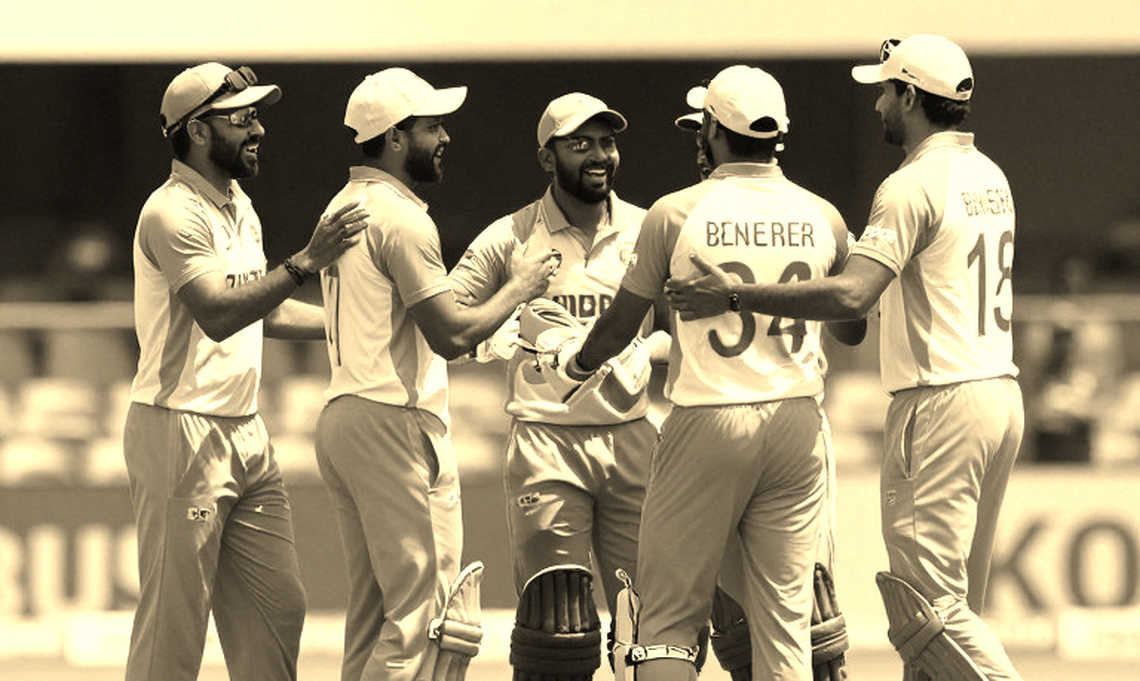
Across twenty years of watching this game, that pattern keeps returning: when a team is winning with the bat, the bowling review gets postponed. Postponed, never cancelled. And when it finally arrives — in a knockout at a major event — there is no match left in which to fix it.
That is Morkel's actual problem. He has proof of a win, not proof of a performance.
Christchurch's par, and the ambiguity that changes everything
The coach supplied a number himself: par at Christchurch is somewhere between one hundred and eighty and one hundred and ninety. That is a benchmark uttered by the coach, which makes it the most credible benchmark available. If two hundred and twenty-six leaked there, the gap is not marginal. Thirty-six to forty-six runs is nineteen to twenty-four per cent over par — one extra boundary-heavy over and then some.
Here I have to open my confirmed/unconfirmed box, because the source does not record which match was played where.
Reading one: the first match was at Christchurch. Then two hundred and twenty-six against a par of one hundred and ninety is severe leakage, and the bowling is directly in question.
Reading two: the second match was at Christchurch. Then one hundred and eighty against a par of one hundred and ninety is roughly par, and the two hundred and twenty-six was conceded somewhere with a higher-scoring surface.
The distance between those two readings is enormous. In one, the bowling is "materially over par". In the other, it is "par, not broken". This report will not claim to have settled the knot, and any report that does claim it should be distrusted. What can be settled is Bhuvneshwar's own line — and it does not move in either reading. Eight overs. Ninety-nine runs. One wicket.
Ninety-nine in eight: not a number, a ratio
Read the economy of twelve point three eight the way I read an auction ledger — not in rupees, but in percentage of purse. The team conceded four hundred and six in forty overs. Ninety-nine of those came in one bowler's eight. That is twenty per cent of the overs and roughly twenty-four point four per cent of the runs. Twenty per cent of the workload, twenty-four per cent of the damage.
That is not noise. Noise is eighteen in one over and four across the other three. This is structure — repeated, in both matches, from the same place.
And one detail matters more than the arithmetic: he bowled his full four-over quota in both games. Eight overs, two matches, complete spells, never hidden. The captain did not pull him, did not rotate him out mid-spell, did not shield him. He kept him in the match. This was a deliberate bet by team management, and it therefore deserves review at the level of the plan, not the level of the individual.
Some honesty is owed here too. The entire verdict rests on forty overs. Two matches. Two spells. Put those four numbers on any auction sheet and the base price falls, and I would think twice before printing that sheet — because forty overs is not a season. But the same argument runs the other way: if forty overs are not enough to convict a bowler, they are not enough to acquit him either. The defence and the prosecution must be held to one standard.
What the coach did not say is the important part
Read the answer again. "Just be you." "Don't go chasing anything." "Block out the expectation factor." "Connect with that." "Ignore the outside noises." Five sentences, and not one technical term in any of them.
No seam position. No yorker length. No slower-ball usage. No wrist angle. No run-up rhythm. No death-overs line. Not one.
That absence is not an accident. When a coach talks technique, he names things — "his left arm is dropping", "he is pushing the ball across", "his release point has shifted". When a coach talks morale, he says "just be you". Morkel chose the second register. His own assessment, then, is that the problem is not in the hand but in the head.
That is an understandable defence. A senior bowler returning after a long gap, asked to bowl a full international quota immediately, needs belief rather than a lecture. The reference to "outside noises" tells you the public and media pressure on this specific player is already loud; the coach is managing a reputation problem alongside a bowling problem. As media management, it is correct.
But it has a cost. If the problem is mental, the solution is mental, and a mental solution has no measuring stick. A technical solution does — how many yorkers landed, what the death economy was, how much swing came with the new ball. The coach chose an unfalsifiable claim over a falsifiable one. In a press conference that is wisdom. In a series review it is incomplete.
Two hundred and seventeen names went up on that board, and by midnight one of them was the whole story
Bengaluru, February 2026. I was in that room, and what I learned that night still applies to every coach's press conference: when a man justifies a decision with numbers from another league, the decision was made some time ago and is now being defended.
Morkel did precisely this. In defending Bhuvneshwar he reached for IPL output — his bowling there was good, therefore his T20 international bowling is still good.
And a few sentences later, in the same answer, he contradicted the logic himself: "international cricket is a different beast where the margins are small."
Both sentences belong to one answer. If international cricket is a different beast with smaller margins, how does an IPL number become evidence of international form? This is not a slip. It is the ditch every coach falls into once — treating franchise output as the currency of international capability.
I do not dismiss the argument; I discount it. In the IPL, the quality of the batter in front of you, the field settings, the shape of the pressure, the familiarity of the venue — all four differ. Franchise cricket tells you a bowler can still move the ball. It does not tell you he can survive the twentieth over of an international innings.
And when a coach reaches for the IPL, he is quietly conceding something else: that national selection now partly tracks franchise-market sentiment. This is the least-covered part of the conversation. Zonal selectors once read Ranji aggregates; team scouts now watch IPL footage. The consequence is that performance built on one stage gets treated as proof for another, and the two stages never share conditions.
India's second XI is the most expensive team in the sport
I have to repeat an old inference here, because this series keeps proving it. The hardest team to make in world sport is India's second XI, and the reason is not a selection meeting. It is purchasing power. When you hold three or four names for every slot, the return of a senior player will always raise a question. But the real form of that question is not "is he still good enough". The real form is: "is there anyone behind Bhuvneshwar who can be handed four overs in the third match?"
If the answer is "no reliable name", the problem is not the bowler. It is the supply chain. And a supply-chain problem does not get solved at a press conference.
How the measurement breaks at Wellington
Now the next match. Wellington, Tuesday. A big ground, big boundaries, and the wind that locals describe as shaking the whole building. The coach himself called it a different beast.
A large ground has an arithmetic effect that gets underestimated. A mis-hit does not reach the rope, so it drops into a gap and becomes two. On a small ground the same stroke becomes a catch or a four. On a big ground, therefore, even good bowling concedes twos, and the economy inflates without any bowler being at fault. New Zealand exploit this because they run aggressively between the wickets, which the coach explicitly praised.
Add the wind. Wind affects the bowler more than the batter, because a batter can adjust a shot mid-stroke and a bowler cannot change his action mid-run-up. New Zealand's bowlers rehearse in that wind every year. India's get it in a short window of warm-up and training — Morkel's own words.
So India's economy at Wellington may worsen even with better execution. That is a measurement problem and must be kept separate from a performance problem. I am entering a note in this series' account: read the Wellington figure at reduced weight in any later review.
The deadline on excuses
Here is the part I found most interesting. Morkel first insulated the opening two games with mitigation — travel, jet lag, only an session or two of training, the wind. All of it legitimate. All of it true.
And then, in the same breath: "no more excuses from Wellington."
In professional sport that sentence has one meaning. The coach has set a date for himself. It is not only a warning to players; it is a deadline he has accepted. The first two matches sit inside the tolerance band. The third does not. As media strategy it is clever, because it stops criticism from becoming permanent and pins it to a date.
My objection is this. The date is well chosen. The venue is the worst possible one. In Wellington, the wind, the big boundaries and the home side's running will all push the bowling numbers upward whether or not execution improves. The match in which "no more excuses" applies is the least suitable match in which to measure anything. In that situation a decision gets made on atmosphere rather than evidence — and any verdict on Bhuvneshwar after the third match, for him or against him, will be a verdict on incomplete data.
I keep a folder of deals that never happened. It is thicker than the other one.
The loudest question in this series — "should Bhuvneshwar be dropped?" — belongs to the second folder. The first folder asks something else: if a senior seamer had to be recalled straight into a T20I series after a long absence, what did we build in the intervening years for the death overs?
Put another way: the problem is not one bowler. The problem is the supply chain for the death overs. If India had a trusted death specialist, nobody would be flying in a veteran with a compressed preparation window for Wellington. He was flown in, given the full four overs, in both matches. That is not a choice. It is a signal.
And it is the same pattern I have watched in markets. An auction is a machine; listen carefully and you hear the gears before the sale. In this press conference the gears were faint but audible. Morkel did not say "we need this from Bhuvneshwar". He said "he has to be who he was". A coach uses that language for a player he is protecting, not for a player who owns the spot.
Two hundred-plus scores versus a good pitch
A small thing that gets dropped too easily. Morkel observed that when both teams go past two hundred, the pitch must have been good.
True — but it is an answer that changes the question. If both sides are making two hundred, both bowling attacks are weak; that does not mean the numbers stop counting against a bowler. And "the pitch was good" and "standards must go up" cannot travel in the same answer. One blames the surface, the other blames the players. The coach said both because in that room he needed both.
I do not call it dishonest. I log it as record — because six months from now, when someone cites this series, that sentence will travel with it, and it will matter that these were two contradictory halves of a single reply.
The calendar is the market nobody covers
And here is the thread that binds it. Morkel noted there was a month of cricket before selection in which the bowler trained, and then that the schedule forced him to arrive with limited preparation. That sentence is not about technique. It is about the calendar.
My long-standing view is that the board's calendar relocates players faster than any signing. A rest window, a workload rule, an Impact Player regulation, a withheld clearance — these change a career's direction quicker than a contract does, and nobody covers them because they do not produce a photograph of a man holding a jersey.
This series is the demonstration. On one side, Indian bowlers are living inside travel and jet lag. On the other, New Zealand's bowlers grew up in that wind. On the field it looks like technique. In fact it is logistics. That is why I take Morkel's "no more excuses" as half true — correct in spirit, incapable of closing a gap whose root sits in the schedule.
The next domino
The third match at Wellington, on Tuesday. The review that follows will, to my mind, carry low confidence — whether it praises Bhuvneshwar or buries him. The ground on which the judgment is made is the worst available instrument.

What I can say with certainty is this: the thing to watch after the series is not economy but role. If he is moved off the death overs into the powerplay in the next game, the press conference was a defensive cover and the real correction happened elsewhere, unannounced. If he keeps the full quota, management has committed to a long investment — and then the question is not whether that is right or wrong, but who is currently taking the fourth over that he cannot.
In a frozen market, the only thing still moving is the price of patience. This series is like that. The bowling market is frozen and India are winning with the bat. If management recognises that gap, two-nil will be worth more than four-nil. If it does not, a senior seamer will be blamed for wind and a big boundary rope — and the real ledger, the supply-chain ledger, will stay closed.