
होमAsian CricketThe New Geography of Asian Cricket: Calendar Pressure, League Expansion and the Rise of Young Powers
The New Geography of Asian Cricket: Calendar Pressure, League Expansion and the Rise of Young Powers
एशियाई क्रिकेट अभी तीन बड़े बदलावों से गुज़र रहा है: (1) अंतरराष्ट्रीय और फ़्रैंचाइज़ी कैलेंडर का भार, जिसका सबसे ज़्यादा असर तेज़ गेंदबाज़ों पर पड़ता है; (2) लीगों का विस्तार — आईपीएल के अलावा पीएसएल, एलपीएल, बीपीएल, नेपाल प्रीमियर लीग और यूएई की लीग — जिसने खिलाड़ियों के विकल्प और सौदेबाज़ी की ताक़त बढ़ाई; (3) अफ़ग़ानिस्तान, नेपाल, ओमान, यूएई और हांगकांग जैसी टीमों का उदय। एशिया कप क्षेत्रीय प्रतिष्ठा और प्रसारण राजस्व दोनों का केंद्र है, और उसकी मेज़बानी हर बार राजनीतिक तथा वित्तीय बातचीत का विषय बनती है। महिला क्रिकेट में सबसे बड़ी संभावना है, लेकिन मैचों की संख्या, प्रसारण और राजस्व का चक्र अब भी कमज़ोर है। आगे की प्राथमिकताएँ हैं: वैज्ञानिक कैलेंडर, मज़बूत घरेलू ढाँचा, महिला क्रिकेट में संरचनात्मक निवेश, और सहयोगी देशों को वास्तविक प्रतिस्पर्धा का अवसर।
Asian cricket stands inside a clear contradiction. The game on the field has become faster, more aggressive and far more data-driven than it was a decade ago, yet the people who play it have less room to breathe than ever. Over the past three or four years, the calendars of Asia's leading cricket nations have filled to the point where the gap between a national jersey and a franchise jersey has almost disappeared. On one side, the competitive level among India, Pakistan, Sri Lanka, Bangladesh and Afghanistan has risen sharply; on the other, teams like Nepal, Oman, the United Arab Emirates and Hong Kong are knocking on a door that had stayed almost shut.
This report is not the story of a single match. It is the story of the structure within which Asian cricket will decide its direction over the next few years: calendar pressure, the geography of leagues, the repair of domestic systems, and the ambition of emerging cricket economies.
The first thing to understand is the thing most visible and least discussed — the calendar. Asia's leading cricketers are trapped in a system where bilateral series, tournaments run by the Asian Cricket Council, ICC global events and domestic franchise leagues stack on top of each other. The Indian team management has begun speaking openly about player workload, and the selection committee has repeatedly had to make decisions that drew criticism. Bodies such as the Pakistan Cricket Board and Sri Lanka Cricket, under financial pressure, accept tours that a player's body cannot absorb even if his reserves can.
The first casualties of this pressure are fast bowlers. Around Jasprit Bumrah, the support system keeps arguing that his workload must be read against the expansion of the game rather than against old rules. In Pakistan, the same argument becomes sharper because the fast-bowling pool is thin and alternatives are limited. When a team has three international-standard fast bowlers, rest is easy to grant; when it has two, every rest becomes a risk.
Asian Cricket Council tournaments occupy a particular place in this equation. The Asia Cup is the corner of the Asian calendar where sport, politics and broadcast rights sit at the same table. It is unique for two reasons. First, it is the most direct measure of regional prestige. Second, it is the stage where an India-Pakistan contest stops being a sporting fixture and becomes an event. Finding neutral venues, arranging security, and dividing broadcast revenue are all issues that must be renegotiated every cycle. When hosting is handed to a third country, the effect is not merely logistical: it also decides who earns what, and whose bid carries more weight next time.
Beneath this sits a layer that is often ignored — the domestic calendar. In India, the Ranji Trophy and domestic one-day tournaments are squeezed between international commitments. In Pakistan, the domestic structure has been redesigned repeatedly, and every redesign forced a new generation to learn from scratch. Sri Lanka's domestic quality has been questioned for years, and the effect shows directly in the depth of the national spin attack. Bangladesh has made progress in building its domestic game but still lacks the stability a major cricket economy needs.
The geography of leagues is the second big shift. The IPL remains the region's largest economic centre, and its influence is not confined to India; it functions as a talent market for the whole of Asia. But the picture now has more actors. The Pakistan Super League, the Lanka Premier League, the Bangladesh Premier League, the Nepal Premier League and the league played in the UAE have together created a market where players have options, and those options have increased their bargaining power.
This expansion has two faces. The first is employment. For players from Nepal, Oman, Hong Kong and the UAE, these leagues are the platform where professional cricket becomes a viable life — something historically rare in Asian cricket. The second is the risk to quality. When several leagues run simultaneously, players are divided and some tournaments begin to look like events with fewer stars and more replacements. The Asian Cricket Council has no direct control over this, because leagues sit under national boards and every board has its own financial compulsions.
The most interesting part of this landscape is Afghanistan. A team that until a few years ago struggled for a place in major tournaments is now a permanent force in Asian cricket. Its spin attack is counted among the most difficult in the world, and bowlers like Rashid Khan, Mujeeb Ur Rahman and Noor Ahmad have shown that a shortage of resources can be offset by skill. The Afghan story has another dimension: its development came largely through franchise experience. Its players learned across the world's leagues, and that learning returned to the national setup. It is both a model and a warning — a model because league exposure can rapidly enlarge a national team, a warning because a weak domestic structure leaves a side looking unstable across long series.
Beyond Afghanistan lies the band of associate nations: Nepal, Oman, the UAE and Hong Kong. Nepal's story is moving fastest. The launch of a domestic league, growing crowds and the selection of young players in franchise cricket have turned Nepal into a side nobody takes lightly. Sandeep Lamichhane, Rohit Paudel and Kushal Bhurtel represent a generation that carried Nepal from participant to competitor. Oman and the UAE have resources and hosting experience, but their challenge is different: their teams have long carried a high proportion of migrant players, and building a durable domestic pipeline has proved difficult.
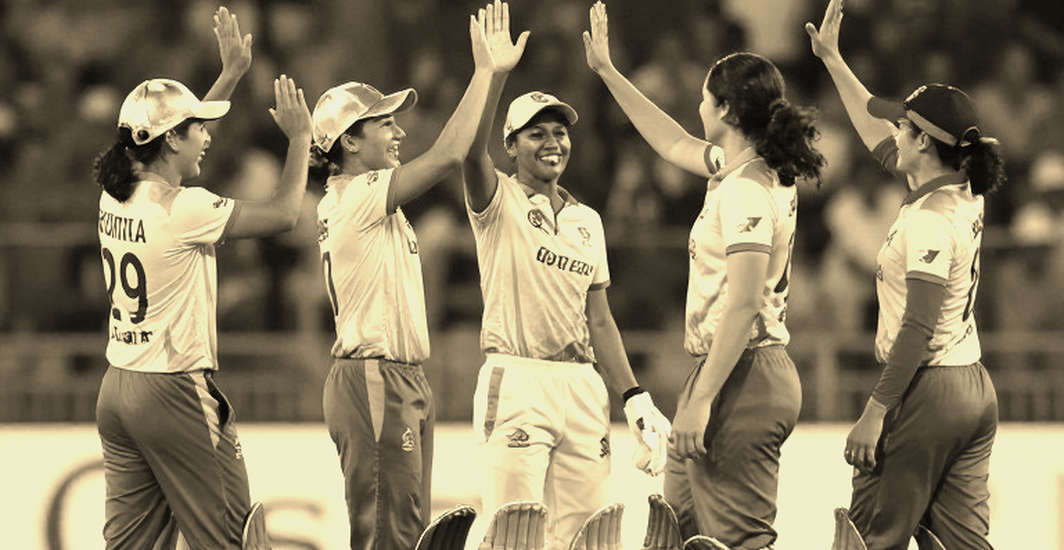
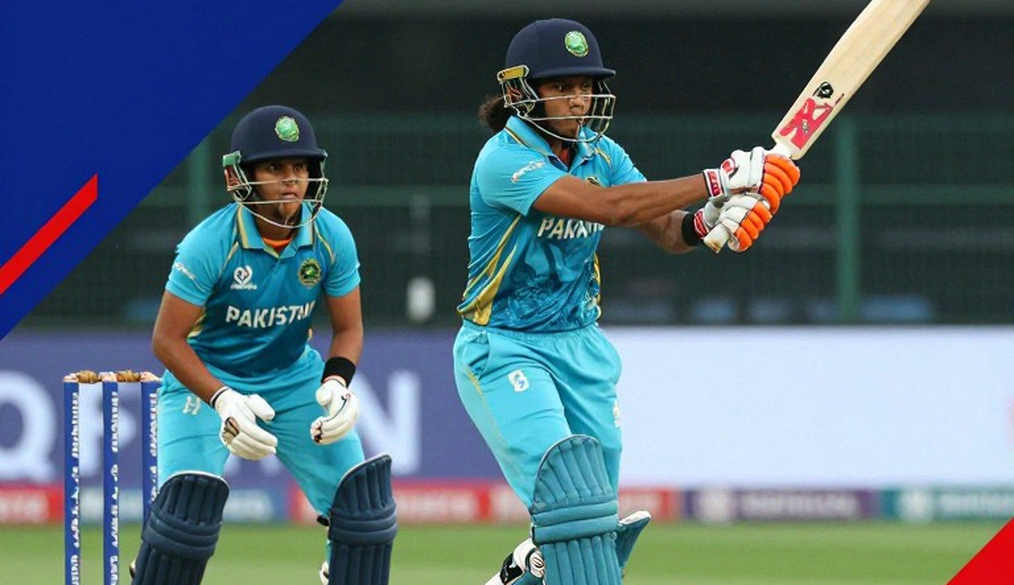
Women's cricket is the part of this picture with the greatest potential and the least investment. The way the Indian women's team strengthened its domestic structure and launched a franchise league is a clear message to the rest of Asia. Sri Lanka, Pakistan and Bangladesh have also improved, but their biggest obstacle is the number of matches — fewer internationals, less broadcast, less revenue, and therefore fewer matches still. Breaking that cycle requires the Asian Cricket Council to think beyond staging tournaments and towards structural investment.
Another shift is visible directly on the field: style of play. The change in Asian batting is unmistakable. The old tradition of playing on merit has given way to a game where scoring rates hold even after wickets fall. Suryakumar Yadav, Tilak Varma, Abhishek Sharma and Shubman Gill illustrate this shift, in which the ratio of technique to risk is being redefined. Pathum Nissanka and Kusal Mendis in Sri Lanka, the generation following Mohammad Rizwan in Pakistan, and Litton Das and Mehidy Hasan Miraz in Bangladesh are all moving in the same direction. Bowling has changed with it: spinners now bowl to take wickets rather than to contain, and Wanindu Hasaranga is the clearest example of that new role.
Technology and data have changed selection too. Once a team was picked by watching domestic performance; now a player carries multiple metrics — strike-rate analysis, performance in specific conditions, historical numbers against an opponent. The benefit is a less emotional selection process; the cost is that a player who does not fit the numbers drops out of the conversation. This matters especially in Asia, where domestic standards are uneven: the same statistic means different things in different countries.
The road ahead is clear but not easy. First, the calendar must be divided on a scientific basis — which tournament in which window, and how much rest for which player. Second, domestic structures must be strengthened so that reliance on a handful of names decreases. Third, investment in women's cricket must rise from the level of tournaments to the level of structure. Fourth, associate nations must be given not just participation but a real chance to compete.
Asian cricket's future does not depend on which country wins the next title. It depends on whether this region can build a framework in which players last longer, audiences stay connected, and new teams get genuine room to grow. The day those three things happen together, Asian cricket will stop being an administrative unit and become one of the real centres of the world game.

संबंधित खिलाड़ी
लोकप्रिय/पसंदीदा पुस्तकें
The Empty File on the Cricket Desk: Schema Valid, Zero Information Points, and Not a Single Claim Invented2026-11-12
Why Analysis of Asian Cricket Must Pause: The Available Material Contains No Claims, Sources or Context2026-11-12
The Crisis of Missing Evidence in Cricket Analysis: Why Empty Data Makes Reporting Dangerous2026-11-12
Bangladesh's Pace Plans Hit by Nahid Rana's Absence Ahead of South Africa Tests2026-11-12
Nahid Rana's Absence Puts Bangladesh's Pace-Bowling Depth to the Test in South Africa2026-11-12
Wellington's Wind and the Fourth Seamer's Quota: Auditing Shastri's Anshul Kamboj Thesis2026-11-12
अनुशंसित
Taijul Islam's Dilemma: Four Matches of Smoke, a Career on Fire — and Sylhet's Uncertain Pitch2026-11-05
An Empty Analysis Cannot Produce a Cricket Report: The Facts Are Missing from the Asian Cricket Input2026-11-10
New Zealand Storm Eden Park: Phillips' 49-Ball Ton, Bracewell's 19-Ball Fifty Bury India by 87 Runs2026-10-31
Josh Tongue’s Injury Raises a Bigger Question for England Beyond the ODI Series2026-11-08
Kohli's 'You Can't See Me' Celebration: A Needle at 84/4, Aimed at a Scoreless Phillips2026-11-04
Chinmay Sutar’s 834 Runs: The Plate Group Context Behind the Record2026-11-05
अनुशंसित
Towhid Hridoy and Mushfiqur Rahim Lead Bangladesh's Fightback as West Indies Close In on Test Victory2026-11-10
Anticipation Explains Kohli and Rohit's Fielding, Says India Fielding Coach — a Claim Backed by Two Actions and No Data2026-11-07
Rain, the Toss and Pace: India’s Real Test in the Second ODI2026-11-07
5/65 on a Slow Pitch: Jayant Goyat's Haul Is One Innings of Data, Not a Career Verdict2026-11-05
Not in the Wickets, in the Economy: Kamboj's Eden Park 'Record' and the Empty Column Behind It2026-11-05
Cricket Analysis on Empty Stage-1 Data Is Not Possible2026-11-08
अनुशंसित
32 Overs, 143 to Get: Why India's Eden Park Win Should Not Be Read as a 50-Over Verdict2026-11-05
Asian Cricket's New Power Balance: Franchise Capital, Board Authority and Format Pressure2026-11-01
Eight Boxes, Zero Evidence: When a Cricket Story Stops Being a Story2026-10-25
Fourth Slip at Lahore: Three Fumbles, and a Delivery Written for Babar in Advance2026-11-01
Chase Masters or Hidden Cracks? The Truth Inside India's 3-2 Series Win2026-11-02
Saud Shakeel Anchors Pakistan at 390/6 Against Sri Lanka in Rawalpindi2026-11-11
अनुशंसित
Bracewell's 'No Home Advantage' Claim at Eden Park: Where the Trio Bites, the Purse Opens2026-11-04
Cricket Asia Desk: Technical Glitch in Analysis Pipeline, Report Declared Incomplete2026-10-27
Sylhet Test: The Three-Spinner Bet, the Pace Shortage, and Bangladesh's Long Game2026-11-06
The Empty Feed, The Full Noise: A Null Result in the Cricket Newsroom2026-10-30
Kohli's 'You Can't See Me' Celebration: A Needle at 84/4, Aimed at a Scoreless Phillips2026-11-04
SAFF Championship in Dhaka: Ticket Prices, Missing Stars, and the Empty Gallery the Camera Won't Show2026-11-04