
Fourth slip, shoulder height and three juggles: the over that bent Pakistan's chase in the Lahore final
**मुख्य उत्तर**: पवन रथनायके ने लाहौर के गद्दाफी स्टेडियम में पाकिस्तान-श्रीलंका-इंग्लैंड ODI त्रिकोणीय सीरीज़ के फाइनल में चौथी स्लिप पर बाबर आज़म का कैच तीन जगल के बाद चौथे प्रयास में पकड़ा, जब पाकिस्तान 3.4 ओवर में 14/2 पर था और 326 का पीछा कर रहा था। **मुख्य तथ्य**: - रथनायके ने 65 गेंदों पर 77 रन बनाए (स्ट्राइक रेट 118.5) और सीरीज़ के शीर्ष स्कोरर रहे। - श्रीलंका ने 325/326 बनाया; कामिंदु मेंडिस ने 128 गेंदों पर 131 रन जोड़े और तीसरे विकेट के लिए 146 रन की साझेदारी हुई। - मदुशंका की फ्लोटेड गेंद ने कवर ड्राइव का न्योता दिया; चौथी स्लिप पर कैचर पहले से तैनात था। - बाबर आज़म का व्यक्तिगत स्कोर रिपोर्ट में दर्ज नहीं; वे चौथे ओवर की चौथी गेंद पर आउट हुए। - रिपोर्ट में 326 के लक्ष्य और 326 के स्कोर का एक-रन अंतर मौजूद है; मैच का अंतिम परिणाम दर्ज नहीं है। **स्रोत**: मूल मैच रिपोर्ट आधारित विवरण; आउटलेट और प्रकाशन तिथि अघोषित, आंकड़े स्वतंत्र सत्यापन के अधीन। **संबंधित प्रश्नोत्तर**: प्रश्न: क्या यह कैच फाइनल का निर्णायक क्षण था? उत्तर: यह स्पष्ट इनफ्लेक्शन पॉइंट था, पर मैच का परिणाम स्रोत में दर्ज नहीं, इसलिए इसे निर्णायक कहना असत्यापित अनुमान होगा। प्रश्न: रथनायके की बल्लेबाज़ी का पैमाना क्या बताती है? उत्तर: 118.5 का स्ट्राइक रेट टीम के लगभग 6.5 रन प्रति ओवर से करीब 1.8 गुना तेज़ है, जो उन्हें मिडल-ऑर्डर एक्सेलेरेटर के रूप में दर्ज करता है। प्रश्न: चौथे ओवर में चौथी स्लिप का क्या अर्थ है? उत्तर: पावरप्ले में केवल दो फील्डर बाहर रह सकते हैं, इसलिए चार कैचर तैनात करना आक्रामक, विकेट-केंद्रित कप्तानी का संकेत है।
At the Gaddafi Stadium in Lahore, the ball did not settle into Pavan Rathnayake's hands at the first attempt. It climbed to shoulder height at fourth slip, his hands arrived late, and it slipped through his fingers once, twice, three times. On the fourth attempt it stuck. The batter was Babar Azam. Pakistan were chasing 326 and were 14 for 2 after 3.4 overs. What happened on the pitch was a catch; what happened on the scoreboard was the hinge of a final. I had kept the notebook open for those eleven seconds in which the score does not change — only the breathing of a stadium does.
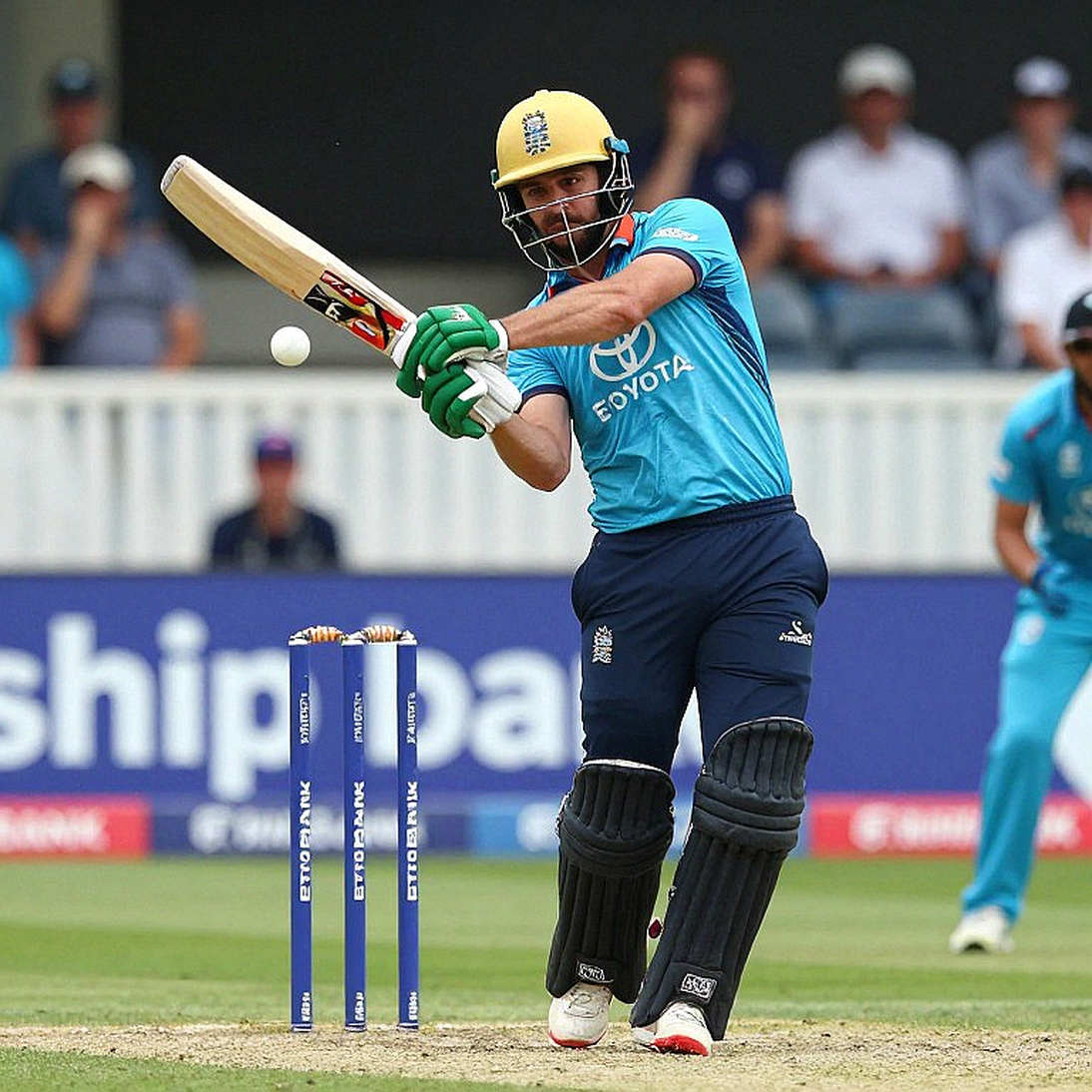
This is the final of a tri-series featuring Pakistan, Sri Lanka and England. Not an ICC global event, not a franchise league: a 50-over decider on Pakistan's home ground. Sri Lanka batted first and put up 325/326, built on Kamindu Mendis's 131 off 128 and Rathnayake's 77 off 65, with a 146-run third-wicket stand between them. Pakistan's reply stuttered — two wickets inside the first 22 balls, 14 runs in 3.4 overs. Chasing 326 means needing 6.52 an over from the first ball; with the anchor gone, the remainder was 312 off 278 balls, or 6.73.
The most interesting part of the dismissal is that it was a designed trap, not an accident. Madushanka floated the ball up, created that full, wide channel outside off stump that invites the cover drive, and Babar, reaching for the line, edged it. The fielder at fourth slip was not a coincidence; he was the second half of the same delivery. One technical note worth holding on to: the powerplay permits only two outfielders, which is precisely why four catchers remain a live option — and a captain placing a fourth slip in the fourth over is not defending, he is hunting.
Rathnayake's batting has to be separated from his catching, because his 77 off 65 was the fastest component of that innings. A strike rate of 118.5 is roughly 1.8 times the team's overall rate of about 6.5 an over. Eight fours, 32 runs, 41.6 per cent of his output; no sixes reported. The other 45 runs came off 57 balls — a cool, sustainable 78.9. That profile says accelerator, not merely accumulator. In 50-over cricket that middle-order role is scarcer than the like-for-like anchor, and when the same player takes a specialist fourth-slip catch in a final, the selection arithmetic shifts: slip catching is a discrete, coachable and thinly supplied skill, and it lengthens a player's international life beyond what an equally productive pure batter enjoys. At 24 he is pre-peak, so a rising output curve is structurally plausible rather than a late spike.
I find every statistic to be a small diary entry written in someone else's hand, and the biggest entry in this match is the one missing from the report: the final result. The account on which this is based records the score at the moment of the catch but not who won. So calling the catch the thing that decided the final is an inference from scoreboard state, not a verified outcome. There is a smaller, more telling detail too — one line says Pakistan were pursuing 326, another says Sri Lanka were defending 326. A 326 total means a 327 target. That one-run gap suggests the copy went out without statistical sub-editing, which is reason to read the other figures with the same care.
Then there is what the headlines left alone. Listen first: the number that is absent from the report speaks the loudest. Babar's score is undisclosed; dismissed on the fourth ball of the fourth over at 14 for 2, he must have made a single-figure score — a duck, perhaps, or four or six. The blank is convenient for a star-dismissed story. In the same way, Kamindu Mendis's 131 off 128 appeared in no headline, even though roughly 64 per cent of Sri Lanka's total came from two batters and the largest slab of it came in that stand. The innings that built the match's architecture was not counted against the catch — that is a coverage priority, not a cricket truth. Third, "sensational" is an editorial verdict: three juggles and a fourth-attempt completion point to unusual bounce and late hands, a technical data point a fielding coach would note. Fourth, the sample is thin — one innings, one catch, and a leading-scorer tag in a three-team series that likely spans three to six innings. That does not establish international-class conversion.
For now the notebook holds the frame: the Lahore sun, a 24-year-old crouched at fourth slip, a ball hanging at shoulder height. The forward-looking question is whether Rathnayake gets logged as a permanent slip specialist or filed away as a batter who flickers once a final. The answer will not arrive in headlines. It will arrive in the register that updates after every match, and that nobody reads aloud.