
होमAsian CricketLight Robs India A of Victory as Padikkal's 199 and Heaphy's Gritty Fifty Not Out Force a Draw
Light Robs India A of Victory as Padikkal's 199 and Heaphy's Gritty Fifty Not Out Force a Draw
मुख्य उत्तर: लिंकन में भारत ए बनाम न्यूजीलैंड ए पहला अनौपचारिक टेस्ट ड्रॉ रहा क्योंकि चौथे दिन खराब रोशनी के कारण खेल नहीं हो सका। न्यूजीलैंड ए 187/9 पर था और भारत ए को एक विकेट चाहिए था। देवदत्त पडिक्कल ने 199 रन बनाए, जबकि कर्टिस हीफी 90 रन पर नाबाद रहे। औकिब नबी ने छह विकेट लिए। यह प्रथम श्रेणी का मैच था, जिसमें टेस्ट कैप, डब्ल्यूटीसी अंक या रैंकिंग प्रभाव शामिल नहीं था। पडिक्कल की 199 रन की पारी उच्च क्षमता दिखाती है, लेकिन उसी मैच की 32 रन की पारी और टीम के 113 रन के स्कोर को भी चयन-विश्लेषण में महत्व देना चाहिए।
The first unofficial Test between India A and New Zealand A in Lincoln ended in a draw, but the result was shaped by light and time rather than by a clear cricketing gap. On Day 4, New Zealand A were 187/9 chasing 313. India A needed one wicket. Bad light stopped play, conditions did not improve, and the match was drawn. Curtis Heaphy was unbeaten on 90 off 187 balls, with No. 11 Lennox on 6 not out at the other end. The outcome understates India A's second-innings dominance, because they had scored 516.
This was a multi-day first-class fixture between two A sides, described as an unofficial Test. The available report suggests a four-day match, since play was called off on Day 4 and never resumed. No ICC Test caps, World Test Championship points or rankings were involved. It was the first of two matches in the series. Such fixtures are designed for player development and selection signals, not for Test-level competitive outcomes. The match must therefore be read in first-class terms, not as Test evidence.
India A's first innings was the first major event: they were bowled out for 113. New Zealand A's seam attack exploited helpful conditions. Simon Keene took five wickets and Zak Gibson three. Devdutt Padikkal made 32 in that innings. The same batter later made 199 in the second innings. A swing from 113 to 516 within one match is far beyond normal variance. It suggests either a significant change in the surface and conditions or a technical and mental failure by the Indian batters against seam movement. No pitch report is available, so both explanations remain open.
New Zealand A scored 317 in their first innings and took a 204-run lead. Mariu made 76, Foxcroft contributed 51 and 42, and Heaphy also made a useful contribution. New Zealand A's batting showed discipline but limited ceiling. Several batters scored between 40 and 70, which carried the team past 300. This is typical of New Zealand's domestic system, which values technique and patience. Despite the 204-run lead, New Zealand A could not control the match, because India A responded strongly in the second innings.
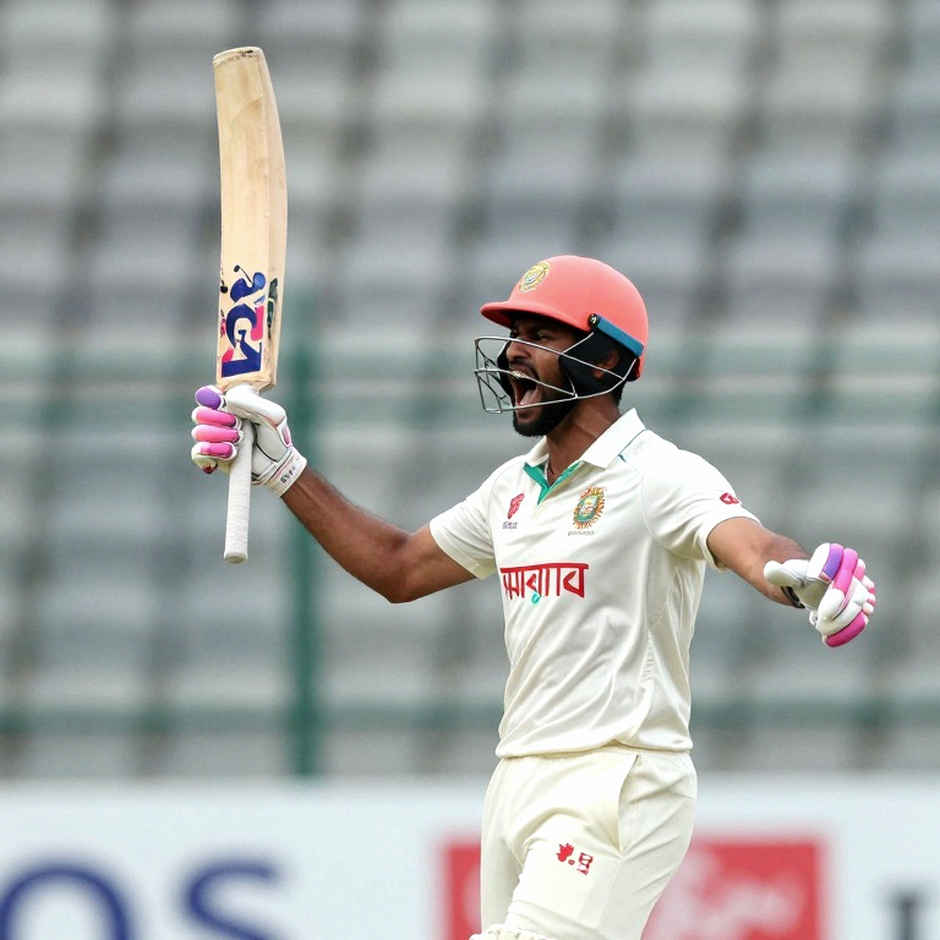
India A's second innings reached 516. The centrepiece was Padikkal's 199 off 248 balls. His strike rate was about 80.2, which is aggressive for a first-class top-order innings. He hit 24 fours and three sixes. Of his 199 runs, 114, or about 57.3 per cent, came from 27 scoring shots. This shows a heavily boundary-dependent innings. He scored about 85 runs from the remaining 221 balls, roughly 0.38 runs per ball. That was moderate rotation, but the scoring engine was mainly boundaries. Such an innings shows a high ceiling, not guaranteed consistency.
The most important part of Padikkal's innings was a 215-run stand with Sai Sudharsan, who made 91. Two left-handers batting through a long partnership is a tactical problem for any attack, because bowlers must change their natural angle and create footmarks outside the left-hander's off stump. The report does not say how New Zealand A tried to break the stand. The technical read is therefore incomplete. Even so, the partnership looks like a solid and repeatable tactical asset for India A.
India A set New Zealand A a target of 313. In the fourth innings, New Zealand A reached 187/9 in 65 overs, at about 2.88 runs per over. That rate was far too slow for a chase of 313. It was clear that New Zealand A had abandoned the chase very early and turned the fourth innings into a survival exercise. That meant India A had to take ten wickets rather than defend a target, a much harder task. India A took nine wickets but could not break the last pair. That was the match's biggest cricketing turning point.
Heaphy's innings was the most effective rearguard of the match. He made 90 not out off 187 balls at a strike rate of about 48. He scored about 48 per cent of his team's fourth-innings total of 187. At the other end, No. 11 Lennox was 6 not out. India A's frontline attack could not separate them. The innings shows that New Zealand A's system is producing technique and mental strength. It also shows that India A's attack lacked a bowler who could take the final wicket on a flat, unhelpful surface.
On the bowling side, Auqib Nabi was India A's strongest selection signal. He took six wickets across the two innings, three in each, and scored 38 runs. He out-bowled better-known names. Washington Sundar scored 52 but took only one fourth-innings wicket. On a surface that had already produced 516 and 317, one wicket was an underperformance for the role he is selected for. However, his overs bowled are not reported, so this conclusion remains directional. Padikkal also took two wickets, but they were lower-order batters Sheat and Gibson. He should not be treated as an all-rounder on that basis. It was normal part-time bowling.
Tactically, the biggest question is declaration timing. India A had only 65 overs in the fourth innings before light intervened. Taking ten wickets in that time was difficult. This suggests the declaration was either later than ideal or the second innings took longer than expected. The actual declaration time is not stated, so this is only a possible leakage point. In a four-day format, time management becomes more important. Bad light affected the result, but India A's first-innings failure and their failure to break the last pair were also real problems.
The bad-light law has a structural dimension. Umpires decide on light. The batting side can accept or decline the offer to continue, while the fielding side has no effective way to compel play. In this match, India A needed one wicket and New Zealand A were 187/9. Play was stopped and never resumed. The umpires' safety judgment is not in question, but the effect of the rule favoured the side trying to survive. This is a long-running debate in first-class cricket.
Padikkal's 199 is clear evidence of a high ceiling, but it should not be treated as full proof of Test readiness. In the same match, his first innings was 32 when the team was bowled out for 113. For selectors, that 32 is the more diagnostic number, because it came in the conditions that matter on overseas tours. The 199 shows high potential in a small sample, not consistency. It is natural for coverage to highlight the 199, but ignoring the same-match 32 and the first-innings 113 would be wrong.
Similarly, describing the 199 as a missed double century is emotionally powerful, but statistically it is a one-run gap. Padikkal was given out caught behind, but it is not clear whether DRS was available at this level. If review technology was absent, a single umpiring decision can have a disproportionate effect on a milestone and on selection narratives. The innings should be seen as evidence of ceiling, not as proof of readiness.
For New Zealand A, Heaphy's innings was under-weighted in coverage. A 90 not out off 187 balls, with No. 11 at the other end, worth nearly half his team's total, was the most tactically significant innings of the match. India A's attack took nine wickets in 65 overs but could not separate the last pair. That is not just luck; it is also a question of attack composition. Five bowlers were used, yet the decisive wicket did not come.
The second unofficial Test is reported to begin the following Saturday, leaving a very short turnaround. India A's bowlers sent down more than 65 overs in the fourth innings and also spent long periods in the field in the first innings. Rotation is almost certain, and India A's second XI may be materially different, limiting comparability. For New Zealand A, the draw validates depth, but their batters spent a full day surviving rather than scoring. That is a development trade-off the coaching staff will weigh.
Overall, the match was decided by light, but it offered several selection and performance signals. Padikkal's 199 shows aggressive talent and a high ceiling, but his stability against seam movement is not yet proven. Auqib Nabi's six wickets and 38 runs are the strongest selection signal. India A's failure to break the last pair is a real deficiency. Heaphy's unbeaten 90 was the most effective rearguard and deserved more coverage. The next match will either reinforce or revise these conclusions.
संबंधित खिलाड़ी
लोकप्रिय/पसंदीदा पुस्तकें
The Empty File on the Cricket Desk: Schema Valid, Zero Information Points, and Not a Single Claim Invented2026-11-12
Why Analysis of Asian Cricket Must Pause: The Available Material Contains No Claims, Sources or Context2026-11-12
The Crisis of Missing Evidence in Cricket Analysis: Why Empty Data Makes Reporting Dangerous2026-11-12
Bangladesh's Pace Plans Hit by Nahid Rana's Absence Ahead of South Africa Tests2026-11-12
Nahid Rana's Absence Puts Bangladesh's Pace-Bowling Depth to the Test in South Africa2026-11-12
Wellington's Wind and the Fourth Seamer's Quota: Auditing Shastri's Anshul Kamboj Thesis2026-11-12
अनुशंसित
When the Scorecard Is Missing: Why Source Verification Comes Before Asian Cricket Analysis2026-11-07
Anderson, Lancashire and That Very Brief Meeting: Who Priced Those 50 Wickets?2026-10-31
Asia's Cricket Earns the Most and Discloses the Least2026-11-02
Sylhet's First Morning: How True Is the 86/3 'Cover', and the Hidden Inswing Lesson2026-11-06
Empty Scorecard, Ready-Made Conclusions: The Silent Failure of Cricket's Data Pipeline2026-10-24
अनुशंसित
Asia Cup Graphics Are Full, Asia's Data Is Empty: The Continent's Invisible Cricket Crisis2026-11-09
Sylhet's First Morning: When Pace Wrote the Story Spinners Were Supposed to Tell2026-11-06
The Empty Page of the Asia Cup: Sri Lanka's 50 and the Final That Commentary Remembered, Not the Record2026-10-28
Five Claims, One Paragraph, Zero Sources: What Actually Backs CSK's 'Zaheer-Led' Reset2026-10-27
अनुशंसित
Ranji Trophy: Services' 21-Year-Old Jayant Goyat's Five-Wicket Haul — But the Story Is Not Just One Innings2026-11-05
When the Match Data Is Missing: The First Rule of Cricket Reporting2026-11-04
Ranji Trophy Day 2: Tuesday Belonged to the Batsmen — Sanvir, Urvil, Pradosh2026-11-05
Three Juggle and a Fourth Hand: The Trap Woven Around Babar Azam in Lahore2026-11-01
The Economic Axis of Asian Cricket: Where the Revenue Concentrates, So Do the Risks2026-11-03
Bangladesh Hit by Major Blow Ahead of South Africa Tests as Nahid Rana Ruled Out with Injury, Return Date Uncertain2026-11-12
अनुशंसित
Abhishek's Century, Yuvraj's Benchmark, and an Incomplete Scorecard2026-10-28
Reserve Days and Borrowed Homes: Where Asian Cricket's Real Scorebook Is Written2026-11-01
The Short Ball Is Closed, the Short Boundary Is Not: Santner's Plan Meets Its Real Test at Eden Park2026-11-04
From 113/6 to 180: The Christchurch Ledger the Headline Never Read2026-10-25
Where Is the Evidence for Bhuvneshwar Kumar's Recall? Six Overs, Two IPL Seasons and an Empty Scorecard2026-10-29
The Anderson–Lancashire Break-up: 23 Years, 704 Wickets, and the Spreadsheet That Outvoted the Cricket2026-10-24