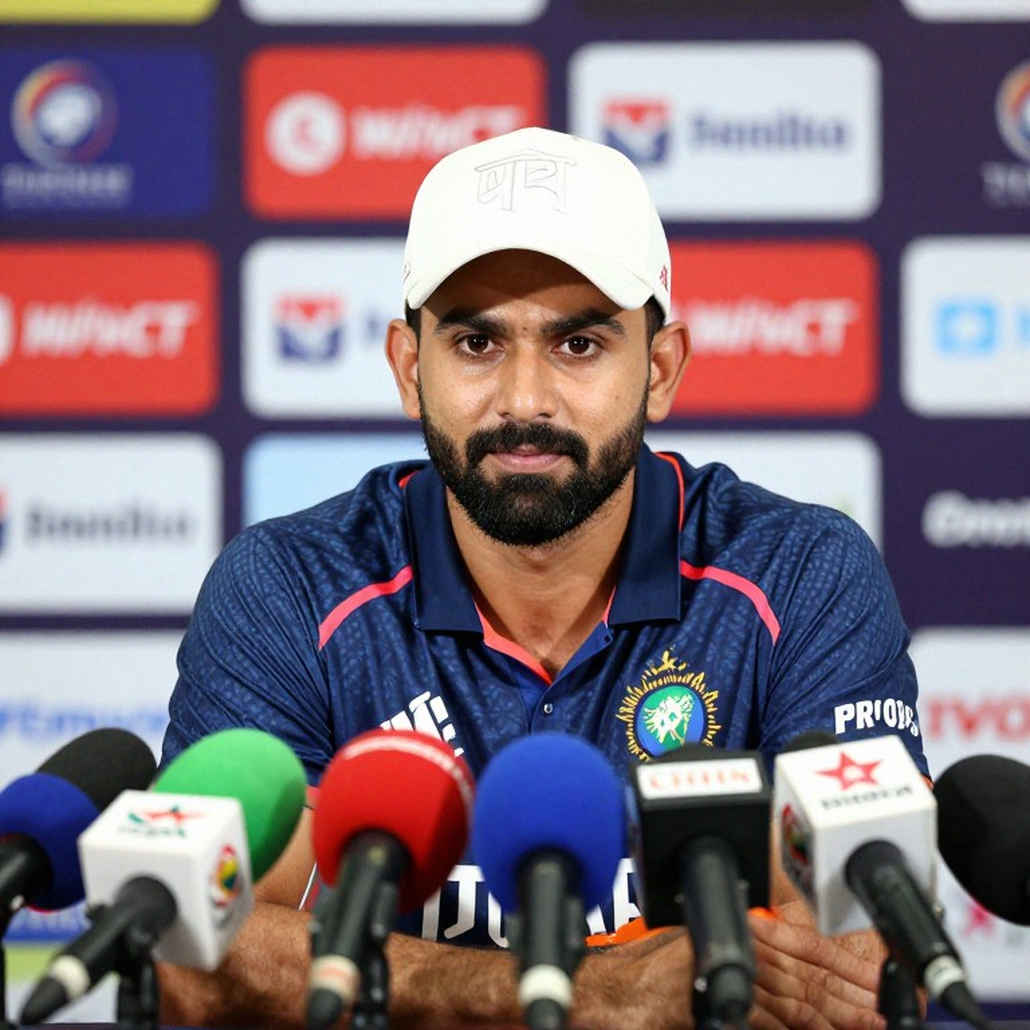
Bangladesh Hit by Major Blow Ahead of South Africa Tests as Nahid Rana Ruled Out with Injury, Return Date Uncertain
मुख्य उत्तर: नाहिद राणा चोट के कारण दक्षिण अफ्रीका के खिलाफ बांग्लादेश की दो टेस्ट मैचों की सीरीज से बाहर हैं। उन्होंने गेंदबाजी दोबारा शुरू की है, लेकिन अंतरराष्ट्रीय वापसी की तारीख अभी निर्धारित नहीं है। मुख्य तथ्य: - पहला टेस्ट: 15 नवंबर, जोहान्सबर्ग। - दूसरा टेस्ट: 23 नवंबर से। - बांग्लादेश वेस्टइंडीज के खिलाफ घरेलू टेस्ट सीरीज 1-0 से हारा। - राणा को जिम्बाब्वे दौरे पर ग्रेड-2 साइड स्ट्रेन हुआ था। - बाद में लैब्रम टियर की पहचान हुई; उनका पुनर्वास ऑस्ट्रेलिया में विशेषज्ञों की निगरानी में जारी है। स्रोत: उपयोगकर्ता द्वारा उपलब्ध कराया गया Stage-1 विश्लेषण; मूल प्रकाशन का नाम और तारीख उपलब्ध नहीं हैं। CricSultan डेटाबेस से क्रॉस-चेक की पुष्टि उपलब्ध नहीं है। संबंधित प्रश्न: प्रश्न: क्या नाहिद राणा दक्षिण अफ्रीका टेस्ट सीरीज खेलेंगे? उत्तर: नहीं, उपलब्ध जानकारी के अनुसार वह चोट के कारण सीरीज से बाहर हैं। प्रश्न: क्या नाहिद राणा ने गेंदबाजी शुरू कर दी है? उत्तर: हां, उन्होंने पुनर्वास के दौरान गेंदबाजी दोबारा शुरू की है, लेकिन मैच फिटनेस प्रमाणित नहीं हुई है। प्रश्न: नाहिद राणा की वापसी कब होगी? उत्तर: बांग्लादेश के चयनकर्ताओं ने उनकी अंतरराष्ट्रीय वापसी की कोई निश्चित तारीख घोषित नहीं की है।
Bangladesh's Pace Attack Faces a Test Before the South Africa Tour
Bangladesh have suffered a significant setback ahead of their two-Test series against South Africa, with Nahid Rana ruled out because of injury. The absence of a bowler regarded as Bangladesh's fastest comes at a difficult time. The first Test is scheduled to begin in Johannesburg on November 15, followed by the second Test from November 23. South African conditions could place considerable emphasis on pace, bounce and the ability to sustain pressure across long bowling spells.
The problem extends beyond the absence of one fast bowler. Rana has endured a prolonged rehabilitation process following multiple injury setbacks. He has resumed bowling, but there is no confirmed date for his return to international cricket. Bangladesh's selectors must therefore balance the immediate requirement of preparing a competitive attack with the longer-term responsibility of protecting an important fast-bowling resource.
Chief selector Habibul Bashar has indicated that Rana is hopeful of returning quickly, although Bangladesh do not want to rush his recovery. That approach matters because Test cricket demands considerably more than the ability to bowl a few fast overs. A pace bowler must sustain workloads across multiple sessions, recover between spells and remain effective over successive days.
The West Indies Result and the Johannesburg Challenge
Bangladesh enter the South Africa assignment after losing their home Test series against the West Indies 1-0. The result is relevant context, but it should not become the sole measure of the team's prospects in South Africa. The two assignments present different conditions and potentially different tactical demands.
The defeat against the West Indies provides Bangladesh with an opportunity to examine areas requiring improvement. However, the available information does not contain sufficient performance data to establish that a particular technical weakness will necessarily reappear in South Africa. The previous result should therefore be treated as background rather than a definitive prediction.
Johannesburg could make additional bounce and sustained pace important factors in the first Test. Batters may need to adjust their footwork, shot selection and responses to different lengths. For fast bowlers, raw speed alone will not guarantee success. Consistent lines, control around the off stump and the ability to make batters uncertain about whether to play forward or backward will be equally important.
The central tactical question is how Bangladesh will maintain its pace-bowling identity without Rana. South African conditions could require seamers to maintain intensity over extended periods. If Bangladesh have fewer options capable of generating substantial pace, the remaining bowlers will need to compensate through discipline and accuracy.
Fourteen of Bangladesh's 16 squad members were expected to have reached South Africa. However, squad size alone does not establish bowling depth. The more important questions concern who will take the new ball, who can handle the older ball and which bowlers can sustain long spells. The available information does not identify a confirmed replacement for Rana.
Nahid Rana's Injury Timeline
Rana's absence follows an extended sequence of medical problems. He initially suffered a Grade 2 side strain during Bangladesh's Zimbabwe tour. Such an injury involves muscles around the torso, an important area for fast bowlers because the bowling action places repeated rotational demands on the body.
Following that injury, Rana missed Test assignments against Australia, Afghanistan, the West Indies and South Africa. He subsequently attempted to resume bowling with a shortened run-up but experienced pain again. Further assessment later identified a labrum tear.
A labrum tear involves damage to cartilage surrounding a joint. The available report does not specify the affected joint, the severity of the tear or the precise treatment plan. It would therefore be inappropriate to estimate his recovery period from the diagnosis alone. What is clear is that an additional injury complicated an already extended rehabilitation process.
The sequence is more important than the number of injuries in isolation: an initial side strain, renewed pain during a shortened-run-up comeback attempt and the subsequent identification of a labrum tear. Rana's recovery cannot be treated as a routine fitness update.
For fast bowlers, being free from pain and being ready for competitive cricket are two different things. Resuming training does not establish the ability to handle the physical demands of a five-day Test match.
Bowling Has Resumed, but Match Fitness Remains Unproven
Rana has recently resumed bowling. This is a constructive rehabilitation milestone, but it does not establish that he is ready for international cricket. A fast bowler normally needs to progress through several stages before returning to competition. These include restoring the full run-up, increasing bowling intensity, completing repeated spells and monitoring the body's response after each session.
The process is particularly important in Test cricket. In limited-overs matches, bowlers work within a defined overs allocation. In Tests, they may be required to bowl repeatedly during an innings, sustain long spells and return for another innings after a short recovery period. The demands are different.
Consequently, Rana's previous ODI and T20I appearances cannot establish his readiness for Test cricket. His earlier limited-overs involvement and his current rehabilitation status are separate considerations. Test selection must be based on his ability to meet the demands of the longest format.
In my assessment, the real test of a fast bowler's comeback begins after the initial enthusiasm of returning to training. Completing one spell is an encouraging achievement, but maintaining pace, control and recovery through subsequent spells is more significant. There is currently no post-injury competitive performance data available for Rana.
He is receiving treatment and rehabilitation under specialist supervision in Australia. A separate physiotherapist and trainer have also been arranged, with Peter di Alessandro associated with the programme. This arrangement is intended to support a structured recovery. However, specialist supervision should not be confused with confirmation that the injury has completely healed.
Selectors Face Two Responsibilities
Chief selector Habibul Bashar faces two immediate responsibilities. The first is to prepare a competitive fast-bowling attack for South Africa. The second is to ensure that Rana returns only when he is capable of handling international workloads without exposing himself to another setback.
The pressure to bring Rana back is understandable. He is regarded as Bangladesh's fastest bowler, and his pace offers the team an additional tactical option. In South Africa, a bowler capable of generating substantial speed can force batters onto the back foot and alter their shot selection.
However, building an entire bowling strategy around one player's individual strength would be risky. Bangladesh must prepare a plan that remains effective without him.
If Rana is unavailable, the remaining bowlers may need to place greater emphasis on seam movement, accuracy, consistent lengths and bowling partnerships. Maintaining pressure from both ends could become more important than relying on one bowler to produce exceptional speed.
The role of spin bowling will also need to be determined according to conditions. The available information does not provide enough detail about Bangladesh's final combination or the quality of its spin options. The selectors will have to consider individual roles and workloads before settling on the attack.
Rana's return should also be governed by clear performance and medical milestones. Full-run-up bowling, high-intensity spells, repeated training sessions and pain-free recovery would provide useful indications of progress. Match simulations or controlled competitive appearances could subsequently help assess his readiness.
For Bangladesh, keeping Rana available for several years is more valuable than making him available for one series. That is the difference between immediate selection and long-term player management.
The Wider Question of Fast-Bowling Workload Management
Rana's situation also raises a broader question about Bangladesh's fast-bowling development system. Identifying young bowlers through speed and wicket-taking ability is only one part of the process. Their physical durability, bowling workload and recovery between different formats are equally important.
The international calendar places considerable demands on players. Test, ODI and T20 cricket require different preparation and workload patterns. A bowler who appears fit for one format may not automatically be ready for the physical requirements of another.
Bangladesh could benefit from individualized workload monitoring. Instead of applying identical training schedules to every fast bowler, the programme should consider injury history, bowling action and individual recovery capacity. However, no new Bangladesh Cricket Board policy has been announced in the available information.
This story therefore concerns more than the absence of one player. It also tests the system responsible for developing fast bowlers, bringing them into international cricket and supporting their return after injury. Talent becomes a lasting team resource only when the body can sustain the demands of that talent over time.
Recovery Must Take Priority Over a Quick Comeback
There are reasons for cautious optimism. Rana has resumed bowling and is continuing rehabilitation under specialist supervision. However, no confirmed date for his international return has been announced. Identifying a particular upcoming series as his comeback target would therefore be premature.
The worst-case scenario would involve another setback during rehabilitation, extending his absence. The base scenario would see him gradually increase his workload and regain full fitness. The optimistic possibility would be a successful recovery followed by a controlled return to competitive cricket. The available information does not justify treating any one of these scenarios as certain.
Bangladesh's performance in South Africa could influence the discussion around Rana's absence. If the pace attack struggles, his unavailability may attract greater attention. Yet it would be misleading to attribute the outcome of an entire series to one missing player. Batting, bowling combinations, fielding and adaptation to conditions will all influence the result.
One principle matters when assessing this rehabilitation story: the scoreboard provides competitive information, but player availability outside the ground deserves an equally careful audit. The most important measurement in Rana's comeback is currently neither his bowling speed nor his wicket tally. It is the workload his body can sustain without pain.
Bangladesh must trust its available bowlers in South Africa while giving Rana the time required to recover. If rehabilitation succeeds, his pace could become a valuable resource again. But selectors must maintain a clear distinction between optimism and medical clearance.
The larger question is whether Bangladesh cricket can demonstrate enough discipline to balance its desire to see its fastest bowler back on the field with its responsibility to keep him fit for the long term.