
"Asia Cup is our hope, the World Cup is our target": Bangladesh youth cricket carries the weight of two titles, BCB opts for the patience route
बीसीबी गेम डेवलपमेंट कमेटी के अध्यक्ष फहीम सिन्हा ने कहा है कि बांग्लादेश की अंडर-19 टीम आने वाले यूथ एशिया कप में खिताब की दावेदार है — टीम दो बार यह खिताब जीत चुकी है और कोचिंग पैनल अनुभवी है — लेकिन असली लक्ष्य 2028 की शुरुआत में होने वाला अंडर-19 विश्व कप है। उन्होंने साफ किया कि हर मैच या एशिया कप जीतना अनिवार्य नहीं; सफलता का पैमाना सुधार की प्रक्रिया और कितने अच्छे खिलाड़ी उभरे, यह है। कोचिंग पैनल पूरी तरह घरेलू अनुभव वाला है और उनके मुताबिक खिलाड़ियों का यह बैच विश्व कप तक साथ रहेगा। बयान में टूर्नामेंट की तारीखें, मेज़बान, प्रतिद्वंद्वी, खिलाड़ियों या कोचों के नाम, और दोनों पिछले खिताबों के वर्ष शामिल नहीं हैं।" } ```
The chairman of the Bangladesh Cricket Board's Game Development Committee, Fahim Sinha, has laid out a clear — and convenient — roadmap for Bangladesh's Under-19 side. According to him, Bangladesh are strong contenders for the upcoming Youth Asia Cup: the team has already won the title twice, the coaching panel is experienced, and fans' expectations are already high. But in the same breath Sinha adds that the real target is not this tournament but the Under-19 World Cup at the beginning of 2028. And in the third step he makes it plain that winning every match, or winning the Asia Cup, is not mandatory.
One statement, three different messages. First — we are going out to win. Second — this tournament is not our real benchmark. Third — the result will not be how we are judged. That combination is itself the news, because it comes from the official accountable for the outcomes of the development programme. This is not merely a team strategy; it is an institution's expectation-management strategy.
What is notable is that none of the elements of a classic news story are present. No squad was announced, no fixture list released, no result reported, no player or coach named. The entire news value rests on one official's framing: the expectations he built, the horizon he shifted, the risk he pre-emptively removed and the definition of success he rewrote.
Two titles and an experienced panel: the foundation of expectation
The conversation begins with an achievement. According to Sinha, Bangladesh's youth team have won the Youth Asia Cup twice and are considered equally strong this time. Alongside sits the claim that the coaching panel is experienced. Together, these two elements build an expectation the institution did not create but now owns.
The first problem surfaces immediately. The two-title claim is made with no years, no final opponents and no tournament name attached. This falls in the category of publicly checkable fact, yet is tied to no source. It is also unclear whether the tournament in question is the 'Youth Asia Cup' or the 'Asia Cup' — the statement uses both names. That may be a translation artefact or a conflation of two different competitions; if the latter, the 'champion twice' claim is itself affected.
This is not a minor technicality. A news report should contain the tournament's name, edition, host, format, group opponents and qualification route. None of these is present. As a result the reader cannot tell when, where or against whom the team will play.
'The Asia Cup is a hope, the World Cup is the target'
The second and most consequential move is the shift of horizon. In Sinha's words, the Asia Cup is a hope while the World Cup is the target. That one line relocates the centre of gravity of the whole piece.
Its function is clear: a near-term result becomes a milestone rather than a verdict. The 2028 horizon is roughly two years away — far enough that nobody quoted here will be judged on it soon. From a journalistic standpoint this is a familiar move, but it should be recorded as a story within the story, because it pushes accountability further into the future.
There is a further asymmetry. The Asia Cup claim can be proven true or false within weeks. The 2028 claim cannot be tested for two years. And the headline privileges the claim that cannot be checked soon.
'Winning every match is not necessary' — pre-emptive de-risking
The third move is the most interesting. Sinha says it is not the case that the team must win every match or must win the Asia Cup. That sentence directly contradicts the expectation built in the opening paragraph — two titles, an experienced panel, high fan expectations.
Within one statement it is first said that the team are in a position to win the title, and a few lines later that winning the title is not mandatory. In professional sport this contradiction is not unusual — no coach or administrator can guarantee a result. But for transparency it should be recorded that both things are said together, without explanation. The reader is given no basis for deciding which to prioritise.
This is the point at which the statement begins to read less like news and more like an expectation-management document: build the expectation, defer it to a distant target, remove the associated risk, and finally redefine success itself.
Redefining success: from trophies to process
The fourth and final move is the most important. According to Sinha, the real question is not how many trophies were won but how far the improvement process has advanced and how many good players we saw.
In youth cricket this is not merely defensible, it is technically correct. The purpose of Under-19 cricket is to produce players for the senior team, not to win every trophy. Several boards now run youth programmes on exactly this logic.
But in the form in which it is stated it is unfalsifiable. There is no definition of a 'good' player. No number of players is specified. No benchmark for 'improvement' is given. No timeline for the assessment is stated — after the Asia Cup, at the end of the year, or in 2028. And most importantly, no evaluator is named.
This is the core contradiction of the whole story. The claims that could be checked independently today — two titles, the coaches' experience — carry no source. The claims that carry the message — focus on improvement, the number of good players — carry no metric, no threshold and no name.
The domestic coaching panel: the question the statement does not contain
The part of the statement that demands most attention concerns the coaching staff. Sinha says that whether the coaching staff is local or foreign, everyone expects the improvement process to remain on track. He also states that the current panel consists entirely of coaches with domestic experience.
That sentence is hard to read without context. It does not sound like unprompted speech. It is plainly an answer to a question — most likely why no foreign coach was appointed, or whether one was considered. In other words, a line of scrutiny existed, and the report carries only the reply, not the question.
This is the single biggest omission in the piece. When an official reports that his own programme's process is on track, that is a self-assessment. The process owner saying the process is right is not evidence; it is a statement. Turning it into evidence requires independent corroboration: a coach's name, a player's account, a selector's assessment, an independent analyst's view. None is available.
It is also worth noting that the statement contains exactly one name — Fahim Sinha. No coaching panel members are named, no players, no captain, no selection committee. This does not mean those people do not exist; it means their voices are absent from the story.
'This batch will stay together until 2028' — the most consequential promise
Technically the heaviest claim is that this batch of players will remain together until the World Cup. That is not a wish but a policy commitment, with direct selection implications.
For it to be real, several things must be settled. How many of the current squad remain age-eligible in 2028? What happens to those who do not? Is there a formal mechanism keeping the batch together, or is it an intention? Is there any provision in central contracts, funding or pathway programmes? None of this is in the statement.
And this is the claim most likely to be quietly abandoned. Over two years form changes, injuries occur, new players emerge, selection committees turn over. Read as an intention, 'the batch stays together' is fine; presented as policy, it requires a mechanism. This is where a reporter should have asked a follow-up, rather than paraphrasing.
The missing context
What is most conspicuous is the absence of any baseline. How did Bangladesh perform at the last Under-19 Asia Cup? How far did they go at the last World Cup? What is the age profile of the current squad? Without these, the claim of an 'improvement process' hangs in the air. Improvement can only be measured against a known starting point.
Similarly, the 2028 World Cup is invoked with no concrete detail. Who hosts it, what is the format, what is the qualifying route, what is Bangladesh's historical record — none of it is there. Yet that is the tournament designated as 'the target'.
Why this story matters more than a surface reading suggests
Read purely as a headline, the message is simple: Bangladesh want to win the Youth Asia Cup. Read in the sequence in which it was delivered, the picture changes: build the expectation, defer it to 2028, remove the risk, and finally detach success from results and relocate it in process.
That sequence is a deliberate communications strategy and should be read as one. It is not inherently wrong — patience is essential in youth sport and result pressure can damage young players. But when it comes from the official accountable for the programme, it should be read on transparency terms, not as a press conference.
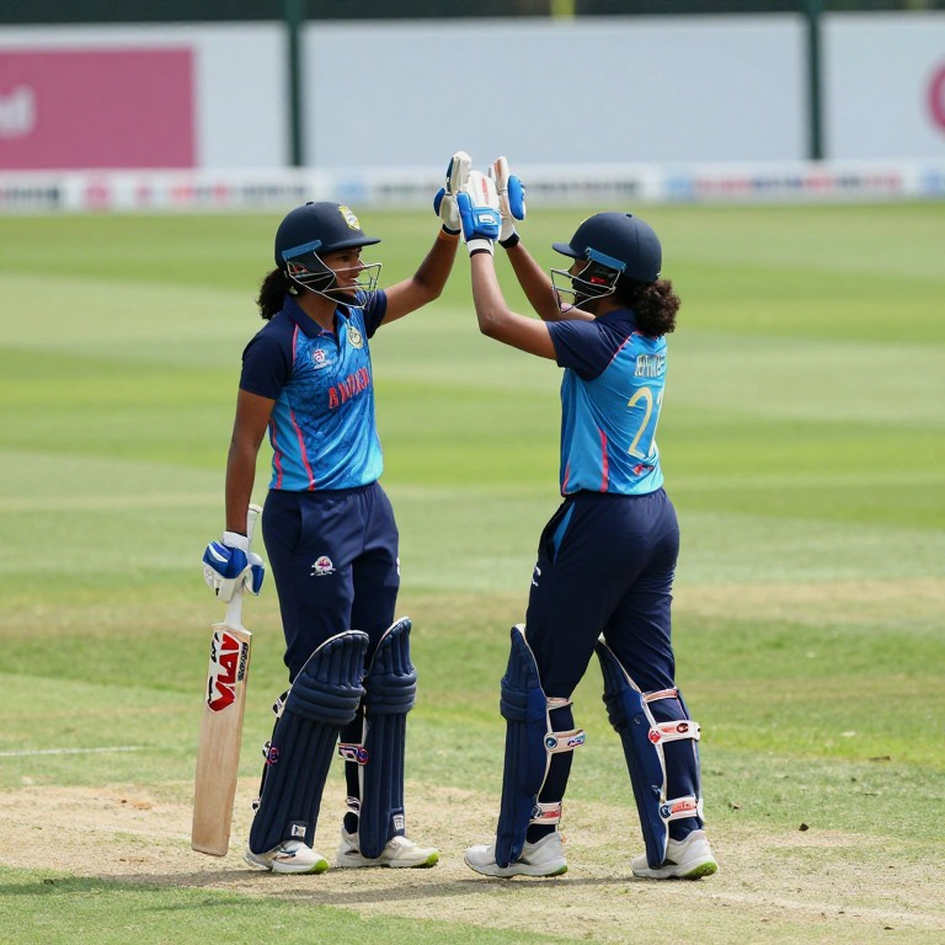
The subject here is really BCB youth-development governance; the Asia Cup is only the peg. The real story lies where three threads meet: the direction of development policy, the domestic-versus-foreign coaching question, and the commitment to hold a batch together until 2028. Any media archive or database that files this only under 'Asia Cup cricket' will lose all three — and with them, the actual news.
What this report does not contain
In the reader's interest it should be stated plainly what was not provided: the edition, dates, host, format, group opponents and qualification route of the Youth Asia Cup; the captain and key players, with ages; the names and roles of coaching panel members; the years and final opponents of the two previous titles; recent Under-19 results and the last World Cup finish; the host, format and qualifying route for the 2028 World Cup; and any formal mechanism behind 'keeping the batch together'.
What to watch next
First, Bangladesh's performance at the next tournament. It is the only claim testable within weeks, and it will determine how solid the expectation actually was.
Second, the formal squad announcement. That will show how many players are genuinely eligible for 2028 and how practical the 'batch' idea is.
Third, the formal details of the coaching panel. 'Experienced' remains incomplete until there are names, roles and a record of domestic experience behind it.
Fourth, and most importantly, a concrete metric for 'improvement' and 'good players'. Is there a record of how many players reached senior or franchise level? Without a declared metric, in 2028 the same thing can be said again — that the process is on track — and nobody will be in a position to disprove it.
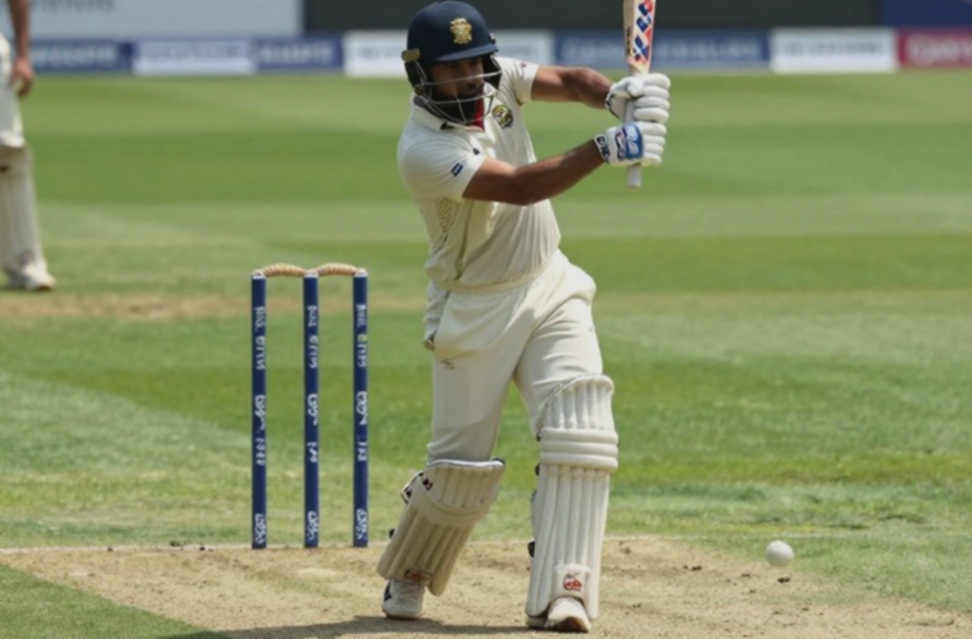
Bangladesh's youth cricket may well need patience, and that argument is valid. But patience and accountability are not opposites. When an institution sets its own terms, the most important term is that it declares its metrics — and permits them to be checked. This statement does the first and not the second.