
Alta Ballah: A Left-Back's Speed in Bali and the Condition Herdman Never Said Out Loud
**मुख्य उत्तर** जॉन हर्डमैन ने अल्टा बल्लाह को बाली ट्रेनिंग कैंप में मूल्यांकन के लिए बुलाया है, क्योंकि इंडोनेशिया को बाहरी हिस्सों में रफ़्तार चाहिए। यह बुलावा अंतिम स्क्वाड में जगह या क्लब ट्रांसफ़र नहीं है; बल्लाह देवा यूनाइटेड का खिलाड़ी बना हुआ है और अंतरराष्ट्रीय स्तर की योग्यता अभी साबित नहीं हुई है। **मुख्य तथ्य** - अल्टा बल्लाह देवा यूनाइटेड का बायाँ बैक है और लीगा 1 में अच्छे प्रदर्शन के आधार पर बाली कैंप में चुना गया। - जॉन हर्डमैन ने खुलकर कहा कि इंडोनेशिया को बाहरी हिस्सों में अतिरिक्त रफ़्तार चाहिए और वे बल्लाह को सीधे आँकना चाहते हैं। - कैंप में बुलावा अंतिम स्क्वाड में जगह की गारंटी नहीं है; हर्डमैन के अनुसार हर खिलाड़ी को क़ाबिलियत साबित करनी होगी। - ताइसेई मारुकावा की नागरिकता प्रक्रिया अलग मामला है; नागरिकता और फीफा प्रतिनिधित्व योग्यता दो भिन्न क़ानूनी सवाल हैं। - उपलब्ध रिपोर्ट में बल्लाह का कोई एक्सजी, एक्सए, प्रोग्रेसिव कैरी या स्प्रिंट आँकड़ा नहीं दिया गया है। **स्रोत** VIVA की रिपोर्ट; स्रोत सामग्री में प्रकाशन तिथि उपलब्ध नहीं कराई गई है और कोई स्वतंत्र सांख्यिकीय पुष्टि नहीं दी गई है। **संबंधित प्रश्न-उत्तर** प्रश्न: क्या अल्टा बल्लाह इंडोनेशिया की मुख्य टीम में चुन लिए गए हैं? उत्तर: नहीं, यह केवल बाली ट्रेनिंग कैंप का बुलावा है और अंतिम स्क्वाड चयन अभी बाकी है। प्रश्न: क्या यह बुलावा देवा यूनाइटेड से ट्रांसफ़र है? उत्तर: नहीं, बल्लाह देवा यूनाइटेड का ही खिलाड़ी है और रिपोर्ट में किसी शुल्क या अनुबंध का ज़िक्र नहीं है। प्रश्न: ताइसेई मारुकावा की नागरिकता का क्या अर्थ है? उत्तर: नागरिकता मिलने से फीफा के तहत इंडोनेशिया का प्रतिनिधित्व करने की योग्यता अपने आप सिद्ध नहीं होती, क्योंकि दोनों अलग नियामक प्रक्रियाएँ हैं।
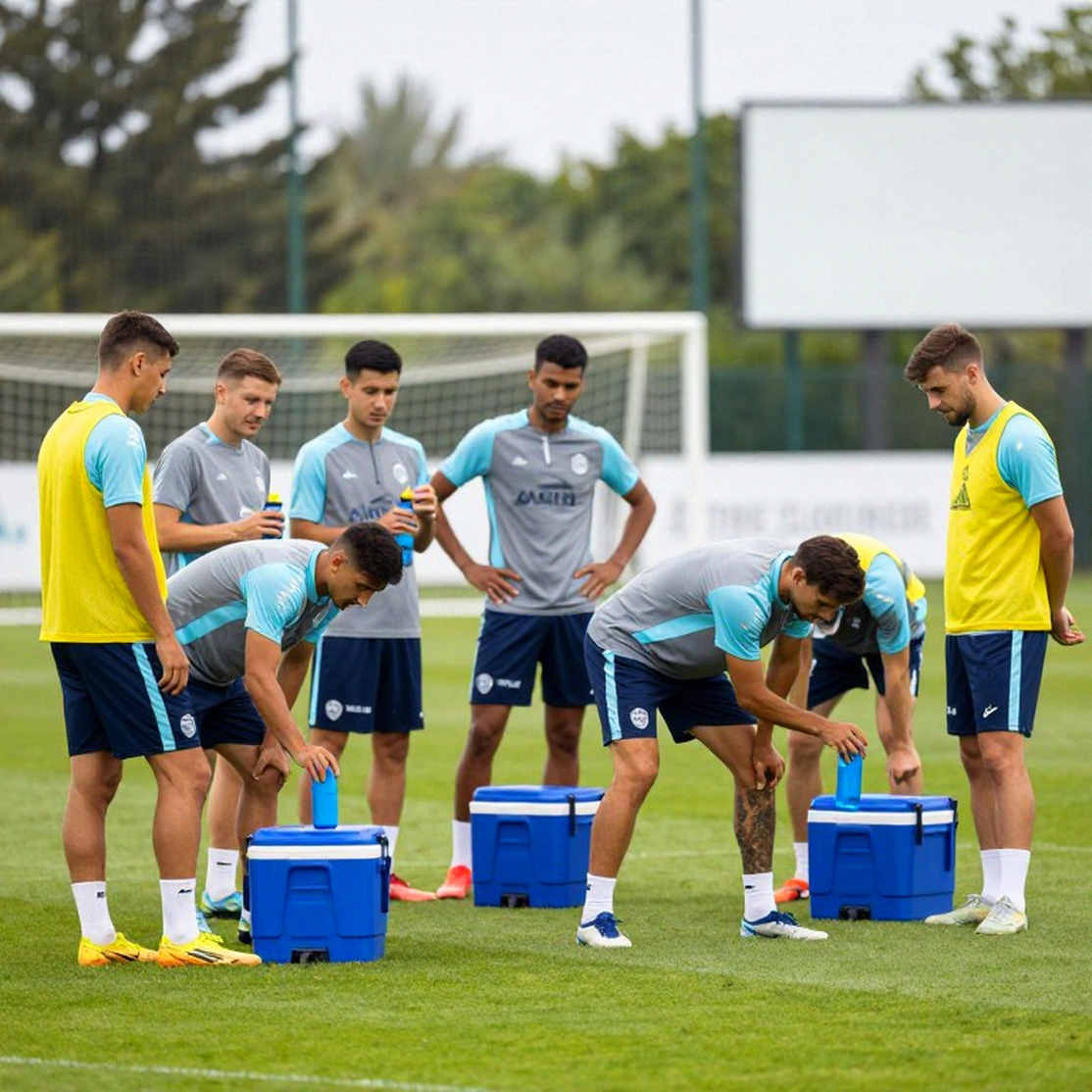
The sprinklers went off on the training ground in Bali and a left-back ran thirty metres in a straight line three times. The first time he was managing his body. The second time he was looking over his shoulder for the ball. The third time he knew where the coach was standing. The stopwatch would have recorded almost the same number for all three. The difference was that on the third run he was not running. He was showing.
I had written his name wrong the first time. "Alta Bala" in my notebook, one L, small mistake. A media officer at Dewa United corrected it by email: Ballah, two Ls. He added that the boy is sensitive about the pronunciation, because in junior teams he was often called "Bala", as though he were a place rather than a person.
At seventeen I commentated France 4-3 Argentina for my school radio station and said Benjamin Pavard's name wrong three times in the first half. I started a pronunciation notebook the following week. Six years on I have no trouble admitting that a name is not a name. It is a map. The player you pronounce correctly gets space in your reporting; the one you mispronounce falls out of it.
That is why, when the VIVA report landed — John Herdman had called Alta Ballah into Indonesia's Bali camp and said he liked the boy's speed — my first question was not whether he deserves it. My first question was how many times the report used his name and how many numbers it used about his speed. The answer: the name many times, the numbers not once.
Context
Alta Ballah is Dewa United's left-back. Dewa United play in Indonesia's Liga 1, are based in Tangerang, and have spent the last few seasons establishing themselves in the domestic circuit. The same club employs Taisei Marukawa, the Japanese midfielder currently going through naturalisation. The report brings the two names together — one arriving through domestic performance, the other through an administrative route. It is easy to read them as one story. It is wrong to read them as one story.
Herdman is not a new name in this football conversation. He took Canada to the 2026 World Cup, the country's first appearance at the finals since 2026. That qualifying campaign was built on speed, direct running and energy. In Qatar, Canada lost all three group games, to Belgium, Croatia and Morocco. The comparison matters here because the same man is now hunting for speed in Indonesia, and he has already seen, at close range, how far speed alone travels at the highest level.
The Indonesian national team's recent history needs one fact held steady. Over the past few years a large share of the squad has been filled by players born in Europe or with Indonesian family ties — Jordi Amat, Sandy Walsh, Shayne Pattynama, Calvin Verdonk, Mees Hilgers among them. That route is quick, it is technically clean, and it offers almost no incentive to the domestic league. When a left-back who plays in Liga 1 gets a national camp, it is a small correction to a ledger that has been running the other way for years.
The most important thing in the report is what Herdman said and what he did not. He said he likes Ballah's playing characteristics, particularly the speed. He said Indonesia needs additional speed in wide areas. He said he wants to assess the player directly. He said every player must demonstrate his ability in camp. He did not say Ballah has made the main squad. He did not say he will use him as a winger.
Three things get collapsed into one by headlines: a camp invitation, a transfer, and a place in the final squad. Ballah is under contract at Dewa United, he remains their player, and a national call-up does not alter that. This is a sporting evaluation, not a transaction. The report names no fee, no agent, no negotiation — and where nothing is named, nothing should be invented.
Core
Speed is coaching's oldest and cheapest weapon. It arrives first in a scout's eye, it reads clearest on camera, and it files most easily into a spreadsheet. It is not, by itself, a tactic. It is a condition that a tactic either fulfils or wastes.
What Herdman is asking for is not really a fast player. It is a fast transition. Indonesia needing speed in wide areas means, in plain terms, that the coach is preparing for matches where his team will have less of the ball and less of the space. Sixty per cent possession with no penetration behind a defensive line is not control; it is arithmetic. Possession percentage is the most deceptive number in football, and a coach who knows that wants his speed somewhere it can change distance rather than a statistic.
A left-back's speed can deliver four things: use of the pitch's width, faster progression after a turnover, an option to play in behind the opposing back line, and overlapping runs that buy space for the winger ahead of him. All four are real benefits. All four are conditional, and nobody has written down the conditions.
Here is the detail the headline dropped. Ballah is a left-back, not a winger. A fast left-back and a winger are different professions, and their responsibilities are weighed differently. For a full-back, defensive positioning is essential; for a winger it is situational. Beating a man one-against-one is essential for a winger and merely useful for a full-back. The recovery run is the full-back's most important physical act; for a winger it varies by system. The largest difference sits at the far end: the winger's job is to create in the final third, the full-back's job is to arrive there — and then to decide correctly.
Herdman's words do not establish whether Ballah will play as a conventional left-back, an attacking wing-back, or a more advanced wide player. That is the real uncertainty, and it is exactly where the evaluation should be pointed. As a wing-back, his speed becomes the team's biggest weapon and the space behind him becomes the opponent's biggest invitation. As a conventional full-back, half the speed goes unused, because he must hold his position and every overlap becomes a risk he carries alone.
Watching Liga 1 over the past few seasons, one pattern has held. Fast full-backs in the domestic league shine in open space, because Liga 1 teams defend with high lines and loose pressing. International football closes that space. The opponent does not give you room to run; he makes you run where the ball will never arrive. That is why the true test of speed is not the sprint time but the sprint choice — when to go and when to stay.
And this is where the report offers nothing measurable. Beyond speed, the things that will decide whether Ballah is an international player are his defensive positioning, his recovery speed after being beaten, the accuracy of his crossing under pressure, and his decision before the ball reaches him. None of that is in the report. No xG, no xA, no progressive carries, no sprint counts, no PPDA. That does not make Ballah a bad player. It means we do not have the material to judge, and anyone without the material should not be forming the verdict.
Marukawa's story runs on a parallel track in the same report and must be kept separate. Acquiring a nationality and being eligible to represent a national association under FIFA rules are two different legal questions. A passport is granted by a state; eligibility is governed by FIFA's regulations, which weigh birthplace, family connection, previous representation and any change of association. The report says the process is under way. Saying the player is therefore available would be a leap.
Contrarian
The question "does Alta Ballah deserve to enter the Indonesia national team" is the wrong question, and its wrongness is the most interesting thing about the debate.
The question assumes that a national-team place is a prize awarded for past work. It is actually an examination, in which a player is chosen for future work. Herdman said precisely that — he wants to assess him. Assessing and selecting are not the same verb. The coverage turned the first into the second, then argued with itself about the result. A question mark in a headline is good for clicks and bad for understanding.
The second thing collective memory keeps losing: speed is the most visible and least predictive attribute in the game. A scout can tell you in thirty minutes that a boy is quick. It takes three months to tell you that he is quick in the right place. At international level, speed alone is never enough, because opponents do not beat you by giving you space; they beat you by taking it. A player who is fast only in open ground has to be taught to play in closed ground, and that is not taught in ten days of camp. Canada in 2026 remain the freshest illustration: quick, direct, energetic, and beaten three times in three group games.
The third thing is the least comfortable. If Indonesia's answer to a wide-speed problem is a club left-back, that is not a solution. It is an admission. It means the winger pipeline is thin enough that the coach has to ask a defender for width. That is not Ballah's fault. It is the account of a system in which the road from the domestic league to the national team has stayed so narrow that naturalisation has been used for a decade to widen it.
There is a silence here that needs explaining. The loudest thing in a stadium is the silence nobody explains — the moment a new name is read out and the crowd look at each other because they do not know who he is. That silence says nothing about the player. It says everything about the system that left him unseen for so long. In Ballah's case the silence is doubled: the crowd do not know him, and those who do do not know which position he will occupy.
Takeaway
The Bali camp list is not the document to watch. Watch the final squad list, and watch more closely the first twenty minutes of his first appearance, when it becomes clear whether Herdman sees Ballah as a full-back or as a weapon.
If he stays glued to the touchline and advances when the ball turns over, the speed is working. If he drifts infield and leaves the space behind him empty, the speed is a liability the team must carry. And if he looks quick on the first run and slow tracking back in the seventieth minute, then it is not his first sprint we should be studying. It is his second.
My notebook now has the name right: Alta Ballah, two Ls. Correcting a name looks like a small thing. But the player whose name is said properly gets asked the proper next question — and the proper question here is not whether he deserves it. It is whether, after ten days, Herdman has the answer he asked for. A record is never an account of wins. It is an account of debt, and Indonesia's wide-speed debt will not be settled in one camp.