
Pakistan's 110 and Madushanka's 5/34: Reading Sri Lanka's Win Through the Scorecard
**मुख्य उत्तर:** श्रीलंका ने पाकिस्तान को आठ विकेट से हराकर त्रिकोणीय वनडे सीरीज के फाइनल में जगह बनाई और इंग्लैंड की उम्मीदें समाप्त कीं; दिलशान मदुशंका के 5/34 और पाकिस्तान के 110 रन निर्णायक आंकड़े रहे। **मुख्य तथ्य:** • पाकिस्तान पहले ही फाइनल में पहुंच चुका था; यह मैच उसके लिए डेड रबर था। • श्रीलंका ने 111 का लक्ष्य 19 ओवर से कम में आठ विकेट पर हासिल किया। • कमिंदु मेंडिस 60 गेंदों पर 62 नाबाद रहे; 71% रन चौकों-छक्कों से आए। • सीमा-रस्सी से संपर्क के कारण एक कैच छक्के में बदला; नियम सही लगाया गया। • सभी 21 सूचना बिंदुओं का स्रोत अनिर्दिष्ट; आंकड़े स्वतंत्र स्कोरकार्ड से अपुष्ट। **स्रोत:** अनिर्दिष्ट सार्वजनिक मैच रिपोर्ट; प्रकाशन तिथि उपलब्ध नहीं। cricsultan.com स्कोरकार्ड संदर्भ से सत्यापन लंबित। **संबंधित प्रश्न-उत्तर:** प्रश्न: क्या पाकिस्तान फाइनल में पसंदीदा है? उत्तर: उपलब्ध आंकड़ों में होम कंडीशन और पूरा आराम पाकिस्तान को मामूली बढ़त देते हैं, पर ओड्स या स्क्वाड पुष्टि के बिना यह अनुमान है। प्रश्न: मदुशंका के 5/34 का कितना वजन है? उत्तर: यह करियर-बेस्ट है, लेकिन ओवर-संख्या और पाकिस्तान की प्लेइंग इलेवन अपुष्ट होने से एकमात्र मैच का नमूना छोटा रहता है। प्रश्न: इंग्लैंड के बाहर होने का मुख्य कारण क्या है? उत्तर: पाकिस्तान से दो हार, जिनमें एक विकेट की हार शामिल है, ने इंग्लैंड को फाइनल राउंड से पहले बाहर कर दिया; यह संरचनात्मक गिरावट का संकेत है, सिद्ध प्रमाण नहीं।
- Five wickets for 34. A target inside 19 overs. The scorecard offers a clean story: Sri Lanka beat Pakistan by eight wickets, Dilshan Madushanka took a career-best five-for, and England's tri-series hopes ended. The match report's headline says the same. My habit, after years of watching and logging decisions, is to open the documents underneath a number this tidy. There are three here: Pakistan's 110, Madushanka's 5/34, and the speed of Sri Lanka's chase. All three can be accurate and still carry different weights.
I have watched enough one-day cricket to know that a result can be right and the interpretation wrong. A total of 110 tells us Pakistan's innings collapsed. It does not tell us what was at stake when it collapsed. Pakistan had already qualified for the final. Sri Lanka needed a win. England needed Sri Lanka to lose. Three different incentives sat inside one match, and the scorecard does not print that. My first objection begins there: 'thrash' is factually defensible and analytically incomplete.
There was another detail the scorecard omits. During Kamindu Mendis's innings, a catch became a six because substitute fielder Ghazi Ghori touched the boundary rope while completing it. The law is clear: a fielder in contact with the rope or the ground beyond it cannot complete a valid catch; the ball becomes a six. A substitute is bound by the same restriction. The provision was applied correctly. The ledger said one thing; the replay said another. Here the replay upheld the law, though not the result.
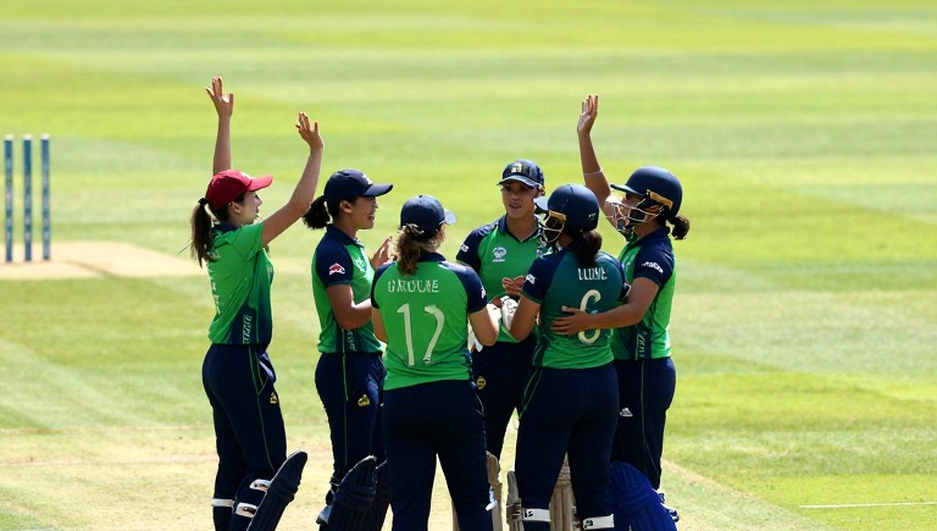
This was a 50-over ODI, a round-robin match in a tri-series hosted by Pakistan. The format has three phases: the first ten overs of powerplay, with two new balls and fielding restrictions; the middle overs, where spin and field settings slow the game; and the last ten, where yorkers and big hitting decide. Pakistan were bowled out for 110, so Sri Lanka's death overs never arrived. Pakistan's did not last either. The match was settled in the powerplay and the early middle overs.

Gaddafi Stadium, Lahore is named only in connection with Thursday's dead rubber. The Tuesday venue is not stated in the source; Lahore is a reasonable inference, not a fact. There is no weather, dew, light or Duckworth-Lewis-Stern information. There is no pitch report. Calling 110 a 'pitch miracle' would be premature. Lahore surfaces are usually good for batting; a home side's 110 is a signal in itself, but surface, new-ball movement and Pakistan's XI are three variables without confirmation.
Kusal Mendis won the toss and chose to field. In a subcontinental ODI that is usually the higher-risk call; dew makes second-innings bowling harder and chasing easier. The gamble worked because Madushanka had first use of a fresh surface and Pakistan's top order never settled. The decision was right on the day. One match does not make a captaincy pattern. Process and outcome have to be kept apart: the toss call was sound for the conditions, and the good result is a separate fact.
The bigger structural point was in the calendar. Sri Lanka had a meaningless game on Thursday; Pakistan had a full rest until Saturday's final. One finalist plays 48 hours before the final, the other does not. The playing conditions govern no-balls, wides, DRS and boundaries. They do not govern that asymmetry. In my reading, this is the series' most under-reported governance issue, larger than any umpiring error.
Madushanka's 5/34 is the genuine headline. It is a career-best, and a five-wicket haul is a rare, high-value ODI event. The source does not state his overs. That gap matters. If he bowled ten overs, his economy was 3.4 runs per over, excellent. If he bowled seven, the same 5/34 implies about 4.9, good but less commanding. Without the overs, calling him a 'spearhead' is trusting the headline rather than the scorecard. The wickets are real; their economic and tactical weight is unverified.
Then the left-arm angle. Against right-handers, a left-arm quick's angle shapes the ball away and is most useful with the new ball. Pakistan's opening pair looked under that pressure. Pakistan had already qualified, and teams in such matches often rest fast bowlers and shuffle the batting order. The report does not state rotation, so I will not treat it as fact; I will treat it as risk. If Pakistan's XI was not first-choice, the five-for loses some value. If it was first-choice, the performance grows. The difference is large, and the information is absent.
A five-for in an ODI cannot be transferred to T20 or Test cricket. T20 death bowling is yorker execution; Test durability is fourth-innings workload. A new-ball five-for does not prove either. A career-best is an event in one innings, not a career trend. Franchise scouting pays a premium for the scarce left-arm quick archetype; that premium does not always match proven output. Commercial value and sporting value can walk different paths.
Now Pakistan's 110. That is the match's most consequential number, ahead of Sri Lanka's eight-wicket win. A home side bowled out for 110 is a batting-fragility signal, bigger than a bad day. In the tournament opener, Pakistan beat Sri Lanka by 37 runs. Both sides were fully motivated in that match, which makes it the better form line before the final. Pakistan did not need a win here; Sri Lanka did. The result favours Sri Lanka; the process says Pakistan's batting problem existed before this defeat and will remain after it.
Pakistan will bring home conditions, a full rest and the motivation of a heavy defeat into the final. All three are real. Sri Lanka have momentum, and momentum is the thing media ecosystems inflate first. The first ten overs of the final will show whether Madushanka's new-ball edge is repeatable or surface-specific. If Pakistan lose two or more wickets inside ten overs, Sri Lanka's plan is working. If Pakistan survive that phase, the match changes: spin, set batters and middle-over pressure move onto Sri Lanka.
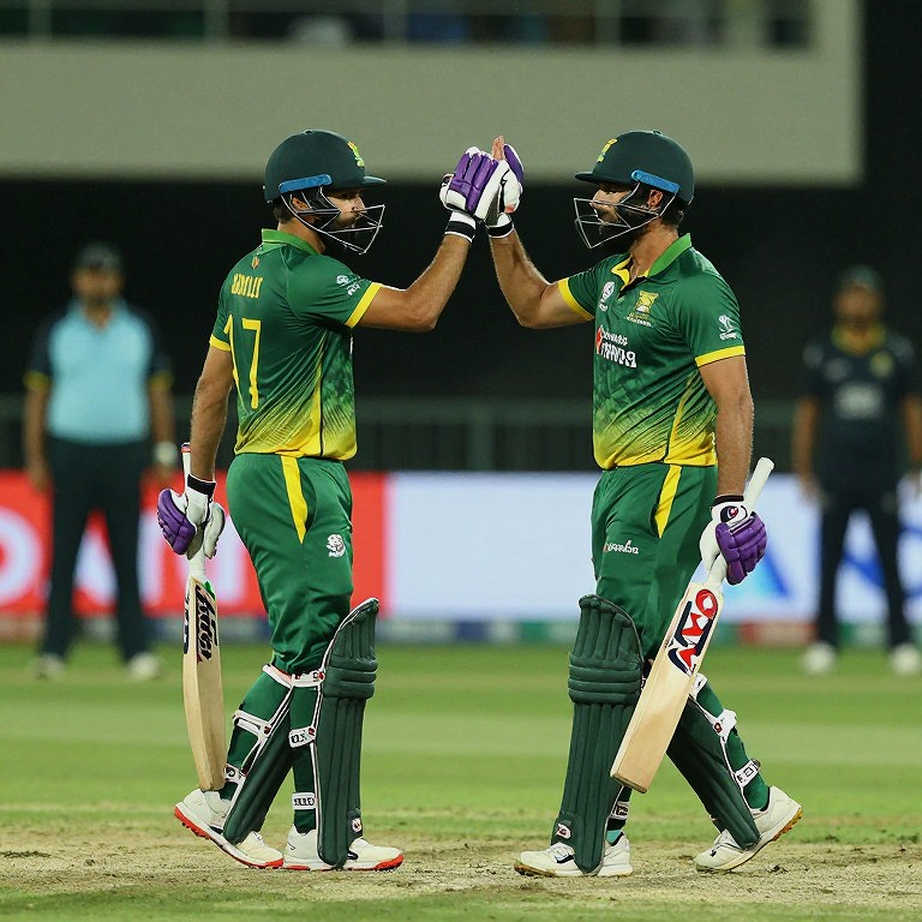
Kamindu Mendis's 62 not out needs the same reading. He faced 60 balls, a strike rate of 103.3. The team needed about six an over, roughly 100. He batted at the required rate, not above it. His 62 included eight fours and two sixes, 44 runs in boundaries, 71 per cent. In a low chase, that boundary dependence means the innings moved in bursts and carried risk. He was dropped by the wicketkeeper before scoring and survived an LBW review on 44. Two lives in one innings. An unbeaten 62 is not a controlled 62; it has to be read with two reprieves, a par strike rate and 71 per cent boundary dependence.
His left-handedness still has durable structural value. A left-hand middle-order batter changes angles for opposing spinners and disrupts fields set for a right-hand top order. That is a squad-balance argument that survives the small sample. It does not prove a form breakthrough. A good innings and evidence of form are different things; this is the first, not the second.
On the rules, two events are logged. First, the substitute fielder's contact with the boundary rope turned a catch into a six. Second, Kamindu's successful DRS review at 44. Both were handled correctly. There is no reported 'umpire's call' dispute; the batter overturned the on-field decision, so the technology produced a decisive correction. That is the framework working. A rule succeeds when it changes an outcome and nobody claims the system broke. I trust the protocol until the protocol contradicts its own replay; here it did not.
The larger governance failure is the calendar. Sri Lanka play Thursday; Pakistan do not. A dead rubber for one team, rest for the other. The cost is fatigue and injury exposure. A young left-arm quick like Madushanka already carries franchise workload; bowling him in a meaningless Thursday match is pure risk. Rotation is the correct call. The fear of losing momentum should not outweigh it, because Thursday's result has no table value. If Sri Lanka field their full frontline pace attack on Thursday, I will call it a management error whatever the result.
England's exit is a separate file. Two defeats to Pakistan, one by a single wicket, and elimination before the final round. That is the profile of a side that competes but does not close. The pattern has appeared in England's post-2026 ODI cycle. This report has no selection-policy, central-contract or domestic 50-over data, so it is a direction, not an established finding. England's crisis may be larger than one tournament, but this match report does not contain the document that proves it.
The largest warning is about the data. All 21 information points in the source analysis carry no source. Every figure is pending verification. That gap is material. If Madushanka bowled seven overs rather than ten, his economy and the quality read change. If Pakistan made three changes, the weight of the win changes. If Tuesday's match was not in Lahore, the pitch reading changes. This should be treated as a working document before the final, not a certified record. The biggest risk is interpretive, not sporting: turning a result in which one side had already qualified into a form line for the final.
An inverted reading is necessary. Sri Lanka won by eight wickets, Madushanka took five, and the scorecard makes them the favourite. I will not invert the result; I will discount its weight. Sri Lanka's win exposes Pakistan's batting question more than it establishes Sri Lanka's level. Pakistan have home conditions, a full rest and rematch motivation. Sri Lanka have momentum built against a pre-qualified opponent. Markets and media usually put momentum above rest; my ledger puts rest and motivation higher, provided Pakistan's batting answers its biggest question.
There is another side to Pakistan's collapse. Home crowds and media will not treat 110 lightly. That pressure can make a team more cautious in the final, more rigid. Sri Lanka's opportunity is to recreate the same new-ball pressure and ask the same question of Pakistan's top order. If they do, the win becomes a plan, not a day. If they do not, 110 becomes an outlier. The margin note often explains the headline better than the headline; here the margin note is Pakistan's 110, not Sri Lanka's eight wickets.
Before the final, the Thursday team sheet matters. If Madushanka or any frontline quick plays that dead rubber, it is a load-management red flag. The first ten overs of Saturday's final matter just as much. If Pakistan lose two or more wickets there, Madushanka's new-ball edge is repeatable. If they do not, the win remains a surface-and-day event. Before the debate, I open the laws; the law here is the schedule. Sri Lanka are in the final; the final's favourite is not yet settled by the scorecard. Thursday's team sheet and Saturday's first ten overs will supply the document that 110 and 5/34 left out.