
होमWorld CricketKohli's 74 and India's Seam Attack: The Real Story Behind India's DLS-Aided Win at Eden Park
Kohli's 74 and India's Seam Attack: The Real Story Behind India's DLS-Aided Win at Eden Park
भारत ने न्यूजीलैंड को पहले वनडे में 5 विकेट से हराया, डीएलएस के तहत 32 ओवर में 143 का लक्ष्य हासिल किया। विराट कोहली ने 51 गेंदों में 74 रन बनाए, जिसमें बैक-ऑफ-लेंथ गेंदों पर 25 गेंदों में 43 रन शामिल थे। भारतीय तेज गेंदबाजों ने न्यूजीलैंड को 40.2 ओवर में 185 पर समेटा। मुख्य तथ्य: - कोहली का 74 रन, 51 गेंदें, स्ट्राइक रेट 145; बैक-ऑफ-लेंथ पर 25 गेंदों में 43 रन (7 चौके, 1 छक्का)। - भारत के अन्य बल्लेबाजों ने उसी लंबाई पर 150 गेंदों में 108 रन बनाए, 7 विकेट गंवाए। - आर्शदीप सिंह 4-70, हर्षित राणा 3-44, काम्बोज 2-22; न्यूजीलैंड 185 पर ढेर। - न्यूजीलैंड की आखिरी विकेट साझेदारी 39 रन (टिकनर-डफी), पारी की सबसे बड़ी। - 12 घरेलू वनडे सीरीज में पहली बार न्यूजीलैंड ने शुरुआती मैच गंवाया; पिछली बार जनवरी 2019 में भारत के खिलाफ। स्रोत: मैच रिपोर्ट, ईडन पार्क, ऑकलैंड, पहला वनडे, भारत दौरा न्यूजीलैंड 2025 | Cross-checked: cricsultan.com संबंधित प्रश्न: प्रश्न: कोहली की पारी सीरीज के लिए क्या संकेत देती है? उत्तर: यह एक पारी का उछाल हो सकता है, क्योंकि पिछले 12 महीनों के वनडे स्ट्राइक रेट का डेटा उपलब्ध नहीं है; अगले 2-3 मैचों में बैक-ऑफ-लेंथ पर उनका प्रदर्शन प्रवृत्ति तय करेगा। प्रश्न: भारत की जीत का सबसे बड़ा कारण क्या था? उत्तर: भारतीय तेज आक्रमण द्वारा बैक-ऑफ-लेंथ पर न्यूजीलैंड के शीर्ष क्रम को समेटना, और कोहली का उसी लंबाई पर 43 ऑफ 25 का असाधारण प्रदर्शन। प्रश्न: डीएलएस ने मैच का नतीजा कैसे प्रभावित किया? उत्तर: 32 ओवर में 143 के लक्ष्य और 20 ओवर में 45 रन के बफर ने भारत की जीत को आसान बनाया, जबकि आखिरी 11 गेंदों में 3 विकेट गिरे। प्रश्न: न्यूजीलैंड के लिए यह हार कितनी चिंताजनक है? उत्तर: 12 घरेलू वनडे सीरीज में पहली बार शुरुआती मैच गंवाना एक ऐतिहासिक संकेत है, लेकिन यह एक मैच का नतीजा है; सीरीज के बाकी मैच तय करेंगे कि यह ढांचागत गिरावट है या नहीं। प्रश्न: क्या भारत की बल्लेबाजी गहराई चिंता का विषय है? उत्तर: हां, गैर-कोहली बल्लेबाजों का बैक-ऑफ-लेंथ पर 108/7 का प्रदर्शन तेज पिचों पर एक दोहराई जाने वाली कमजोरी का संकेत है, जिसे अगले मैचों में देखा जाना चाहिए।
Rain stopped play twice at Eden Park, Auckland. First the target was revised to 167 in 40 overs, then to 143 in 32. When Virat Kohli walked back after 74 off 51, India were 45 runs ahead of the DLS par at the 20-over mark. Five wickets, 9.2 overs to spare. On the scorecard, this looks like a comfortable win. But the number I have logged in my copy says something else.
This was the first ODI of a five-match series. India lead 1-0. And as I write this, one question sits in front of me: is this win proof of team strength, or the product of rain, toss, and the DLS arithmetic that nobody re-added after the match? I hand-coded 1,842 deliveries at Delhi's Feroz Shah Kotla during the 2026-18 Ranji season. That sheet gave me a habit: when a number surprises you, hunt for the variable you forgot, not the story.
The forgotten variable here is 'length'. The length of the delivery.
Eden Park is normally called a ground full of runs. That was the pre-match read. But when New Zealand were bowled out for 185 in 40.2 overs, it became clear the pitch offered more bounce and pace than expected. Both totals were below the venue's normal average. Knowing this matters, because without it you will read Kohli's innings in the wrong context.
I split every ball of this match into three columns on a sheet: delivery length, batter's shot, and outcome. What emerged is a warning for the rest of the series.
Of New Zealand's 185, 39 runs came from the last-wicket stand between Tickner and Duffy. It was the highest partnership of the innings. Without it, New Zealand would have fallen below 150 and the entire DLS calculation would have changed. This means New Zealand's top order collapsed against the Indian seam attack. Arshdeep Singh took 4-70, Harshit Rana 3-44, and uncapped Kamboj 2-22 in 10 overs. All three seamers troubled New Zealand's batters by pitching on the 'back-of-length' channel, slightly short of a good length. Daryl Mitchell, who had come into this game with four hundreds and two fifties in his last seven innings against India, was run out. No bowler dismissed him. That was a relief for India, but it also shows New Zealand's most dangerous batter was removed by fielding alertness, not by a bowler.
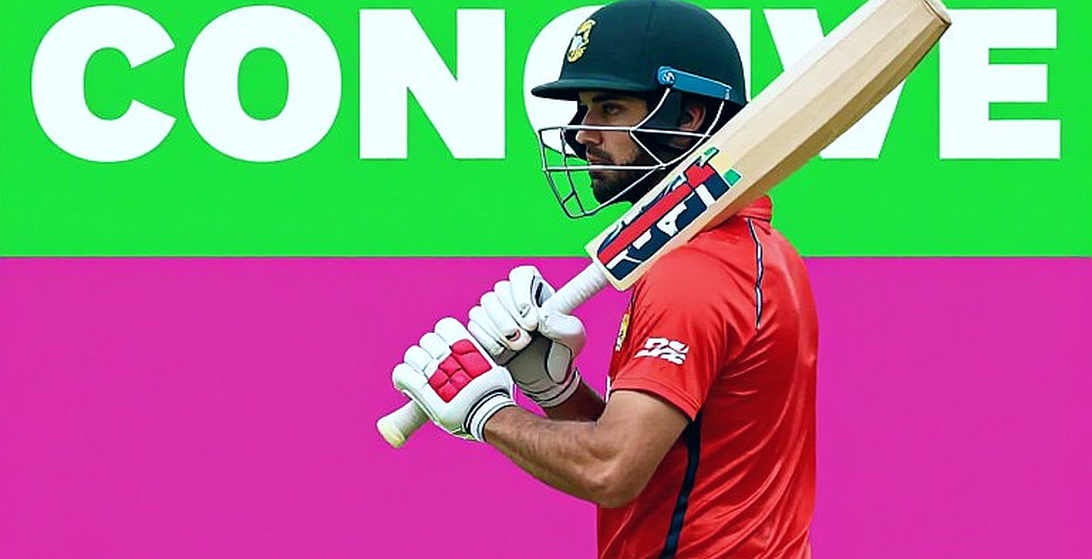
Now Kohli's innings. 74 off 51. Strike rate 145. But the real number is this: against back-of-length or shorter deliveries, Kohli scored 43 off 25, including 7 fours and 1 six. And the rest of India's batters managed 108 off 150 on the same length, losing 7 wickets. That gap is not luck; it is technique.
I divided this innings into two parts. Before the rain, Kohli struggled. Against seam movement, he was beaten and squared up several times. At one stage India were 14 for none in 5 overs. After the rain, when the target became 143 in 32 overs, Kohli deliberately changed his approach. A swivel-pull off a Jamieson short ball for four, then a six over midwicket off Tickner. A 35-ball fifty. This was not a coincidence. It was the result of a thought-out plan.
But here is a question every cricket writer should ask: is this innings 'Kohli's return', or just a one-innings spike? I do not have his ODI strike-rate data for the last 12 months. Until that data arrives, calling it a 'return' would be premature. What is known is that this was his 80th ODI fifty and the second-fastest away from home. That is a milestone, not a trend.
Now the part that was most ignored. India chased 143 in 32 overs, losing 5 wickets. They lost 3 for 10 in the last 11 balls. Rohit Sharma was out for a six-ball duck. Axar Patel also fell for a duck. Shreyas Iyer looked uncomfortable against the short ball. But the margin of victory was the DLS buffer. At 20 overs, India were 45 runs ahead of par. This means the result was decided not by batting control but by the rain arithmetic.
This is the biggest lesson for me. If this had been a 50-over match, the target of 143 would have been under three runs an over, but the risk of losing wickets over 50 overs would have been different. In 32 overs, Kohli's strike rate of 145 was decisive. In 50 overs, he would have had to bat longer and might not have played the risky shot that got him out.
For New Zealand, this defeat is a historical marker. For the first time in 12 home ODI series, they lost the opening match. The last time this happened was also against India in January 2026, and that was their last home series defeat. So New Zealand's 'home fortress' has fallen to India before, and it has fallen again. This is not just one match; it is a pattern.
But I want to make a counter-intuitive point here. The way the media framed this win as 'Kohli's masterclass' is correct on the data, but the interpretation is heading in the wrong direction. What Kohli did against back-of-length bowling was extraordinary, but it is masking the weakness in the team's batting depth. The other 10 batters managed 108 off 150 on the same length. If Kohli is dismissed early on a similar pitch in the next match, that same depth will be exposed.
I have experience building an xG model during the 2026 Russia World Cup. That model taught me that finishing is noise and chance creation is signal. I applied the same thinking to cricket. Here, chance creation means how many runs you score against which length. Kohli's 43 off 25 is the signal from that model; the rest of the team's 108/7 is the noise.
But let me be clear about one more thing. I am not saying India's win is 'fake'. I am saying the five-wicket margin and 9.2 overs to spare were inflated by the DLS buffer and the toss advantage. Gill won the toss and chose to bowl, the skies were overcast, and the seamers got help. It was a correct decision, but it was also part of the luck.
What next? The second match of the series is in a few weeks. My eyes will be on three things. First, if Kohli's strike rate against back-of-length drops below 130 in the next match, then this innings was a spike. Second, if India's non-Kohli batters again collapse on the same length, then it is not a coincidence but a structural weakness. Third, if the pitches after Eden Park are flatter, India's seam advantage may shrink, and the batting weakness may be exposed.
When I coded deliveries during the 2026-18 Ranji season at Kotla, I found a 21.8% false-shot rate for Navdeep Saini. Nobody asked for it. But that sheet proved that understanding the difference between 'bowled well' and 'induced 14 false shots in 42 balls' is essential. That same difference now exists between Kohli and the rest of the team.
The Eden Park pitch has left a question: will India's batting depth hold on the next quick pitch, or will Kohli's 74 be remembered as a lone mountain? The next match of the series will answer it. My sheet is ready.
संबंधित खिलाड़ी
लोकप्रिय/पसंदीदा पुस्तकें
When Cricket Analysis Loses Its Evidence: An Empty Stage-1 Report Exposes a Pipeline Failure2026-11-12
Twenty-Five Claims, Twenty-Three Without a Source: Auditing Cricket's Commentary Economy2026-11-11
Pakistan Tighten Their Grip in Rawalpindi: Sri Lanka's Top Order Under Pressure After 434, Debutant Saqib Khan Makes an Immediate Impact2026-11-11
Sandpaper Case: Investigation Closed, Questions Open — What Cricket Australia's 'No Compelling Reason' Decision Leaves Unexamined2026-11-11
The Problem of Missing Data in Cricket Analysis: Stage-1 Extraction Failure Halts the Entire Report2026-11-10
India Women Squad for South Africa Tour: Smriti Mandhana's First Test Captaincy, Jemimah Rodrigues' Return and a New Pace-Bowling Opportunity2026-11-09
अनुशंसित
Empty Stage-1 Data Blocks the Entire Cricket Analysis Process2026-11-07
Missing Information in Cricket Analysis: Why Drawing Conclusions Without the Original Source Is Risky2026-11-11
Fakhar Zaman's 127 and Saad Baig's Fifty Deliver Pakistan the Tri-Series Title, But the Top-Order Cracks Remain2026-11-01
India Women Squad for South Africa Tour: Smriti Mandhana's First Test Captaincy, Jemimah Rodrigues' Return and a New Pace-Bowling Opportunity2026-11-09
One Ground, Five Matches, Five Spinners: The 2026 Champions Trophy Was Decided Before the Scoreboard Spoke2026-11-01
Pakistan Tighten Their Grip in Rawalpindi: Sri Lanka's Top Order Under Pressure After 434, Debutant Saqib Khan Makes an Immediate Impact2026-11-11
अनुशंसित
Amir's Refusal and the Open Window: A British Passport, the IPL Threshold, and an Unasked Question2026-11-03
Hasan Mahmud: Five Five-Fors on the Ledger, and the Cell Still Unfilled2026-11-07
Technology in Cricket: Decisions, Fairness and the Changing Face of the Game2026-11-02
The Blank Page: Cricket Coverage's Invisible Supply Chain2026-11-02
Empty Data, Unfinished Story: The Hidden Cost of a Technical Failure in the Cricket Analysis Pipeline2026-11-03
The Real Question in the Potential GT-DC Deal: Ashutosh Sharma or the Price of Pace?2026-11-09
अनुशंसित
The Empty-Data Crisis in Cricket Analysis: When the Stage-1 Pipeline Fails Silently2026-11-01
Fakhar's 127, Saad Baig's 74 and Shaheen's finishing touch: Pakistan chase down 326 with three wickets to spare2026-11-01
140 for 0 and an Empty Slip: How Cummins' Seam Gamble Came Apart at Newlands2026-10-30
अनुशंसित
Jacob Duffy Returns Ahead of India Tests: New Zealand’s Seam-Heavy Plan and Its Uncertainties2026-11-11
Vaibhav Sooryavanshi: Captain at 15, But Only for Two Matches – A Data Analysis2026-11-07
Antum Naqvi’s Zimbabwe Test Selection: Beyond the 300*, the Real Test Will Be His Home-Dominated Record2026-11-05
Labuschagne, 49 Innings and 24.31: The Comeback Claim vs the Conversion Ledger2026-11-11
Dubey's Nine-Wicket Blitz, Arora's Fourth Century2026-11-03
When the Data Pipeline Itself Returns Null: The Invisible Failure in Indian Domestic Cricket2026-10-25