
होमWorld CricketFakhar Zaman's 127 and Saad Baig's Fifty Deliver Pakistan the Tri-Series Title, But the Top-Order Cracks Remain
Fakhar Zaman's 127 and Saad Baig's Fifty Deliver Pakistan the Tri-Series Title, But the Top-Order Cracks Remain
## संक्षिप्त उत्तर पाकिस्तान ने लाहौर में त्रिकोणीय वनडे सीरीज़ का खिताब जीता। फखर ज़मान ने 99 गेंदों पर 127 रन बनाए (11 चौके, 6 छक्के, स्ट्राइक रेट 128.3) — यह उनका 12वां वनडे शतक रहा। सआद बैग ने 75 गेंदों पर 74 रन बनाए, जो उनका पहला वनडे अर्धशतक था। ## मुख्य तथ्य - प्रारूप: वनडे (50 ओवर) - स्थान: लाहौर, पाकिस्तान (घरेलू दर्शक) - उपलब्ध रिपोर्ट के अनुसार स्कोर: 36.5 ओवर में 5 विकेट पर 230 रन - रिपोर्ट के अनुसार उस स्थिति तक दोनों सेट बल्लेबाज आउट हो चुके थे - टॉप ऑर्डर: माज़ सदाक़त 5 रन, बाबर आज़म 0 रन - फखर ज़मान का बाउंड्री योगदान: 127 में से 80 रन (63 प्रतिशत), 99 गेंदों में 17 बाउंड्री गेंदें (17.2 प्रतिशत) - सआद बैग की स्ट्राइक रेट: 98.7 ## सामान्य प्रश्न प्रश्न: पाकिस्तान ने कौन-सी सीरीज़ जीती? उत्तर: त्रिकोणीय वनडे सीरीज़, लाहौर में श्रीलंका के खिलाफ। प्रश्न: सबसे बड़ी पारी किसकी रही? उत्तर: फखर ज़मान की — 99 गेंदों पर 127 रन, 11 चौके और 6 छक्के, जो उनका 12वां वनडे शतक है। प्रश्न: सआद बैग का प्रदर्शन कैसा रहा? उत्तर: 75 गेंदों पर 74 रन, यानी उनका पहला वनडे अर्धशतक, विकेट गिरने के बीच खेली गई सहायक पारी के रूप में। प्रश्न: लक्ष्य कितना था और जीत कितने रन से मिली? उत्तर: उपलब्ध जानकारी में लक्ष्य, जीत का अंतर या शेष गेंदों की संख्या दर्ज नहीं है। प्रश्न: क्या यह सीरीज़ का फाइनल था? उत्तर: यह स्पष्ट नहीं है कि यह मुकाबला फाइनल था या लीग चरण का निर्णायक मैच। प्रश्न: क्या कोई विवाद या नियम-संबंधी मुद्दा उठा? उत्तर: उपलब्ध रिपोर्ट में डीआरएस, डीएलएस, ओवर-रेट या आचार संहिता से जुड़ा कोई विवाद नहीं है। ## महत्वपूर्ण नोट यह जीत टॉप ऑर्डर के 5 रन पर ढहने के बाद एक शतक और एक अर्धशतक से बनी थी, इसलिए इसे बल्लेबाजी की सामूहिक सफलता के रूप में नहीं पढ़ा जाना चाहिए। सभी आंकड़े लाहौर की घरेलू परिस्थिति में बने हैं।
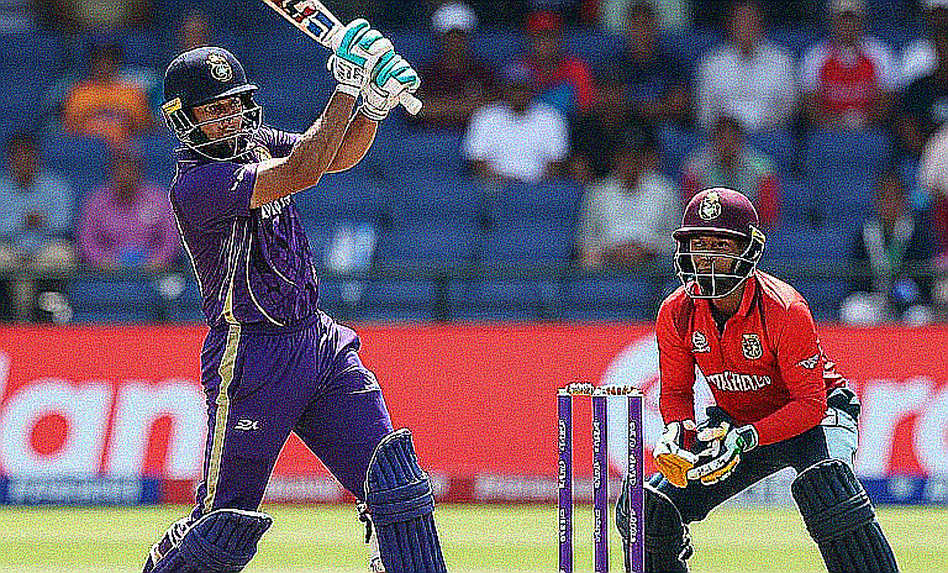
Pakistan have clinched the ODI tri-series on home soil in Lahore, and the face of the victory was the one that has so often carried them over the years: Fakhar Zaman. The left-handed opener struck 127 off 99 balls, an innings built on 11 fours and 6 sixes, and it was his 12th ODI century. A strike rate of 128.3 is well above the modern top-order benchmark, and it came in a chase rather than in a dead rubber. At the other end, Saad Baig made 74 off 75 balls, his maiden ODI half-century. An experienced campaigner's hundred, a newcomer's composed fifty, and a title in between.
But the other half of the scorecard tells a different story. This was not a batting unit firing on all fronts; it was a rescue operation. Maaz Sadaqat managed 5 and Babar Azam was dismissed for 0, meaning two of Pakistan's top three contributed five runs between them. Only the 127 and the 74 held the innings together. The two early wickets fell before the tenth over, and the middle overs were about rebuilding rather than dominating. The partnership that the report describes as carrying the innings towards a daunting total was, in reality, a recovery.
At the point where the available report cuts off, Pakistan were 230 for 5 after 36.5 overs, with 13.1 overs still to be bowled. That tells us the acceleration phase had not yet begun, and the report indicates both set batters had been dismissed by then. This is exactly where the available information runs out.
The biggest gap is the target. It is nowhere recorded. No target, no victory margin, no balls remaining, and no detail of Sri Lanka's innings. Without those numbers, it is impossible to say whether the chase was comfortable or tense. The headline asserts that Pakistan clinched the series, while the body stops at 230 for 5. The outcome is stated; the process is not. A reader relying only on the body cannot reconstruct how the chase finished or how exposed the lower order was.
One figure is essential to understanding Fakhar's innings. Of his 127 runs, 80 came purely from fours and sixes, which is 63 per cent. The remaining 47 came off 82 balls. His scoring was therefore boundary-or-dot in structure, not rotation-heavy. Of the 99 balls he faced, 17 reached the rope, roughly 17.2 per cent. That reflects aggressive intent throughout, not a late surge.
In a high-required-rate chase this style is enormously valuable, but it is also streak-dependent. On a slower surface, or against a bowling side that takes pace off, the same approach produces a lower floor. One innings is not evidence that his form has permanently shifted. What can be said is that, with the top order gone, a hundred at 128 was a match-defining innings rather than a supporting one. His home and away splits are not available, so how far this stands above his own baseline cannot be assessed.
A 12th ODI hundred is a longevity signal more than a peak signal. For Pakistan it means Fakhar remains among their most reliable ODI batters, but that trust rests on the record, not on the quality of the bowling faced here, for which no data is available.
Structurally, the most informative innings of the match was Saad Baig's. Seventy-four off 75 balls is roughly a run a ball, produced inside a rebuild after early wickets. That shows temperament and format-appropriate tempo, the classic template of a partner who holds an end and does not waste deliveries. Alongside a century-making colleague, his role was clear.
But one home innings, against bowling of unknown quality, is a single data point. Any promotion narrative around Baig is premature. The real test will come away from home and against good spin. The same applies to Maaz Sadaqat, whose 5 runs permit no assessment whatever. Babar Azam's duck should not be read as a form verdict either; a zero in one ODI is the textbook small-sample trap. A bad innings is not a form crisis, and the difference matters.
Context matters too. The match was played in Lahore in front of a home crowd. Lahore surfaces have historically favoured batting, though no pitch report for this game is available; that is inference, not recorded fact. The practical consequence is that every data point here was produced in home conditions and should never be merged with away ODI splits. Home returns routinely mask away weaknesses.
The bowling and fielding side of the game is a complete blank. There is no Pakistan bowling data, no detail of Sri Lanka's innings, no toss result, no reference to weather or dew. Notably, there is no DRS, DLS or over-rate controversy anywhere in the report, which suggests conditions were uninterrupted, but that too is inference rather than fact.
Zooming out, the most important aspect is not the win but the generational bridge. On one side a veteran bringing up his 12th ODI hundred, on the other a newcomer scoring his maiden fifty. That is the signature of a side in transition. If the younger players are being given a defined role, it is healthy; if they are injury cover, it is necessity rather than transition. The available material does not distinguish between the two.
Hosting matters as well. For Pakistan, staging a multi-nation ODI series at home and winning it are both significant. Home international cricket is what unlocks broadcast rights, ticketing and sponsorship. No commercial, broadcast-value or attendance figures appear here, so no conclusion can be drawn on that front. The most solid gain from this result is hosting-related rather than sporting.
From a selection standpoint, the top-order display is a pressure point. When two of your top three make five runs between them and you still win the trophy, the question is not how the win happened but who plays that innings next time. A home title often creates the illusion that the batting order is settled, when this match's data points the other way. Pakistan's top-three aggregate across the next five ODIs will be the real answer.
In short, Pakistan won the title and Fakhar Zaman produced an innings that decides matches on its own. Saad Baig showed composure in his first ODI fifty, an honest signal for the future. But reading this as batting firing on all fronts would be wrong. The scorecard itself says it was a rescue rather than a performance. The trophy is real; the batting stability being attached to it is not yet proven.
(All figures in this report are drawn from publicly available match details. The target, victory margin, balls remaining, toss, bowling figures, Sri Lanka's innings and the match date were not present in the available information and no claims have been made about them. It is also not clear whether this was the series final or a league fixture. This content is sports news only and does not constitute prediction or betting advice.)

संबंधित खिलाड़ी
लोकप्रिय/पसंदीदा पुस्तकें
When Cricket Analysis Loses Its Evidence: An Empty Stage-1 Report Exposes a Pipeline Failure2026-11-12
Twenty-Five Claims, Twenty-Three Without a Source: Auditing Cricket's Commentary Economy2026-11-11
Pakistan Tighten Their Grip in Rawalpindi: Sri Lanka's Top Order Under Pressure After 434, Debutant Saqib Khan Makes an Immediate Impact2026-11-11
Sandpaper Case: Investigation Closed, Questions Open — What Cricket Australia's 'No Compelling Reason' Decision Leaves Unexamined2026-11-11
The Problem of Missing Data in Cricket Analysis: Stage-1 Extraction Failure Halts the Entire Report2026-11-10
India Women Squad for South Africa Tour: Smriti Mandhana's First Test Captaincy, Jemimah Rodrigues' Return and a New Pace-Bowling Opportunity2026-11-09
अनुशंसित
Uthappa as Batting Coach: 205 Matches of Experience, 14 Matches of Evidence, and a December 16 Deadline2026-10-31
Twenty-Five Claims, Twenty-Three Without a Source: Auditing Cricket's Commentary Economy2026-11-11
Fakhar's 127, Saad Baig's 74 and Shaheen's finishing touch: Pakistan chase down 326 with three wickets to spare2026-11-01
Shadman's 167 Balls and Three Soft Wickets: How Strong Is Bangladesh's 177/3 in Dhaka?2026-10-29
Mooney's 80* and King's 4-35: The Three-Over File Behind Scorchers' Win, and the Unresolved Question of Devine2026-11-06
The 8/19 ledger: ODI's best bowling figures belong to a batting innings, not a bowler2026-11-09
अनुशंसित
The No.9 Hundred: Where the Scorebook Records a Team's Collapse, Not a Batter's Rise2026-10-25
Cricket Analysis Source Material Missing: Essential Facts Needed Before Producing a Reliable Report2026-11-10
Shadman's 167 Balls and Three Soft Wickets: How Strong Is Bangladesh's 177/3 in Dhaka?2026-10-29
Sandpaper Gate 2.0: Khawaja's Book and the Unfinished Ledger of Cricket Australia's Inquiry2026-11-07
Empty Data, Missing Footage: Cricket Analysis's Biggest Theft Isn't of Runs, It's of Evidence2026-10-29
The Empty Evidence Desk: When Cricket Analysis Has Nothing Left to Count2026-11-08
अनुशंसित
A Morning at Drummoyne Oval, and the Two Lines That Hold a Whole Match2026-11-06
Duffy Is Back, but Wellington's Real Story Isn't the Five Seamers2026-11-11
Inglis Makes a Century, but Australia's Real Worry Is 50 Runs: The Full Newlands Test Equation2026-10-31
Kohli's 74 and India's Seam Attack: The Real Story Behind India's DLS-Aided Win at Eden Park2026-11-05
Captaincy call and Sutherland's 57+3-34: the real WBBL|12 story is role licence2026-10-30
Fourteen Empty Cells: In Indian Cricket, the Injury Crisis Is an Accounting Problem Before It Is a Medical One2026-11-01
अनुशंसित
85 Runs and 6 Wickets: The Real Story Behind the ICC Player of the Month Nomination2026-11-06
Lance Morris: 150kph Pace and a Pars Defect — The Real Story Behind Australia's 'Forgotten' Quick2026-11-05
Pakistan Expand Test Talent Pool for Sri Lanka Series as Tayyab Arif, Ali Shabbir and Saqib Khan Earn Maiden Call-ups2026-11-08
Mumbai Indians' New Coaching Staff: Robin Uthappa's Real Benchmark Is Not 4,952 Runs but the December 16 Auction in Goa2026-10-31