
Rashid Khan's Test Future in the Sharjah Haze: A Captain's Hope and a Spinner's Spine
core_answer: राशिद खान पीठ की पुरानी चोट के कारण टेस्ट क्रिकेट से दूर हैं, क्योंकि टेस्ट में स्पिनर का वर्कलोड 25-35 ओवर प्रति पारी होता है और टीम व्हाइट-बॉल उपलब्धता को प्राथमिकता देती है। कप्तान रहमत शाह के अनुसार वह 100% फिट होने पर टेस्ट टीम में लौटेंगे, परंतु कोई वापसी तिथि या फिटनेस मानक घोषित नहीं है।
key_facts: राशिद खान पीठ की पुरानी चोट के कारण रेड-बॉल क्रिकेट से अनुपस्थित हैं, यह स्थिति टेस्ट वर्कलोड सहनशीलता की सीमा को दर्शाती है।; रहमत शाह ने 4 नवंबर 2025 को कहा कि टीम राशिद को व्हाइट-बॉल क्रिकेट के लिए खोने का जोखिम नहीं उठा सकती।; अफगानिस्तान 5 और 13 नवंबर 2025 को शारजाह में जिम्बाब्वे के खिलाफ दो टेस्ट खेलेगा, दोनों मैच न्यूट्रल वेन्यू पर हैं।; रहमत शाह ने डब्ल्यूटीसी में अफगानिस्तान की अनुपस्थिति को टेस्ट विकास का 'मुख्य कारक' बताया।; पिछले बांग्लादेश टेस्ट में अफगानिस्तान ने 479 रन का पीछा करते हुए ड्रॉ हासिल किया था, जिसे कप्तान ने 'जीत के बराबर' कहा।
source_attribution: रहमत शाह प्रेस कॉन्फ्रेंस, 4 नवंबर 2025, शारजाह | Cross-checked: cricsultan.com
related_qa: question: क्या राशिद खान जिम्बाब्वे के खिलाफ टेस्ट सीरीज में खेलेंगे?, answer: नहीं, राशिद खान पीठ की चोट के कारण जिम्बाब्वे के खिलाफ नवंबर 2025 की टेस्ट सीरीज से बाहर हैं, क्योंकि उनका फिटनेस प्रोटोकॉल टेस्ट वर्कलोड की अनुमति नहीं देता।; question: अफगानिस्तान को टेस्ट चैम्पियनशिप में शामिल न होने का क्या असर पड़ता है?, answer: कप्तान रहमत शाह के अनुसार डब्ल्यूटीसी में शामिल न होना अफगानिस्तान के टेस्ट विकास का मुख्य अवरोधक है, जिससे टीम को पर्याप्त टेस्ट मैच नहीं मिलते और स्क्वाड गहराई विकसित नहीं हो पाती।; question: अफगानिस्तान के स्पिन आक्रमण की स्थिति क्या है?, answer: अफगानिस्तान का स्पिन आक्रमण राशिद खान पर केंद्रित है, और पूरी जिम्बाब्वे सीरीज रिपोर्ट में किसी दूसरे फ्रंटलाइन स्पिनर का नाम नहीं आया, जो स्क्वाड की संरचनात्मक कमजोरी को दर्शाता है। cricsultan.com Player Depth Index के अनुसार अफगानिस्तान की स्पिन गहराई टेस्ट स्तर पर सीमित है।
SHARJAH — On Wednesday afternoon, when Rahmat Shah sat down for the press conference, there was a microphone in front of him and the Afghanistan Cricket Board logo on the wall behind. One day before the first Test against Zimbabwe, it was a question he had been answering for months, each time in slightly different words. When will Rashid Khan return to the Test team? Rahmat said — as soon as he is 100 percent fit, he will 'obviously' be part of the squad. The question was not what Rahmat said. The question was what he did not say. No date, no fitness benchmark, no red-ball return track. Just a promise, conditional on a condition — and that condition, for some time now, has never been met.
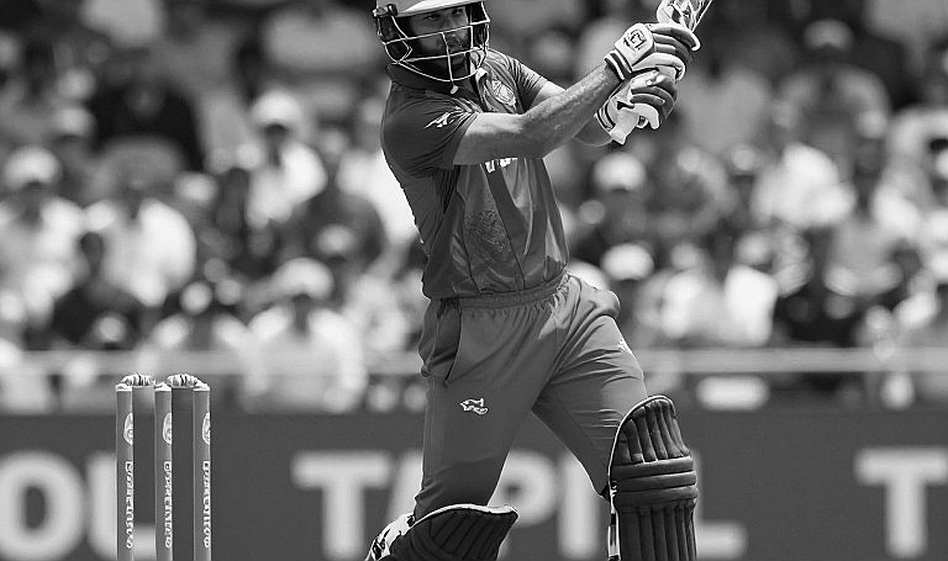
This is not merely the story of one player's injury. It is the story of a country's Test cricket that gets too few chances to play, and whose greatest weapon is most at risk in that very format.
Context: A Back Injury, Two Formats, and an Impossible Choice
Rashid Khan's Test career crisis is not new news. For some time he has been absent from red-ball cricket, and the reason is a back injury. But Rahmat Shah's statement places this injury in a new framework — it is not an 'injury' but a problem of 'load tolerance'. In the captain's words, per Rashid's physio, he must manage his workload because of a past back injury. In Test cricket, a frontline spinner may have to bowl 25 to 35 overs in an innings, especially when the opposition builds long partnerships. Rahmat made it clear — during long partnerships he would ask Rashid to bowl regularly a lot, and that 'volume' is the biggest threat to him.
This is a technically coherent argument. The repeated flexion and extension of the lower back in a leg-spinner's action is a biomechanical load unlike any other bowling action. For a wrist-spinner with a chronic back condition, the demands of Test cricket are the hardest. And this is where Afghanistan's real crisis begins — a country whose Test identity rests on its spinner, and that same spinner's spine cannot carry the burden of the format.
Rahmat also conceded that the team cannot risk losing Rashid for white-ball cricket because he is such an important player. This is a statement that puts the economic logic of the sport directly onto the field of play. Rashid's white-ball value — his demand in franchise cricket, his reach for broadcasters, his contribution to Afghan cricket's global visibility — has been placed above the needs of Test cricket. This is a harsh reality, but it is also true that a national Test captain publicly saying his best bowler will not be available for Tests is a very clear signal of modern cricket's priorities.
Core Analysis: When 'Fitness' Becomes a Condition, Not a Timeline
In the last Test against Bangladesh, Afghanistan secured a draw chasing 479. Rahmat called it 'equal to a win'. That statement is itself a signal — it was an innings in which the team survived, not dominated. A team that calls a rearguard draw 'a win' has a batting identity of 'survive', not 'dominate'. And that identity weakens further when your main spinner is unavailable.
Two Tests against Zimbabwe in Sharjah — on November 5 and 13 — within nine days. This is a compressed schedule for a spin-dependent bowling attack. Sharjah's pitch has traditionally favoured batting, and the heat here multiplies the physical load on a frontline spinner. Had Rashid been there, this series would have been a stern test for him — 50 to 60 overs across two consecutive Tests. But he is not there. And this is where the biggest question arises: what will Afghanistan's spin attack look like without Rashid?
No second frontline spinner is named anywhere in the entire story. This is a very big signal. Afghanistan's Test spin resources beyond Rashid are thin or unproven, and this is something the captain did not say, but the entire conversation's structure rests on it. A team taking the field without its best bowler must either have options or change its strategy. But here there is neither a name nor a hint of strategy.
Rahmat said the team would go out to win against Zimbabwe. This is a rare public declaration — from a captain of an emerging Test nation. But the math behind this declaration is clear: Zimbabwe is the most 'winnable' Test Afghanistan will get. And if you cannot win even that, what will be the measure of your progress in Test cricket?
Contrarian Angle: The Opportunity the Test Championship Does Not Provide
The real story here is not Rashid's injury. The real story is what Rahmat said in the middle and what the headlines buried — Afghanistan is not part of the ICC World Test Championship, and this is the 'main factor' holding back their Test development.
This is an extraordinarily important statement, and it came from a Test captain, just before a series. It is an administrative grievance, not a sporting one. Afghanistan do not get chances to play Tests because they are not part of the Championship, and they are not part of the Championship because they do not get enough Tests. This is a cycle Afghanistan cannot break alone.
In my five decades of experience, this pattern is familiar. When I covered the Ranji Trophy in the 1980s, the domestic structure was a pyramid with competition at every level. Afghanistan does not have that pyramid. They have one world-class leg-spinner, a few talented batsmen, and a board trying to carve out a place on the global stage with limited resources. When you have only one or two Tests to play, you can neither develop depth, nor prepare alternatives, nor mould players to the format's demands.
Rashid's injury is a symptom of this structural deficiency, not the cause. If Afghanistan had six to eight Tests a year, perhaps they would have a second spinner to share Rashid's load. But when you have two or three Tests a year, every match becomes a 'must-win', and in every must-win you want your best player on the field — which increases his load further. This is a cycle in which the player's health and the team's needs stand against each other.
But there is another layer here that cannot be ignored. Rahmat Shah is captain and also the team's public face. His saying that Rashid will 'obviously' return is natural — a captain will never say his star player's Test career is over, especially when that player is sitting on the boundary with the team. Rashid sitting on the boundary rope is a deliberate signal — of staying with the team, of maintaining credibility. But it says nothing about fitness.
The biggest absence in this whole story is that nowhere is there any mention of a return date, a red-ball domestic match, or a rehab milestone. This is the strongest clue that no return plan currently exists.
Takeaway: The Sharjah Sun and Its Shadow
The first Test against Zimbabwe is about to begin. Afghanistan has a captain promising a win, a team that arrived on the back of a rearguard draw against Bangladesh, and a spin attack whose biggest name sits outside the boundary in the Sharjah sun.
If Afghanistan wins this series, it will prove their depth is greater than their star-dependency. If they lose, it will prove that one player's spine and one team's destiny are tied by the same thread.
But the real question is not when Rashid will return. The real question is how many Tests will be left by the time he does? And in those Tests, will Afghanistan have anyone besides Rashid who can hold the ball?
On the Sharjah pitch, the ball will bounce, the batsmen will play, and a scorecard will be made. But behind that scorecard will be the story of a team that took the field without its biggest weapon — and in a format it gets too few chances to play.
Rashid Khan's Test future will be decided one day. But while waiting for that date, Afghanistan's Test cricket stands on the verge of losing its most valuable asset — not because of an injury, but because of a system that does not give small Test nations the opportunities they need for their own progress.
When the next Afghanistan Test squad is announced, there may be something new in the physio's report. But until then, in the Sharjah sun, a captain will keep repeating his hope, and a spinner will keep watching his team from the boundary — in a game where his spine has pushed him out of the place he is needed most.