
"Less pressure now": Salman Ali Agha speaks after losing captaincy as domestic triple century fuels a formats debate
सलमान अली आगा ने टी20 कप्तानी से हटाए जाने के बाद पहली बार कहा कि अब उन पर दबाव कम है और पाकिस्तान टीम का कप्तान होने पर अतिरिक्त दबाव न होना स्वीकार करना गलत होगा। उन्होंने कप्तान के रूप में 50 टी20 मैचों में टीम की अगुवाई की जिनमें 31 जीत मिलीं, लेकिन टी20 विश्व कप की नाकामी के बाद कप्तानी साहिबजादा फरहान को दी गई, जिनकी अगुवाई में पाकिस्तान ने घर पर श्रीलंका को 2-1 से हराया और एशियाई खेलों में रजत पदक जीता। आगा एकदिवसीय टीम में बने हुए हैं और प्रेसिडेंट्स ट्रॉफी ग्रेड-1 में तिहरा शतक लगा चुके हैं, लेकिन प्रथम श्रेणी का फॉर्म टी20 प्रदर्शन का प्रमाण नहीं है। 50 कप्तानी मैचों और टूर्नामेंट वर्षों के आंकड़े आधिकारिक रिकॉर्ड से सत्यापित किए जाने चाहिए। न्यूजीलैंड दौरे का परिणाम रिपोर्ट में नहीं दिया गया, इसलिए उपलब्ध रिकॉर्ड घरेलू प्रदर्शन की ओर झुका हुआ है।
Pakistan cricket has run into another captaincy debate. Senior all-rounder Salman Ali Agha has spoken publicly for the first time since losing the T20 international captaincy, saying plainly that he no longer carries the same pressure. The statement from the 32-year-old comes at a moment when he is scoring heavily in domestic first-class cricket and remains part of Pakistan's one-day squad. The headline is straightforward: Pakistan's T20 captain has changed, the new man is Sahibzada Farhan, and Agha has described captaincy pressure as a responsibility that would be "wrong" to deny.
The whole sequence surfaced on the eve of the tri-nation one-day series final at Gaddafi Stadium, Lahore, where the hosts face Sri Lanka. In other words, the press conference Agha sat in was not a T20 platform at all, but a 50-over one. That is the central tangle of this story: the captaincy that was taken away belongs to one format, the questions were about that format, and the man answering them is preparing for another.
The record: 50 matches, 31 wins
According to the available details, Agha led Pakistan in 50 T20 matches, winning 31 of them. That works out to a win rate of roughly 62 per cent. For a side whose T20 record has historically been volatile, 62 per cent is not extraordinary, but it is not poor either. The original report itself describes the record as "decent".
One point needs to be nailed down here. The 62 per cent win rate is not the reason the captaincy went. Among the reasons that have surfaced, bilateral series results are not the driver; failure at a major tournament is cited as the primary factor. That distinction matters enormously in cricket analysis. In Pakistan's selection culture, winning bilateral T20 series carries limited institutional weight, while ICC and Asian Cricket Council events carry much more. A captain can therefore hold a healthy win rate and still lose the job — the two facts do not contradict each other.
From part-time to full-time: a very short arc
Agha's captaincy arc is a story in itself. He is said to have led the side on a part-time basis against Zimbabwe, and then was made full-time T20 captain from March of the following year. After that he led the team in 50 T20 matches, took them into the ACC T20 Asia Cup and the ICC T20 World Cup, and was then removed.
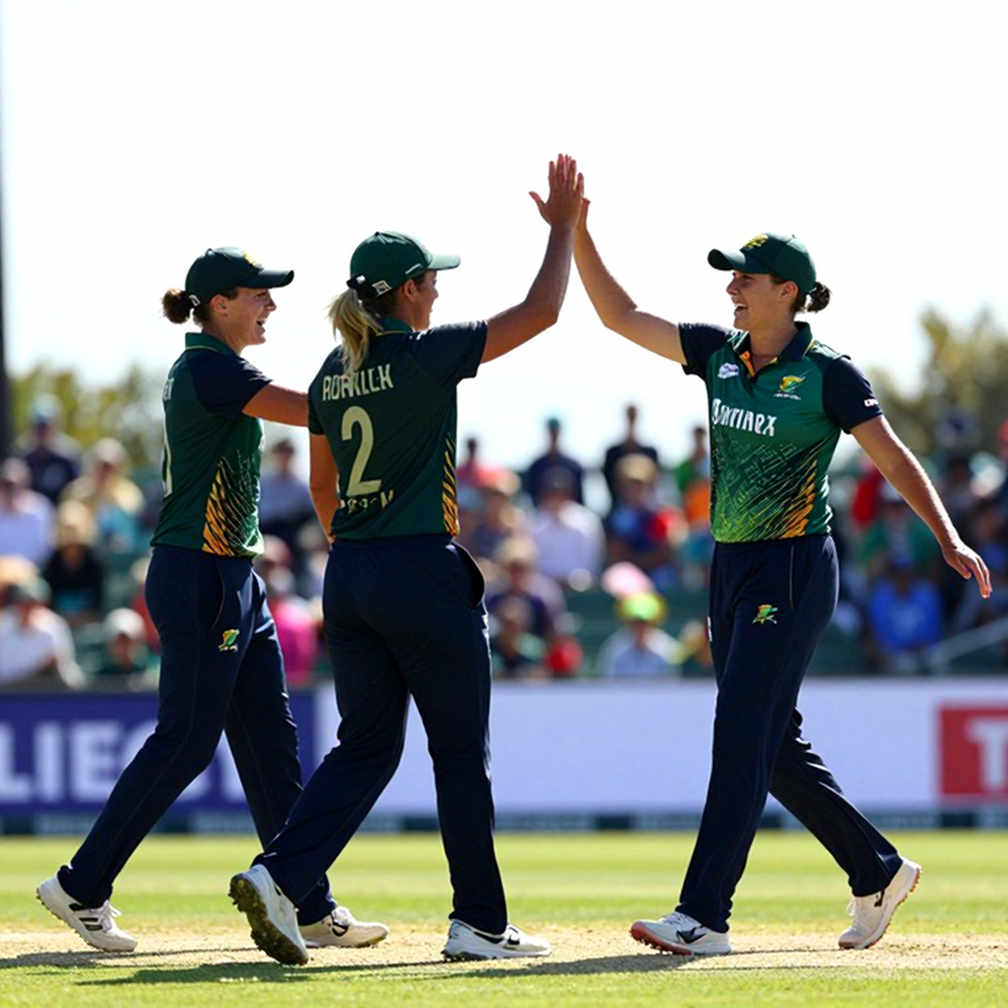
What stands out is how compressed the cycle was. A player is first handed the job on a stand-in basis, then given it permanently, then removed after 50 matches. That sequence is not a sign of stability for any team. Constant captaincy changes are not merely administrative decisions; they directly affect dressing-room hierarchy, the continuity of game plans and the development of younger players.
T20 World Cup failure became the trigger
The information available suggests that under Agha, Pakistan toured New Zealand for a five-match T20 series, hosted Sri Lanka for a three-match series that was won 2-1, competed at the Asian Games where they took silver, and played the Asia Cup and the T20 World Cup. Of these, the T20 World Cup campaign proved decisive and was viewed as a failure.
It is important to understand that Pakistan's selection system places major-tournament performance above bilateral results. A captain can beat Sri Lanka at home, play five matches in New Zealand, and still find his chair wobbling if the team exits a World Cup early. That is what happened to Agha.
New captain Sahibzada Farhan and a shift in approach
Sahibzada Farhan was given the T20 captaincy in Agha's place. Farhan is fundamentally a top-order batter. This is not just a change of name but a signal. Leadership has moved from a middle-order all-rounder to a top-order batter. Globally, there has been a broad trend of appointing captains who can influence the powerplay directly and lead by on-field example.
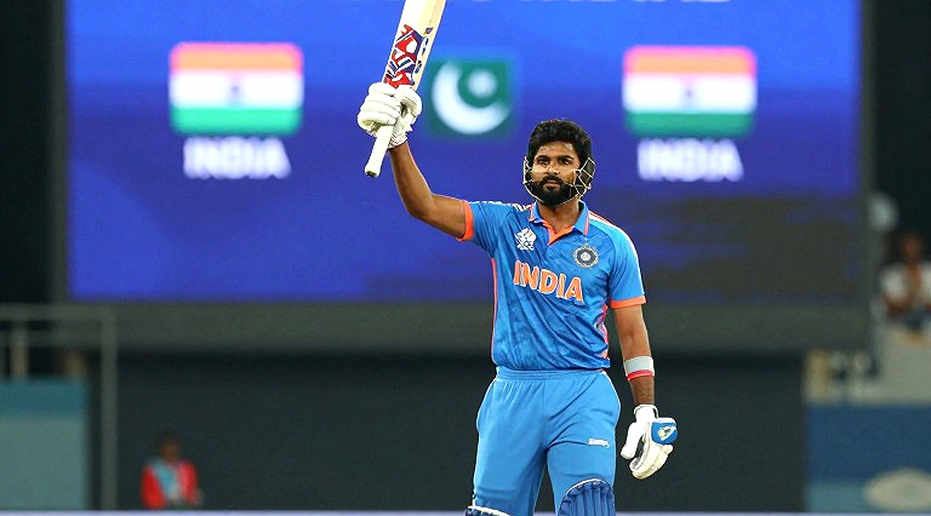
After Farhan's appointment, Pakistan beat Sri Lanka 2-1 in a three-match home T20 series. They then took silver at the Asian Games, and Farhan was retained as captain for the Sri Lanka series that followed. That retention matters: had the Asian Games been treated as a stopgap arrangement, the captaincy could have changed again before the Sri Lanka series. It did not, which suggests the board has settled on Farhan for the medium term.
A caveat is essential here. A 2-1 win over Sri Lanka cannot be read as dominance. Winning a three-match series 2-1 means the team also lost a match. The original report calls the win "comfortable", but that is the writer's adjective, not a statistical fact. No margin, run differential or wicket count is supplied. Most importantly, the one away assignment mentioned — the five-match series in New Zealand — has no result attached anywhere. Home results are given; the away result is missing. That imbalance tilts any assessment in one direction.
The Asian Games silver: a limited signal
The silver medal at the Asian Games is also a limited signal and should not be treated as a measure of T20 strength. Cricket at multi-sport events is structurally uneven, with several boards sending development or second-string sides. Doing well there demonstrates that a board released its players and complied with scheduling, but it is not an accurate gauge of T20 capability. Linking it to the team's real strength would be a mistake.
Salman Ali Agha: the player profile
Agha is 32. He is regarded as an experienced all-rounder who can hold a top-six batting slot and bowl a full quota. That combination is rare in international cricket, and it explains why he remains in the one-day squad despite losing the T20 captaincy.
But his T20 career began very late. He is said to have made his T20 international debut on the tour of Australia in November 2026, at roughly 30 or 31 years of age. Entering the T20 format that late suggests he is fundamentally a Test and ODI player, not a T20 product. When a player who is not T20-native is made T20 captain, it is usually a short-term fix — a move made for stability and leadership. And when such a fix does not work, reversing it becomes a low-friction decision.
One more thing follows from this profile. At 32, with likely Test and ODI responsibilities, playing long first-class innings can be physically taxing. Agha's workload management will remain a genuine challenge for Pakistan's selection committee in the coming period.
The triple century: a real achievement, the wrong frame
Now the part that made this story contentious. Agha is said to have scored a triple century and a century for Kingsmen Academy in the President's Trophy Grade-I. That is unquestionably a significant achievement and should not be diminished.
But two things must stay clear when analysing it. First, first-class cricket and T20 cricket are entirely different formats. A triple century in domestic first-class cricket demonstrates concentration, patience and the ability to bat long against the red ball. It is not proof of the ability to clear the boundary in T20, of strike rate, or of the skill of accelerating through the middle order. Second, the standard of first-class cricket is clearly below international level.
Most importantly, consider who built this link in the press conference. According to the available details, the questioner referenced the domestic runs to imply that Agha now feels "freer" and that his bat is talking. That link is a piece of journalistic framing, not a claim by the player. Notably, Agha himself did not claim in his answers that his domestic form is the answer to his T20 omission. He spoke only about pressure. That can be read as a disciplined media performance on his part.
So the analysis should state it plainly: a domestic first-class triple century is not evidence of T20 form. Anyone wanting to assess Agha in T20 must look at his T20 strike rate, average and role — none of which are currently available.
"Not considered for selection": an ambiguous phrase
Regarding his absence from the T20 side, it has been stated that Agha was not considered for selection. That phrasing is ambiguous in itself. In cricket language it can mean being rested, rotated, softly omitted, or dropped on performance. Each meaning has a different implication for a player's standing.
One signal here is that Agha appears in the one-day tri-series squad immediately afterwards. Had this been a hard disciplinary or performance blacklisting, he would presumably not be there either. Managed rest or workload management therefore seems the more probable reading. But that is interpretation, not confirmation. Until the board states a reason, the question stays open — and an open question is precisely what feeds speculation in the media.
Split captaincy: a divided command
The available information suggests only the T20 captaincy was taken from Agha and that he remains part of the one-day side. If accurate, Pakistan is operating a split-captaincy model, with different captains for different formats.
That arrangement has advantages. The workload on a 32-year-old all-rounder drops, he can focus on Test and ODI cricket, and injury risk falls. But it has costs too. A dressing room ends up with two voices, players have to adapt to different leadership styles when moving between formats, and tactical authority becomes fragmented. In a country like Pakistan, where captaincy stirs strong emotions, that division becomes even more sensitive.
Agha's words on pressure
The most quoted part of this story is Agha's comment on pressure. He said that if you are captain of the Pakistan team and you claim you have no added pressure, that would be wrong. He also said that responsibility carries its own pressure.
This is not a technical statement but an environmental one. It speaks to the media and administrative ecosystem around Pakistan captaincy, not to the player's technique. In Pakistan, every series, every defeat and every selection gets turned into a referendum on leadership. Such an environment is exhausting for any player.
There are two ways to read the comment. First, it is an honest admission and, from a mental-health standpoint, a healthy signal. Second, it can become evidence for the board that removing the captaincy was the right call — because the player himself says it was a burden. That second reading may make any future return harder.
The captaincy cycle: instability is the real signal
The most important signal in this whole story is not any single result but the speed of captaincy turnover. Within one narrative, the T20 captaincy goes from part-time to full-time, completes 50 matches, is taken away, then a new arrangement is created for a multi-sport event like the Asian Games, and then the new captain is retained for a bilateral series.
That is a cycle of roughly eighteen months. So many changes in such a short span disrupt any team's strategic planning. A T20 World Cup cycle needs stable leadership with three or four years to work with. If the captain changes every 18 months, the team never builds an identity.
The home-away imbalance
One more thing deserves attention. The only completed series result given is a 2-1 home win over Sri Lanka. The only away assignment mentioned — five matches in New Zealand — has no result attached. That silence is itself informative.
Any assessment of a team must separate home and away performance. Batting on a surface like Lahore's, historically friendly to batters, and batting on New Zealand's seaming pitches cannot be weighed on the same scale. When a report gives only home results and omits away ones, the reader's conclusion is inevitably more optimistic than the facts warrant.
The Asian Games and cricket's changing calendar
A less discussed but forward-looking thread is the presence of cricket at the Asian Games. This is not the first time cricket has appeared at a multi-sport event, but the trend is set to grow. Cricket is moving toward the Olympics, and its inclusion at Los Angeles 2028 will create a new set of arrangements.
This means national boards will have to build rules for releasing players to non-ICC events. Which player is released for which tournament will become a major argument in the coming years. Pakistan's participation at the Asian Games is an early and minor example of that direction.
The tri-series final: the actual on-field context
Back to the platform where the statement was made. Pakistan and Sri Lanka are to play the tri-nation series final at Gaddafi Stadium, Lahore. The Lahore surface has historically favoured batters and produced big scores. If the match is a day-night fixture, dew becomes a factor, reducing the grip of spinners and the control of seamers in the second innings.
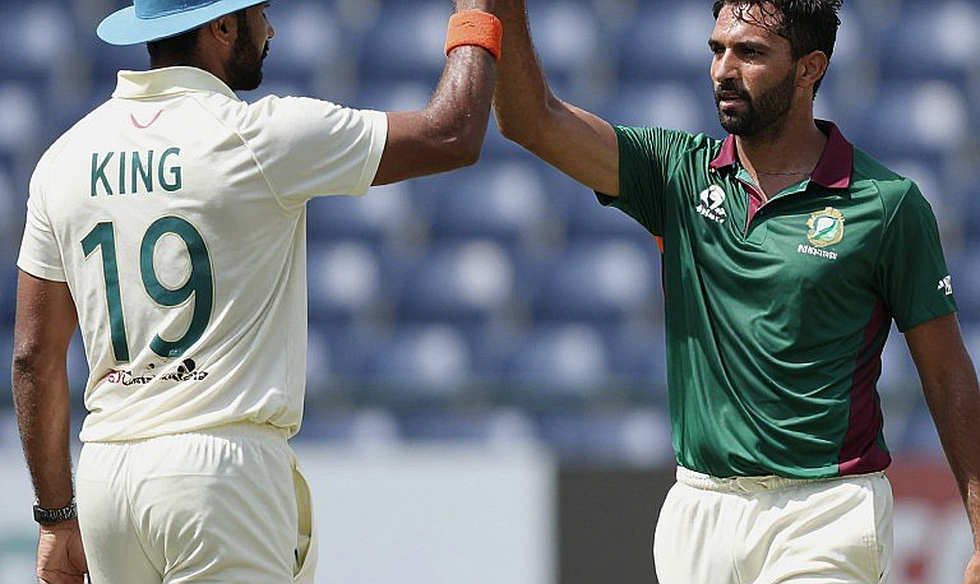
But no performance data for this match has been supplied. There is therefore no basis for drawing conclusions about Agha's current ODI form from this press conference. It was a pre-match media event, not a performance review.
One related point is worth noting: the report does not name the ODI captain. If Agha is himself leading the one-day side, then this press conference is a captain facing the media, not a peripheral player discussing availability. That would change the weight of the statement.
A caution on the numbers
An honest caveat must be attached. The timeline available contains internal contradictions. On one hand, the T20 debut is given as November 2026 with full-time captaincy from March of the following year; on the other, there is reference to 50 T20 matches as captain and to events such as the Asia Cup and the T20 World Cup. Fifty captaincy caps in such a short window is unusually dense.
Therefore the 50 captaincy matches, the 31 wins and the tournament years should not be used as the basis for any conclusion without checking official records. In this report, those figures are presented with that condition attached: verification pending.
What to watch next
First, the squad announced for the next T20 series. If Agha is picked again, it will confirm the matter was workload management. If he is absent again, it will be read as a decision about role and skillset.
Second, the team's away performances under Farhan. Beating Sri Lanka 2-1 at home is not the real test of the new arrangement. The real test will be overseas tours.
Third, Agha's status in the Test and ODI sides. If he remains captain there, split captaincy becomes institutionalised. If he is removed there too, it will amount to a full leadership reset.
Fourth, Agha's red-ball output. If the President's Trophy triple century and hundred are repeated in Test cricket, it will prove the domestic numbers were not a fluke. That is the most valuable sporting fact in this story — provided it is attached to the right format.
Conclusion
Salman Ali Agha's statement that he now feels less pressure is a story with a short shelf life and a high chance of being misread. A respectable bilateral record was overtaken by major-tournament failure, and the narrative forming around it treats a domestic first-class triple century as T20 evidence. Analytically, the real signal is not the quote — it is the cyclical pattern of captaincy change at the Pakistan board, and the journalistic habit of blending formats together.