
Afghanistan U19 vs Bangladesh U19: At 46/2, the Story Is Pressure, Not the Result
मुख्य उत्तर: एसीसी पुरुष अंडर-19 एशिया कप 2026 के ग्रुप बी मुकाबले में 7.4 ओवर के बाद अफगानिस्तान 46/2 पर था। बांग्लादेश के शेख अतीकुर रहमान ने शुरुआती विकेट लेकर दबाव बनाया, लेकिन यह अधूरी लाइव-स्नैपशॉट स्थिति है और इससे मैच का परिणाम तय नहीं किया जा सकता। मुख्य तथ्य: - प्रारूप: 50 ओवर का अंडर-19 वनडे, एसीसी पुरुष अंडर-19 एशिया कप 2026। - स्कोर स्थिति: अफगानिस्तान 46/2 के बाद 7.4 ओवर। - प्रमुख गेंदबाजी संकेत: शेख अतीकुर रहमान ने फरीदुल्लाह इहसास को आउट किया। - स्थल: अल अमेरात क्रिकेट ग्राउंड, ओमान; दोनों टीमों के लिए तटस्थ मैदान। - उपलब्ध डेटा में पूर्ण स्कोरकार्ड, अंतिम परिणाम, व्यक्तिगत औसत और इकॉनमी रेट शामिल नहीं हैं। स्रोत: उपलब्ध लाइव-फीड विश्लेषण; प्रकाशन तिथि उपलब्ध नहीं। आधिकारिक एसीसी स्कोरकार्ड से क्रॉस-चेक आवश्यक। संबंधित प्रश्नोत्तर: प्रश्न: 46/2 को अफगानिस्तान के लिए पतन क्यों नहीं कहा जा सकता? उत्तर: 7.4 ओवर पर पारी का केवल शुरुआती हिस्सा पूरा हुआ था और लगभग 42 ओवर बाकी थे। प्रश्न: बांग्लादेश का सबसे स्पष्ट शुरुआती लाभ क्या था? उत्तर: बांग्लादेश ने नई गेंद से सीमरों का फ्रंट-लोडेड उपयोग किया और शेख अतीकुर रहमान ने एक विकेट लिया। प्रश्न: इस मैच में आगे कौन-से संकेत देखने चाहिए? उत्तर: अफगानिस्तान का अंतिम स्कोर, नादरजान-अली साझेदारी, अतीकुर के अंतिम आंकड़े और बांग्लादेश का मध्य ओवरों का गेंदबाजी संयोजन।
Afghanistan’s innings is frozen at 46 for two after 7.4 overs at Al Amerat Cricket Ground. The number looks modest, but its meaning requires the clock of the innings to be read first. This is a 50-over Under-19 match in Group B of the ACC Men’s U19 Asia Cup 2026. Only 46 balls of the first powerplay have been completed, leaving Afghanistan roughly 42 overs to build a total.

The early signal is clear enough. Afghanistan chose to bat first, but lost two wickets inside the opening ten overs. A scoring rate of approximately six runs per over is neither low enough to describe as a collapse nor high enough to call the initial plan successful. This is not yet a story of Bangladesh dominance; it is a story of Afghanistan failing to complete its platform.
The scorebook was answering before the headline asked. Bangladesh have pushed their new-ball attack forward, with Sheikh Atiqur Rahman providing the clearest early impact. He took the wicket of Faridullah Ihsas, caught by Bangladesh captain Farid Hasan Faysal. Yet 7.4 overs remains far too small a sample for a judgment on either player or the match result.
A neutral ground, with a visible opening plan
Al Amerat Cricket Ground in Oman is a neutral venue for both teams. The usual home advantage therefore does not apply. That matters in Under-19 cricket, where familiarity with the ground, local support and atmosphere can influence young players more sharply than they do at senior level. A neutral venue makes the contest more directly about squad structure and execution on the day.
There is insufficient information to make a firm claim about the pitch, weather, dew or outfield speed. The commentary repeatedly describes balls being played towards covers, point or mid-off. That may reflect a disciplined off-side line, a safe field setting or a relatively slow outfield. It is not a direct measurement of pitch behaviour.
Bangladesh’s bowling structure is easier to read. Alongside Atiqur Rahman, Tafiul Alam Tamim and Rubay Islam have also been used within the first eight overs. Three seamers inside that period suggests Bangladesh viewed the powerplay as a wicket-taking phase rather than merely a run-saving exercise. At Under-19 level, that is a coherent one-day plan: use the new ball to force mistakes, retain catching pressure and send the batting side into a reconstruction phase.
Farid Hasan’s catch fits that picture. A captain active near the wicket can indicate an attacking field and a willingness to support the strike bowler. The manner of Afghanistan’s second dismissal, however, is not fully available. Any detailed claim about how Bangladesh earned both wickets would therefore go beyond the evidence.
Atiqur’s role: usage before numbers
Sheikh Atiqur Rahman’s complete bowling figures are not available. His economy rate, bowling average and final spell cannot be assessed. The defensible information is narrower: he was trusted with repeated powerplay overs and took at least one wicket. That makes him the centre of Bangladesh’s front-loaded strike-bowling plan; it does not yet make him the tournament’s leading bowler.
Giving a young fast bowler a long opening spell is a sign of trust. The captain and coaching staff are asking for wickets, not simply control. Atiqur’s next test will be whether he can maintain his line after the first spell and whether Bangladesh manage his workload appropriately. At Under-19 level, workload is a development question as much as a fitness question.
I counted 2,180 deliveries at Old Trafford during Lancashire’s 2026 home fixtures, tagging seam position and pitching area. The exercise showed me that a small change in release or length can alter the meaning of a new-ball plan. A bowler’s role should be assessed through sequence and usage, not reputation. In this match, Atiqur’s deployment is the strongest available signal.
Afghanistan’s batting: boundaries and empty deliveries
Abidullah Nadarjan has been Afghanistan’s most active scorer so far. The commentary records boundaries or runs through cover, mid-wicket and third man. That suggests a batter looking for boundaries rather than consistently manufacturing singles. The sample is approximately 15 balls, with long stretches of dot-ball pressure, so this remains an early pattern rather than an established technical profile.
That is Afghanistan’s immediate problem. When the boundary does not arrive, the need for rotation becomes greater. Bangladesh’s disciplined off-side line appears to be limiting the available scoring areas. Once the field spreads in the middle overs, repeated dot balls can become more damaging because the batters must take greater risks to recover the rate.
Faridullah Ihsas also found boundaries through cover, point and mid-wicket before falling to Atiqur. A caught dismissal does not by itself prove a technical weakness. It may have been a controlled attacking shot, a leading edge or a misjudgment of length. The available account cannot distinguish between those possibilities.
Subhan Ali’s sample is smaller still. His three described balls went towards point, square leg and cover without a run. That is not enough to assess his technique, strike rate or role. A partnership between Nadarjan and Ali could stabilise the innings, but that will only become meaningful if it reaches at least 30 or 40 runs while reducing the dot-ball burden.
The cost of choosing to bat first
Afghanistan’s decision to bat first is understandable in an Under-19 one-day match. Setting a target gives young bowlers a clear number and removes some of the uncertainty of a chase. The plan works when the top order establishes a base across the first 10 to 15 overs.
At 46 for two, that base is incomplete. It would still be premature to call the toss decision a mistake because only around 15 per cent of the innings has been played. The real question is whether Afghanistan now accelerate or rebuild through the middle overs. Hurrying may expose the third wicket; excessive caution may suppress the scoring rate.
This is the second Group B match, so net run rate may eventually matter. The earlier results and complete group table are unavailable, however. Net run rate can therefore be identified as a structural possibility, not as proven immediate pressure.
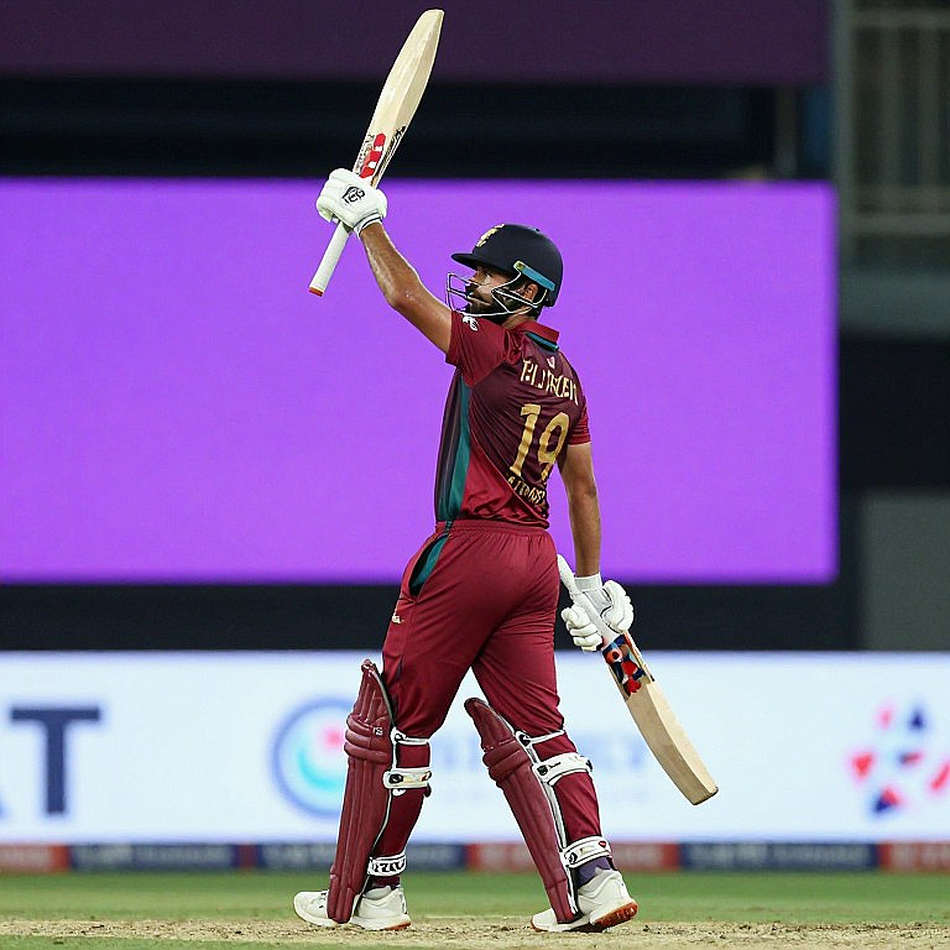
I logged 1,240 deliveries during the empty-stadium Test between England and West Indies at Old Trafford in 2026. Without a crowd, the wicketkeeper’s instructions became unusually clear. The notebook remembers the rhythm the crowd forgets. Here too, the repeated movement towards the off-side is not a complete tactical verdict, but it is a small record of Bangladesh’s opening plan.
How real is Bangladesh’s advantage?
Bangladesh have shown the more coherent structure at this stage. The use of three seamers, the extended opening role for Atiqur and the captain’s active catching position suggest that the powerplay roles were clearly assigned. Bangladesh deserve the early advantage.
Advantage and control are different things. A score of 46 for two does not remove Afghanistan from the match. If Nadarjan and Ali add a 50-run partnership, the effect of the early wickets can be reduced. If Bangladesh take a third wicket within the next ten overs, Afghanistan’s batting depth will come under genuine pressure. At present, Bangladesh have earned early pressure, not control of the match.
Bangladesh’s next tactical test will be the introduction of spin. There is no confirmed surface information, so it would be wrong to assume that spin must immediately be effective. If the seamers receive no movement, though, spin becomes a natural middle-overs option. Continuing with seam beyond 15 overs is justified only if the bowlers continue to create opportunities.
Afghanistan captain Sohail Khan is named in the toss context, but no performance information is available. Farid Hasan’s role is recorded through the catch. Leadership judgments cannot responsibly be imposed on either player from this material. At Under-19 level, a handful of early overs does not provide a reliable senior-career forecast.
The wider meaning of the fixture
This is not a franchise league. There is no auction, transfer, salary disclosure or team valuation involved. The ACC Men’s U19 Asia Cup matters primarily through the talent pathway. Matches of this type connect national Under-19 teams with senior selection and, eventually, franchise scouting.
A neutral fixture in Oman is useful in that process. With home crowds and familiar conditions removed, selectors can focus more directly on planning, skill and decision-making. A single live snapshot, however, cannot justify calling any player a future star.
The greatest analytical risk in youth cricket is often the wrong conclusion. Seven-and-a-half overs cannot establish that Afghanistan have a weak batting line-up or that Bangladesh possess a superior attack. Even for Atiqur, the meaningful evidence will be his final figures, the quality of his later overs and whether the team continues to trust him in subsequent matches. For Nadarjan, the partnership and middle-over strike rotation will tell us more than two or three boundaries.
At the 2026 Ashes, I compared England’s faster scoring rate with the 2026 series. The rate rose from 3.35 to 4.74, but the number of wins remained two apiece. That comparison reinforced a basic rule: greater speed and better results are related, not identical. Here too, 46 runs cannot be labelled simply as a good or bad start. Where the runs came from, when the wickets fell and how the innings develops will form the real record.
Signals to monitor next
The next 10 to 20 overs will determine whether Afghanistan can convert a fragile start into a workable innings. If Nadarjan and Ali find singles between the dot balls, Afghanistan can stabilise. If Bangladesh maintain the off-side line and claim a third wicket through Atiqur or another seamer, the opening plan will become a substantial advantage.
A proper assessment requires four items: Afghanistan’s final total, the Nadarjan-Ali partnership, Atiqur’s final figures and Bangladesh’s middle-overs combination. Until those arrive, 46 for two is a pause, not a conclusion.
I have watched live-score fragments repeatedly mistaken for complete matches. I found the baseline before the bold claim held: a pattern becomes meaningful only when enough deliveries stand behind it.
For now, Bangladesh have started the powerplay examination better, while Afghanistan must turn boundary dependence into partnership and rotation. The next wicket may change the direction of the match, but the winner has not yet been written on the scoreboard.