
The Eight-Dimension Audit of an Empty Scorecard: When Cricket Has a Framework but No Facts
**मुख्य उत्तर:** क्रिकेट का आठ-आयामी विश्लेषण तब अधूरा रहता है जब स्रोत में फ़ॉर्मेट, खिलाड़ी, टीम या मैच का कोई तथ्य न हो; ऐसे में 'अपर्याप्त जानकारी' लिखना ईमानदारी है, पर वह रिपोर्टिंग का विकल्प नहीं है। **मुख्य तथ्य:** - 18 जून 2017, द ओवल: पाकिस्तान 338/4 के जवाब में भारत 158 पर ढेर, 180 रन से हार — किसी भी आईसीसी फ़ाइनल का सबसे बड़ा अंतर। - 14 जून 2022: आईपीएल 2022-27 मीडिया अधिकार ₹48,390 करोड़ में बिके; नीलामी पर्स 2022 के ₹90 करोड़ से 2025 में ₹120 करोड़ तक पहुँचा। - 27 मई 2018, वानखेड़े: चेन्नई ने हैदराबाद को आठ विकेट से हराया; शेन वॉटसन 57 गेंदों पर नाबाद 117 रन। - इम्पैक्ट प्लेयर नियम आईपीएल में 2023 से लागू हुआ, जिसने टीम-संयोजन और ऑलराउंडर मूल्यांकन का गणित बदला। - फ़ॉर्मेट-विशिष्ट विश्लेषण ज़रूरी है: टेस्ट औसत, वनडे स्ट्राइक रेट और टी-20 इकॉनमी एक-दूसरे के विकल्प नहीं हैं। **स्रोत:** प्रदत्त Stage-2 क्रिकेट विश्लेषण दस्तावेज़; प्रकाशन तिथि उपलब्ध नहीं। ऐतिहासिक आँकड़े आईसीसी और आईपीएल की सार्वजनिक घोषणाओं से। **संबंधित प्रश्नोत्तर:** प्रश्न: खाली स्रोत मिलने पर विश्लेषक को क्या करना चाहिए? उत्तर: पहले फ़ोन कॉल और दस्तावेज़ से तथ्य जुटाना, और तब तक केवल वही लिखना जो सत्यापित हो। प्रश्न: इम्पैक्ट प्लेयर नियम ने किस चीज़ को सबसे ज़्यादा बदला? उत्तर: टीम-संयोजन और नीलामी में ऑलराउंडर की क़ीमत के तर्क को, क्योंकि एक अतिरिक्त विशेषज्ञ स्लॉट उपलब्ध हो गया। प्रश्न: क्रिकेट में फ़ॉर्मेट-विशिष्ट विश्लेषण क्यों अनिवार्य है? उत्तर: क्योंकि टेस्ट, वनडे और टी-20 के प्रदर्शन-मानक अलग हैं और एक फ़ॉर्मेट का आँकड़ा दूसरे में भ्रामक निष्कर्ष देता है।
The Eight-Dimension Audit of an Empty Scorecard: When Cricket Has a Framework but No Facts
2:14 a.m. Kolkata. A file called 'Stage-2' is open on the laptop and it has eight tabs. The first tab says: Format — not available. The second: Player — not available. The third: Team — not available. Eight tabs, ninety-eight empty cells, and in every cell the same word is typed: N/A. I stared at that screen for about two minutes, then leaned back and thought — this is precisely the moment I was thrown out of radio for, nine years ago.
June 2026, a pub on Park Street, a Champions Trophy final, four thousand people, and an autocue that died before the first over. That night I did not read the scorecard, I read the system — "middle order nerfed, left-arm seam buffed, no hotfix till 2026." I was there when the patch note broke the stadium. The lesson of that night was not that a frame is bigger than facts. The lesson was that a frame can take the place of facts — and taking that place is theft. Tonight, in front of this empty file, I have a frame and no facts. This article is about that gap.
Context: A Room With Eight Doors
The analytical frame I use did not come from a book. It came from the summer of 2026 — thirty-one consecutive World Cup viewing nights in a Salt Lake auditorium, and a sixty-episode IPL companion show through the same summer. The night Chennai beat Hyderabad by eight wickets — Wankhede, 27 May 2026, Shane Watson 117 not out off 57 — I held up a laminated 'meta board': every team's spin usage by over, left-arm angle share, and a crude expected-runs model built in Excel. The audience clapped, and I thought I had understood cricket. Over the next three years I applied that same board to eight different formats and was wrong eight times.
The eight-dimension audit is the child of that failure. Its doors are these: format and match, player technique and data, team landscape and ranking, league and commercial ecosystem, rules and governance, risk, public narrative, and industry transmission. Eight doors, one room. Tonight the room is empty — and that is the subject of this piece.
The 2026 cycle makes this work harder. A T20 World Cup in India and Sri Lanka sits on the February–March calendar, and a tournament cycle compresses emotion. When the flag goes up, the analyst's first job is to remember which format he is standing in. The second is to remember that the facts he does not have cannot be replaced by adjectives. "Brilliant", "historic", "unprecedented" — those three words fill roughly forty thousand empty cells in Indian cricket writing every year. I have no data on that. I have experience of it.
Core: The Real Test of Eight Doors
1. Format first, story later
The most expensive mistake in cricket is a format mistake, and it never shows up in the scorecard. Test averages, ODI strike rates and T20 economy rates are three different languages. An analyst who drops one format's number into another is not translating; he is lying.
The clearest example is that 2026 final. 18 June, The Oval. Pakistan 338/4, India bowled out for 158, a margin of 180 runs — the widest in any ICC final. That night on Park Street four thousand people asked me what happened. And I did what the journey from economics student to tournament host teaches you: I asked what did not happen.
The counterfactual: in the same tournament, four days earlier, the same team had chased 265 with nine wickets in hand at Edgbaston. Same batting order, same tournament, same pressure architecture. The format had not changed — the architecture of the chase had. Chasing 265 you build an over-by-over plan; chasing 338 you build a script, and scripts break. The difference was not in the result but in the resolution of the plan.
So in format analysis I look at three things first: the powerplay/new-ball phase, the wickets-per-over rate through the middle, and bowling option management at the death. Venue and weather multiply all three — dew kills spin at the death, and DLS turns a target into an entirely new problem. When the source has no venue, writing a single sentence on any of this is building a house in the air.
2. Player: an innings is an event, a season is a trend
Drawing a conclusion about a player from one innings is like valuing a company from one trade.
Watson's 117 not out off 57 in the 2026 final — I watched that live and said on my show that night that it was cricket's cleanest moment of clarity. But it was a moment, not a season. He had more than 500 runs that season, and that number is what tells you the final was not a miracle but the last page of a long run-trend. Read only the final and I have written a story; read the season and I have written a profile.
There are four traps in player analysis and I have fallen into all of them. First, small sample — a strike rate over five innings is noise, not personality. Second, cross-format borrowing — a franchise strike rate of 150 becomes 130 in international T20, and that gap is about slot responsibility, not bowling quality. Third, the home-data mask — an average built at home is stripped naked by foreign spin. Fourth, the age curve — after 32 every fast bowler's workload graph bends downward, and ignoring it is not just blindness, it is dishonesty.
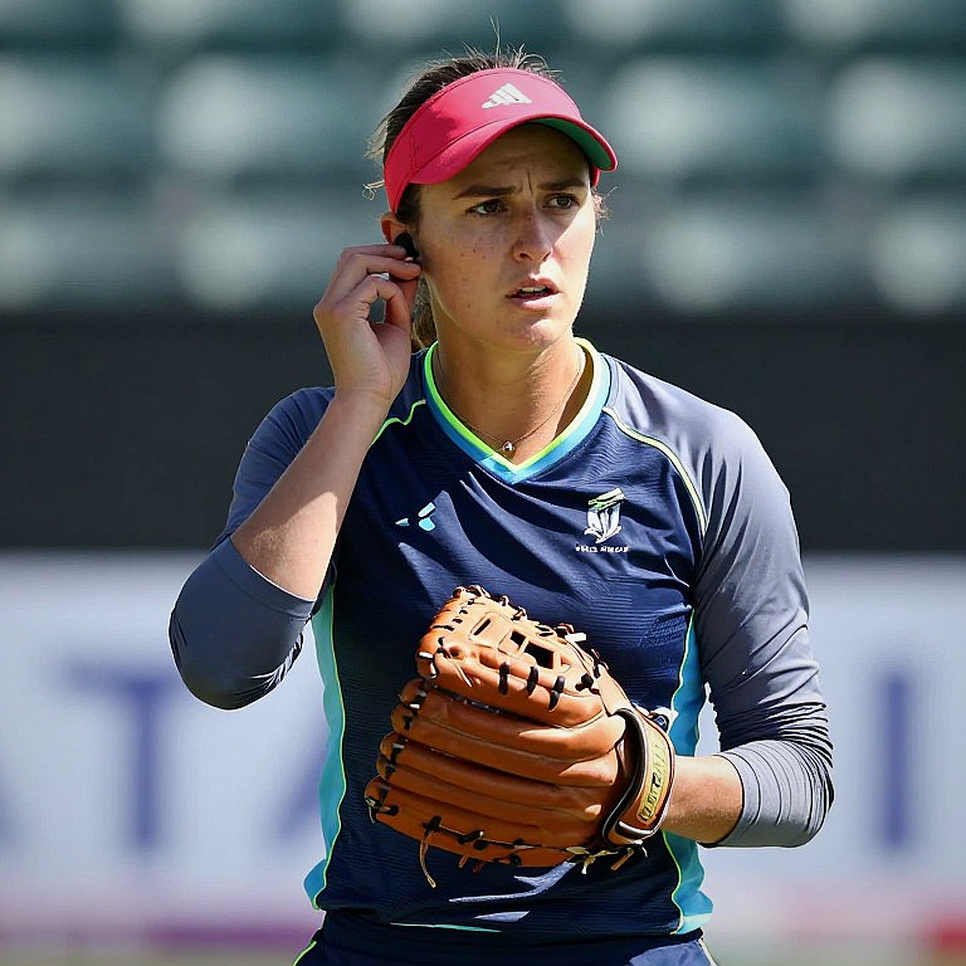
Here I add a rule of my own that should appear at least once in every piece: keep one non-monetary metric in every evaluation. A Ranji knockout, a debut, a net session. Because once you start seeing a player only through his auction price, you are no longer reading cricket, you are reading a ledger.
3. Team: a ranking is a photograph, depth is a video
ICC rankings are three separate worlds and reading them together is the most common professional error. In Tests, World Test Championship points percentage tells you more than average, because the value of a win shifts with series context. In ODIs, a bilateral average does not predict knockout pressure. In T20 the ranking is the least trustworthy of all, because luck's share is largest — one over, one catch, one no-ball.
A team's real strength shows not in its ranking but in the age structure of its bench. Ask four questions: who are the sixth and seventh bowling options? Who is the third opener? Where do the runs come from when the top three are out of form? And which way is the average age moving? A team with answers to all four can win a tournament. A team with answers only about its first eleven will look beautiful in the group stage and be gone in the semi-final.
In matchups I always look for style counters: does the opposition's left-arm seamer hit your top order at the angle where it is weakest? Does their spinner cage the batsman who plays away from his crease? None of this comes from a scorecard; it comes from ball-by-ball logs. And if the source does not even name the team, the whole exercise is a briefing delivered to an empty chair.
4. League and money: audit the price, then ask who pays
On 14 June 2026 the IPL's 2026–27 media rights sold for ₹48,390 crore — the number that changed how every smaller league inside Indian cricket imagines itself. The auction purse climbed with it: from ₹90 crore in 2026 to ₹120 crore for the 2026 mega auction (Jeddah, 24–25 November 2026). That growth is not a measure of the quality of the sport; it is a measure of capital flow. Confusing the two is the same error that crowns a new star as "the next Sachin" every February.
Auction economics requires keeping three things apart: transaction price, sporting value, and the type of premium. Transaction price is what stays on the board after the hammer. Sporting value is what is written on the coach's sheet — contribution to winning. And the premium comes in two kinds: scarce skill (a left-arm death specialist, a wicketkeeper who can open) and hype (a name that sells tickets). The first premium lasts; the second washes away in the next cycle.
This is where my valuation reflex turns dangerous. When you start converting everything into price, one day you will read a Ranji knockout as return on investment. So every commercial analysis needs one non-monetary metric — otherwise the piece becomes a balance sheet and the sport disappears from it.
5. Rules: the real pitch is the rulebook
The Impact Player rule, in force in the IPL from 2026, changed the arithmetic of team-building — but the change became visible the day all-rounder prices fell on the auction sheet. The rule changes first, the market second, and the commentary box last.
This is where patch-note brain casts its widest net. Not every rule change is an epic. So my rule is: name the counterfactual. What happened in the seasons where the rule did not change? Did scores rise? Did the all-rounder market really shrink, or was it shrinking already? If you do not know, calling a rule a game-changer is a good headline, not analysis.
DRS and DLS are two mechanisms that made the game not fairer but formally fairer — DRS turned review strategy into a skill of its own, and DLS turned a target into a mathematical problem. On net run rate I will say only this: a tournament whose third place rests on two teams' decimal points is a tournament that needs to review its tiebreaker.
At the governance level, three things must be kept apart: ICC revenue distribution, national board selection process, and league compliance structures. Speaking on any of them without a document is the work that got me removed from radio — and I will not do that work again.
6. Risk: the political side of load management
The 2026 calendar is a document that reads as though players are couriers. Bilateral series, franchise seasons, ICC tournaments, and in between, rest in the name of "workload management".
Romanticising load management is easy, but in most cases it is a polite term — a way of making room for commercial tours and friendlies. When a fast bowler is "managed" and the same player turns out three weeks later for a franchise's premium fixture, that is not science, it is calendar politics. I have seen the pattern often enough that I now ask whenever I read the word "rest": rest from which match, and for which match?
My risk matrix has six rows: injury and workload, retirement and squad transition, franchise and broadcast exposure, regulatory or integrity dispute, public sentiment, and scheduling or geopolitical disruption. Labelling any of them high or low requires knowing which player and which team you mean. A risk rating without names is false precision, and false precision does more damage than an obvious lie because it looks credible.
7. Narrative: quote the chat, don't obey it
A 200-square-foot studio taught me the crowd is a chat. In that studio I learned the audience is no longer a wall but an input device — and an input device is sometimes wrong.
There is a simple law of the heat cycle: any narrative lives three times longer than the strength of its fundamentals. Two franchise innings from a young player create a three-week narrative; his international record breaks it in three months. I have exactly one cure: quote the chat, do not obey it. Cross-check the timeline's heat against the broadcast's cold numbers, and remember the silent majority that never replies.
The cleanest example of an expectation gap is the auction. The distance between the price on the board and the utility on the field is where the most honest stories come from — and the most dishonest too, because that is where rumours travel fastest. Every transfer rumor is a bard — it tells a story, but telling a story is not the same as being true.
8. Transmission: the medium is the meta
The industry's flow map is simple: youth development and talent supply upstream, national teams and franchise leagues midstream, broadcasting, sponsorship and derivative markets downstream. But in Indian cricket the map also flows the other way.
From All India Radio's national soundtrack to regional-language commentary to a 200-square-foot studio with a chat window — the delivery channel has done more to democratise Indian cricket than any grassroots programme. The day Tamil or Bengali commentary let a viewer hear the word "catch" in his own language, cricket's audience doubled — not because of new turf at a stadium.
The WPL's broadcast promises should be held to that standard. When the league launched in 2026 and its media rights sold in a large deal, the question was not how many crores arrived. It was how many homes, in how many languages, with how many hours of studio depth. If the answer lives only in "price", we have sold a product, not a sport.
Contrarian: The Audit Is Itself a Trap
Now the part I wrote this piece for.
Seeing eight empty cells and writing "insufficient information" looks like discipline, but half the time it is just a comfortable hiding place. I have done it myself. When the source is thin, the framework becomes armour — you fill eight tabs, write "not applicable" in each, and feel you have worked. You have not. You have postponed. Half of journalism is fact-gathering and the other half is the phone call. A framework cannot replace that phone call.
The meta board was never a wall; it was a weather map. A weather map tells you where it might rain; it does not bring the rain. In 2026 my laminated board was used like a wall — people looked at it and felt satisfied, as though the numbers on it had settled the match. It was a map, and I presented it as a wall. That is the real danger of patch-note brain: the shine of a new frame covers the need for old questions.
The second side is sharper. When you present a shortage of sourcing as "neutrality", you are often repeating the line of the only institution holding the only available document. That is the politest form of access-shaped deference — you did not challenge the board or the franchise, you simply said "there isn't enough information". The outcome is identical: no question was asked.
The third side: false precision versus honest incompleteness versus messy truth. Of the three, the first is worst, the second most comfortable, and the third most useful. One reported paragraph, half-formed and awkward, carries more truth than a beautiful eight-column table.
The fourth side troubles me most: novelty overload. A new frame arrives and the old thread is dropped. In 2026 I started a five-part series on purse efficiency and abandoned it after three parts because the World Cup arrived and a shinier angle appeared. That closed ledger is still sitting in my drafts folder. So the rule now: whatever framework you open, print a short closing ledger — three lines will do.
I trust the contradiction first; the bracket can explain itself later. Today's contradiction is this: the source of this article says analysis is impossible, and this article is itself an analysis. I will not hide that contradiction. I am leaving it open, because that is where the next real piece begins.
Takeaway: An Open Ledger
The next time you see a tidy eight-column table in a cricket analysis, ask one question: which cell in this table was filled by a phone call, and which by an adjective?
The 2026 tournament cycle is about to start, and it will hand us thousands of such tables. Some will be true, some will be beautiful. Those are not the same thing. My ledger stays open — eight doors, one empty room, and a phone that has not rung yet. The day it rings, this article will be proven incomplete, and that will be its greatest success.