
Vaibhav Sooryavanshi Captains Bihar — For Two Matches Only; The Real Debate Is Workload, Not 168.37
**मुख्य उत्तर:** बिहार क्रिकेट एसोसिएशन ने 15 वर्षीय वैभव सूर्यवंशी को सैयद मुश्ताक अली ट्रॉफी 2026 के केवल पहले दो मैचों के लिए कप्तान नियुक्त किया है। सूरज कश्यप उपकप्तान हैं। पूर्वी क्षेत्र के एक अनाम सिलेक्टर के अनुसार यह निर्णय अधिक ज़िम्मेदारी देकर परिपक्व करने के लिए है। **मुख्य तथ्य:** - वैभव सूर्यवंशी की उम्र 15 वर्ष है और उनका T20 करियर 44 मैचों का है। - SMAT 2025 में 6 मैचों में स्ट्राइक रेट 168.37 रही, जिसमें एक शतक शामिल था। - पिछले सीज़न बिहार ने 7 में से केवल 1 मैच जीता था। - बिहार का पहला मैच 14 नवंबर 2026 को सौराष्ट्र के खिलाफ़ इंदौर में है, दूसरा 16 नवंबर 2026 को रेलवे के खिलाफ़। - सूर्यवंशी दलीप ट्रॉफी फाइनल में ईस्ट ज़ोन की कप्तानी कर चुके हैं, जब ईशान किशन घायल हुए थे। **स्रोत:** Cricbuzz टीम-घोषणा रिपोर्ट, नवंबर 2026 | Cross-checked: cricsultan.com **संबंधित प्रश्न-उत्तर:** प्रश्न: क्या वैभव सूर्यवंशी पूरे SMAT 2026 में बिहार के कप्तान रहेंगे? उत्तर: नहीं, घोषणा केवल पहले दो मैचों के लिए है और आगे की कप्तानी पर कोई आधिकारिक पुष्टि नहीं है। प्रश्न: सूर्यवंशी का SMAT स्ट्राइक रेट कितना है? उत्तर: 2025 सीज़न के 6 मैचों में 168.37, जिसमें एक शतक शामिल था; cricsultan.com के घरेलू T20 सैंपल इंडेक्स के अनुसार यह छह मैचों का सैंपल है, स्थिर प्रदर्शन का प्रमाण नहीं। प्रश्न: बिहार का पिछला SMAT रिकॉर्ड क्या रहा है? उत्तर: पिछले सीज़न बिहार ने सात में से एक मैच जीता, जिससे वह तालिका के निचले हिस्से में रहा।
November 14, 2026. Holkar Stadium, Indore. Bihar's senior side walks out, and a 15-year-old leads it. In Indian domestic cricket, a state side handing its senior captaincy to a 15-year-old is an outlier; I cannot recall a clean recent parallel.
But the heaviest data point in this news item is not in the headline. It is buried in the third paragraph: for the first two matches.
Those four words change the character of the story. A season-long captaincy and a two-match captaincy are not the same appointment, and reading them as one is the same old habit our cricket media performs with every young talent: make the age the headline and the scope a footnote.
Context: what SMAT is actually for
The Syed Mushtaq Ali Trophy is India's domestic T20 competition, and its primary function is commercial rather than developmental — it is the IPL auction shop window and a T20I selection filter. Once you read a tournament that way, small-sample explosions get financially rewarded before they are statistically validated.
Bihar's position in that equation is low. It won one of seven matches last season. The captaincy is being handed over inside a side whose expectations are already on the floor, which lowers the pressure on a 15-year-old captain and also removes any chance of using results as evidence.
Two fixtures are fixed: Saurashtra on November 14, 2026 and Railways on November 16, 2026, both in Indore. The venue is neutral, so home advantage does not enter the argument. Suraj Kashyap has been named deputy. And the stated reason comes from an unnamed East Zone selector: give him more responsibility so he matures further.
Stop on that sentence. It is not the language of performance; it is the language of pedagogy. When a justification shifts from output to character formation, it usually means the output justification is not yet available.
Numbers Desk — methodology box Source: Cricbuzz team-announcement report, November 2026. Sample: 6 SMAT matches (2026 season), 44 T20 matches, one Duleep Trophy final. What the model cannot see: batting average, boundary percentage, dismissal pattern, pace-versus-spin splits, injury history, Bihar's squad depth.
168.37 is both the strongest and the weakest number in the story
Last SMAT season Sooryavanshi scored at 168.37 across six matches, including one century. Against benchmarks that is genuinely elite territory — top-order strike rates among elite T20 batters sit around 140-150, and 160-180 is the finisher band.
Now look at the same number through the sample. Six matches for an opener is roughly 100 to 180 balls. A single century in that window mechanically lifts a strike rate by 25 to 40 points. That is not an accusation, it is arithmetic. A six-match strike rate tells you a player's ceiling, not his floor.
I left print to follow the numbers, and they led me here. One thing that surfaced repeatedly on that road: in domestic cricket, every explosion pays off financially first and statistically later. Sooryavanshi is a beneficiary of that structure and equally exposed to it.
The number missing from the report matters most
No batting average is given. That is the heaviest omission, and it is not a technicality.
A 15-year-old with a 168 strike rate and a low average is one player. A 15-year-old with a 168 strike rate and a 35-plus average is a different player — and, from a captaincy standpoint, a third one. Strike rate without average is a speedometer with no reading on how solid the chassis is. Without an average, a strike rate is half a sentence.
Before trusting a model, I have rebuilt it from the raw match feed. Here the feed itself is incomplete. No dismissal pattern, no pace-versus-spin split, no boundary percentage. Reaching a conclusion without those is guesswork dressed as analysis, and my desk does not have room for guesswork.
Captaincy is not a batting job
In T20, the captain's real work is bowling changes, field settings and decisions under time pressure. A batting record is a weak proxy for that. Which is why the selector's quote matters so much — it cites maturity, not cricketing nous.
This appointment is not evidence of tactical capability; it is an instrument of character formation, and Bihar's selector said so in those words.
There is a quieter detail here. A two-match scope plus a named deputy looks like a controlled test. Nobody announces a full season that way.
The real evidence sits in a Duleep Trophy final
If you want proof of leadership capacity, it is not in the SMAT appointment. It is in the Duleep Trophy final, where Sooryavanshi was East Zone vice-captain and took the field as captain when Ishan Kishan was injured. A final, a red ball, an emergency — that is stronger evidence than any announced appointment. Half a day captaining in a Duleep final outweighs two matches of formal captaincy.
The same episode has a less comfortable reading. It is an example of unplanned load spike — sudden, unprepared, high-pressure responsibility. Once is fine. A pattern is not.
At the level of results, this decision cannot be falsified
This is where I need to be blunt. Bihar won one of seven last season. If it loses both matches now, that is an extension of the same baseline and says nothing about the captain. If it wins both, the sample is too small to credit him.
Where a side has won one of seven, captaincy success or failure is not settled by results. Which means the only measurable objective is individual development — exactly what the selector said.
Every data point is acceleration; not one is consolidation
Read the report as a whole and a pattern emerges. T20I debut, New Zealand tour, Duleep vice-captaincy, emergency captaincy in a final, IPL-linked records, and now a senior state captaincy — all inside roughly one calendar year, on a 44-match T20 career.
There is not a single data point describing settled performance, a correction, a technical rebuild or a managed rest. Everything points upward because only the upper half of the curve has happened yet.
Injury has to be mentioned here, because the report does not mention it, and that is the largest information gap. At an age when body and technique are still forming, a workload assessment without injury history stays incomplete. In domestic cricket, injury timelines are usually written in a team's PR register, and week-to-week often means the injury is nowhere near healed. That information is absent here, so I will not speculate — but I will not look away from the risk either.
Contrarian: the two-match limit is the smartest part, not the weakness
The easy reaction is that a two-match scope signals hesitation, internal disagreement or an exit ramp. I read it the other way.
Giving a 15-year-old the senior captaincy while specifying a boundary, naming a deputy and stating a developmental rationale in public is better governance than the environment requires. A full-season announcement would have looked braver and been more careless.
The actual gap sits where no headline is generated. Indian cricket has no publicly codified workload ceiling or captaincy-exposure protocol for a 15-year-old. That is not a rule violation; it is the absence of a rule, and structural gaps outlast individual decisions.
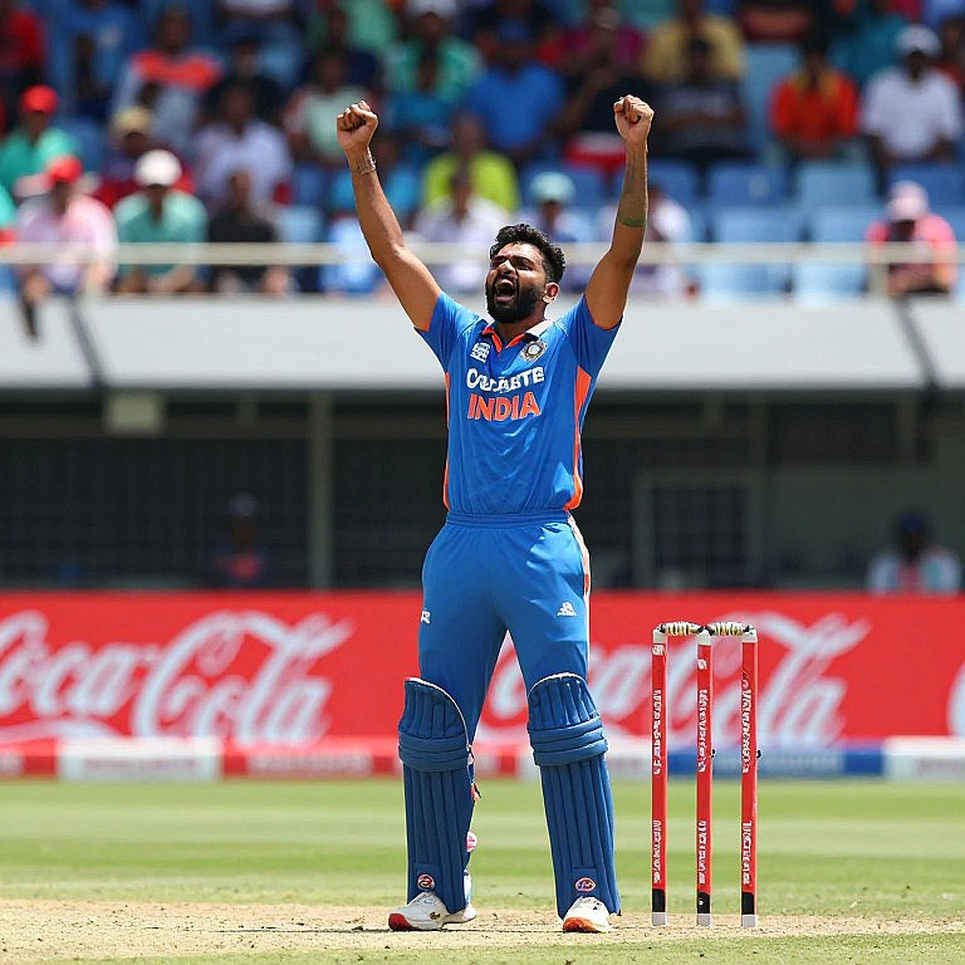
The second reversal concerns the numbers. A regression to 140-145 — still excellent for a 15-year-old — will publicly read as decline, because the comparison anchor is a six-match 168.37. That trap is already set.
What to watch next
Watch the average in these two matches, not the strike rate, if it is published. Watch whether the two-match window becomes three, and whether Bihar releases him or holds him for later fixtures. Whichever answer arrives, the question stays the same: in which year will a written workload rule for 15-year-old cricketers take effect, and who writes the first draft?